
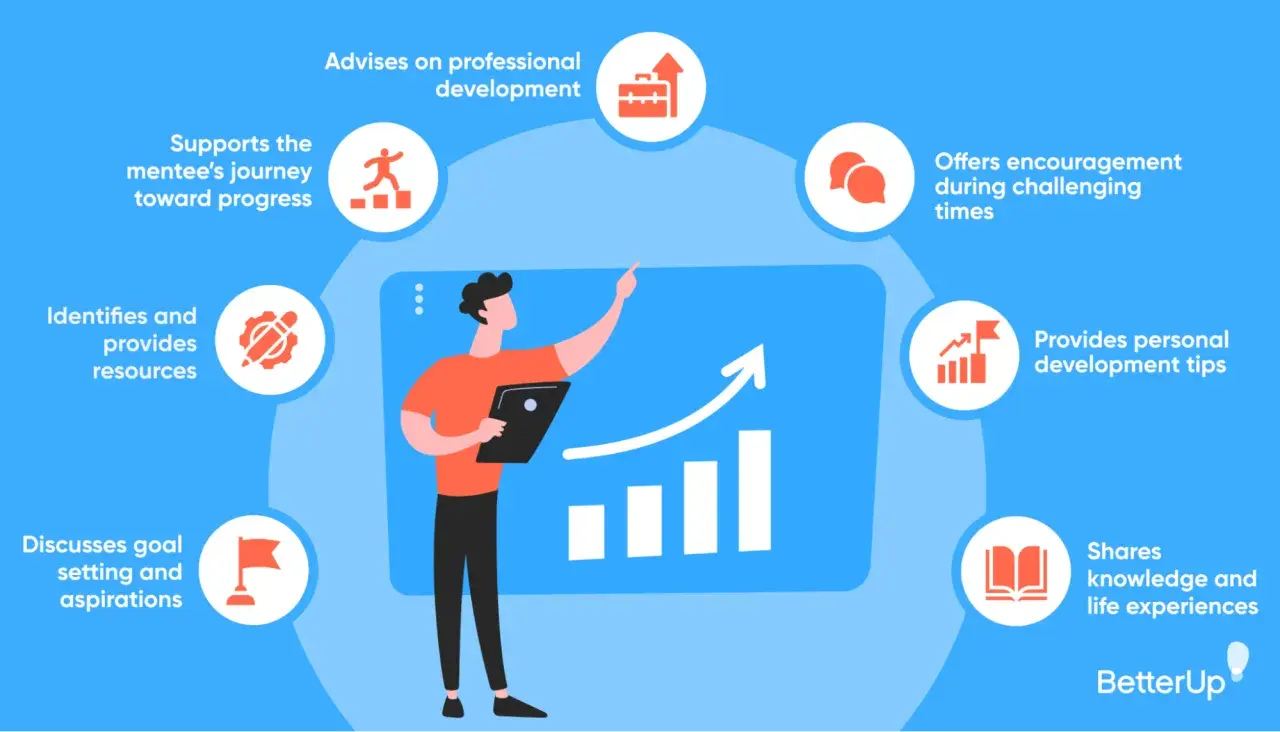
Learning how to be a good mentor is less about sounding wise and more about helping another person think clearly, act with confidence, and grow without becoming dependent on you. In practice, that means setting a useful rhythm, asking better questions, giving feedback that can be acted on, and making room for people whose careers do not look like your own. I am focusing on the parts that matter most in real workplaces, especially when mentoring has to work across hybrid teams, different backgrounds, and uneven access to opportunity.
Good mentorship is structured support, not casual advice
- Start with the mentee’s goals, not your own story.
- Agree on cadence, scope, and a simple way to measure progress.
- Listen for context before offering advice, shortcuts, or opinions.
- Give feedback on specific behaviors and next steps, not personality traits.
- Make mentoring inclusive by widening access, visibility, and introductions.
- Step back when the mentee can think, decide, and network more independently.
Mentoring starts with a role, not a speech
Before I give advice, I like to separate mentoring from the other roles people often mix together. A mentor helps someone think through decisions, patterns, and career moves. A coach focuses more tightly on skill-building and performance. A sponsor uses influence to open doors. Those roles can overlap, but they are not identical, and confusion here creates weak mentoring fast.
| Role | What it does best | What it should not try to do | Best use case |
|---|---|---|---|
| Mentor | Offers perspective, pattern recognition, and career guidance | Replace the mentee’s judgment | Long-term growth, transitions, and navigation |
| Coach | Improves a specific skill through practice and feedback | Become the person’s informal therapist or executive advisor | Performance gaps, presentations, leadership habits |
| Sponsor | Advocates and recommends the person for opportunities | Stay neutral or purely instructional | Promotion visibility, stretch assignments, access |
I usually tell leaders to name the role out loud at the start. That one move prevents a lot of disappointment later. If the mentee expects sponsorship and you are only offering guidance, the relationship will feel thin. If they expect you to solve their problems, you will feel overextended. Clear role definition makes the rest of the work easier, which is why I treat it as the foundation rather than a detail.
Once the role is clear, trust becomes the next priority. That is where the conversation can either become useful or drift into polite small talk.

Build trust before you give advice
The strongest mentoring relationships usually begin with curiosity, not expertise. I try to spend the first conversation understanding context before I offer opinions. What is the person trying to change? What is actually in their way? What would success look like in three months, not five years? Those questions tell me far more than a polished self-introduction ever will.
A practical way to open the relationship is to ask three simple questions:
- What do you want more of in your career right now?
- Where do you feel stuck, and what have you already tried?
- What kind of help is most useful from me: perspective, accountability, introductions, or challenge?
That last question matters. Some people need reassurance. Others need a sharper mirror. Others need access to people and information they cannot reach alone. If I guess wrong, I can still be friendly and completely unhelpful. Good mentors do not assume they know the right shape of help before they know the problem.
Trust also depends on restraint. I keep boundaries clear, especially around confidentiality and scope. A mentoring conversation is not a performance review, and it is not therapy. It is a focused professional relationship with a purpose. When you say what the relationship can and cannot do, the mentee is free to speak honestly instead of performing for approval.
That trust gets much stronger when the relationship has structure, because structure turns good intentions into consistent support.
Make the relationship specific and measurable
Vague mentoring arrangements fail for a boring reason: nobody knows what success looks like. I prefer a simple agreement at the start. It does not need to feel formal, but it should be specific enough that both people know what to expect. A 30- to 45-minute check-in every two to four weeks is often enough for steady progress, and it is usually more effective than long, irregular conversations that never build momentum.
- Choose one primary goal. Pick a real career outcome, such as preparing for a promotion, improving executive presence, or building confidence in cross-functional meetings.
- Set the cadence. Decide how often you will meet and how long the relationship should last before you review it.
- Define the scope. Be clear about what belongs in the conversation and what does not.
- Agree on one action between meetings. The mentee should leave each session with one concrete next step, not a pile of vague encouragement.
- Review progress every 90 days. Ask what has changed, what still feels hard, and whether the format is actually helping.
I also like to document the relationship in plain language. That can be as simple as a shared note with the goal, the next meeting date, and the one or two themes to discuss next time. It sounds basic because it is basic, and basic is often what makes mentoring durable. Without a small amount of structure, even a promising relationship can dissolve into “we should catch up sometime.”
Once you have a structure, the next challenge is making your guidance genuinely useful instead of merely reassuring.
Give feedback that people can actually use
The best mentor feedback is specific, timely, and tied to behavior. I have little patience for advice that sounds wise but gives the mentee nothing to act on. “Be more strategic” is not feedback. “Open your next update with the business impact before the details” is feedback. One changes nothing; the other gives someone a move they can test immediately.
When I give feedback, I try to follow three rules:
- Describe what you observed, not your assumptions about the person’s character.
- Link the feedback to a visible outcome, such as influence, clarity, or trust.
- Leave the person with a next step they can try this week.
Some mentors use a future-focused approach often called feedforward, which simply means helping the person improve the next attempt instead of replaying the last mistake. I think that idea works well in mentoring because it keeps the conversation practical and reduces defensiveness. People usually learn faster when they know the point is progress, not punishment.
Here are a few examples of the difference between weak and useful feedback:
- Weak: “You need more confidence.” Better: “Pause after your first answer and let the room respond before you fill the silence.”
- Weak: “You are not executive material.” Better: “Your ideas are strong, but your summaries need more business context and less internal detail.”
- Weak: “You should network more.” Better: “This month, ask two people outside your team for a 20-minute perspective call and prepare three questions for each.”
Feedback lands best when the mentee trusts that you are on their side. That becomes even more important in diverse and hybrid workplaces, where access and visibility are not evenly distributed.
Mentor inclusively in a hybrid workplace
Gallup’s current U.S. hybrid-work indicator shows that 52% of remote-capable workers are hybrid, so mentoring now has to work across screens as much as across hallways. That changes the job. You can no longer rely on spontaneous chats, body language, or the casual visibility that used to help people learn by osmosis. You have to be deliberate about when you meet, how you follow up, and who gets access to your time.
In an inclusive mentoring relationship, I think the first responsibility is to make hidden rules visible. Explain how decisions are really made in the organization. Translate informal norms. Tell the mentee what good looks like in meetings, in written updates, and in upward communication. That is especially important for people who may not have grown up with the same workplace code words or social access that others take for granted.
Harvard Business Review has noted that 71% of executives choose to mentor people of the same gender or race. That is exactly why inclusive mentoring cannot rely on comfort alone. If you only mentor people who feel familiar, you reinforce the same inequities that limit advancement in the first place. A better mentor looks for potential across difference, not just similarity.
In practice, that means widening access in small but meaningful ways:
- Introduce the mentee to people outside your immediate network.
- Make sure remote or quieter employees are not the last to hear about opportunities.
- Be careful not to confuse communication style with competence.
- Watch for over-correction, where you start speaking for the mentee instead of helping them speak for themselves.
I have found that inclusive mentoring is less about saying the right values and more about removing avoidable friction. If the person has talent but not proximity, your job is to reduce the distance.
Know when to step back, stretch, or refer out
A common mentoring mistake is becoming too central. If every decision runs through you, the mentee is not growing as fast as they could. Good mentoring should create independence, not dependence. If the person is waiting for your approval before making every move, the relationship has started to slow them down.
There are a few signs it is time to step back or broaden the circle:
- The mentee can explain their thinking clearly without you.
- They are getting the same answer from you over and over.
- Their next challenge is outside your expertise.
- They need a manager, HR partner, therapist, or subject-matter expert, not another round of general advice.
I also think mentors should resist the urge to become gatekeepers. Your role is not to own the person’s career. Your role is to help them build judgment, confidence, and access. Sometimes that means connecting them to someone else who can provide a better answer. That is not failure; it is competence.
When the mentee is ready, stepping back gracefully is part of good mentoring. It tells them they are no longer dependent on your voice to move forward, which is often the most concrete sign that the relationship has worked.
The mentors people return to are consistent, specific, and generous
If I had to reduce mentoring to one sentence, it would be this: make the next step clearer than it was before the conversation started. That might mean a sharper question, a more honest piece of feedback, a useful introduction, or a reminder that uncertainty is not the same as failure. The details will vary, but the purpose stays the same.
People remember mentors who are consistent, who tell the truth without making the relationship heavy, and who leave them more capable than before. That is the standard I would use if I were hiring a mentor, and it is the standard I use when I try to be one. If you keep listening first, keep the structure simple, and keep the focus on growth, you will be doing the work well.
If you want a quick self-check before your next mentoring conversation, ask yourself whether you are helping this person think more clearly, act more confidently, and move one step closer to the career they want. If the answer is yes, you are already practicing the kind of mentorship that people trust, remember, and recommend.
