
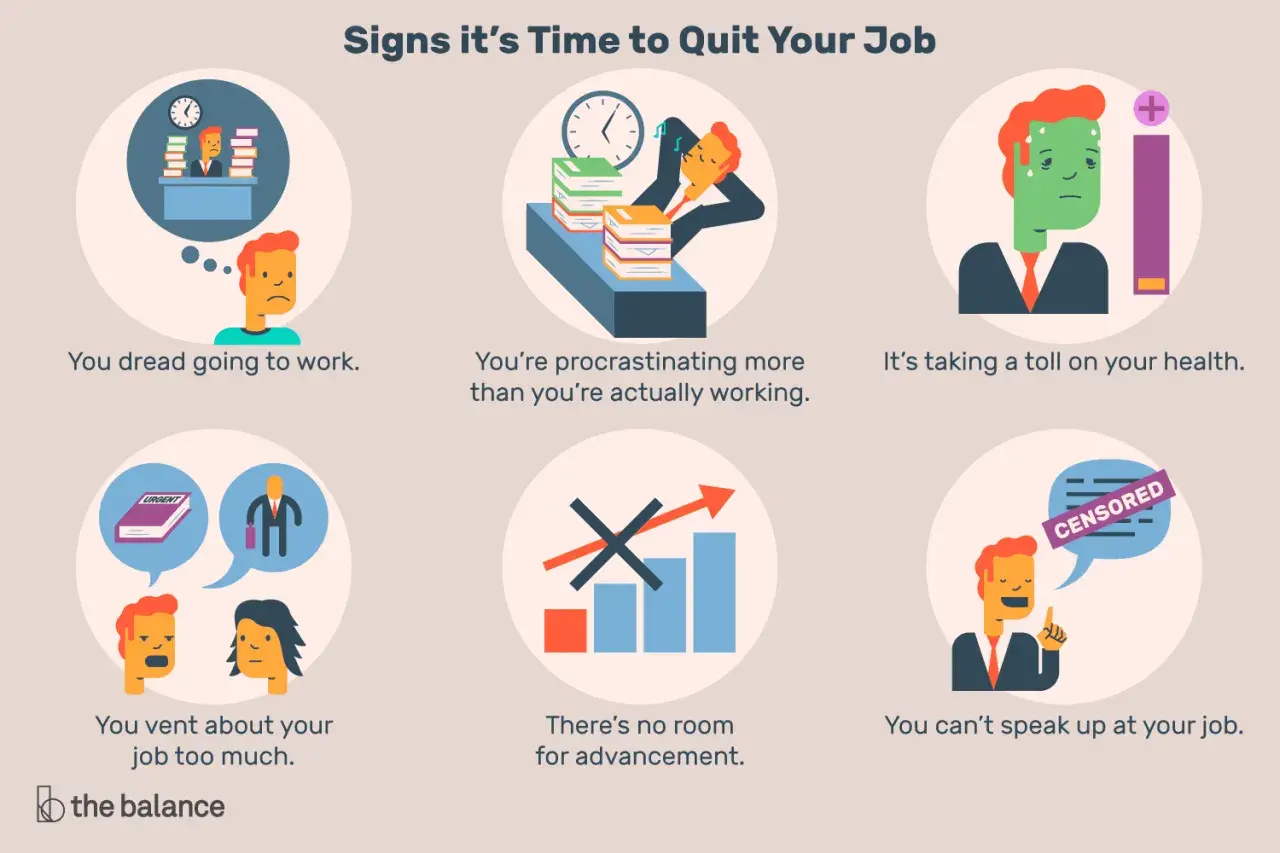
The decision to leave a role is rarely about one bad meeting or a single rough week. In my experience, the clearest signs it's time to leave your job show up as a pattern: your energy keeps dropping, your growth stalls, the culture feels increasingly unfair, and the work starts costing more than it gives back. This article breaks down those warning signs, shows how to tell burnout from a fixable patch, and explains what I would do before resigning.
The fastest way to judge a job is to look for patterns, not isolated bad days
- Repeated dread, stress symptoms, or emotional numbness matter more than one difficult week.
- Culture problems become resignation-level issues when feedback goes nowhere and unfair treatment keeps repeating.
- Burnout and rust-out need different fixes, because one is overload and the other is underchallenge.
- A serious but fixable problem deserves a defined 30 to 60 day repair window.
- If you leave, protect your finances, references, and transition plan before you hand in notice.
The warning signs that usually mean the job has run its course
I usually start with three questions: Am I getting worse physically or mentally, am I still learning, and do I still trust the people around me? When two or more of those answers stay negative for weeks instead of days, the job deserves a serious look. The strongest signals are not dramatic. They are repetitive.
When your body is telling you to stop
- You dread work most mornings and the feeling does not lift after rest.
- Your sleep, appetite, mood, or concentration has changed in a way you can trace back to the job.
- Time off gives you only a brief reset, then the same heaviness returns.
When the work no longer fits your skills
- Your strengths are underused and you are spending most of your time on low-value busywork.
- You are no longer learning anything meaningful, and there is no realistic growth path in sight.
- You cannot picture yourself building a stronger résumé by staying for another year.
Read Also: How to Get on a Board of Directors - Your Guide to Board Seats
When values and fairness are breaking down
- You are being asked to cut ethical corners, hide information, or tolerate behavior you would not defend outside the office.
- Pay, title, and responsibility have drifted apart, and no one is willing to correct the mismatch.
- Promotions, credit, and access to opportunity feel inconsistent or biased rather than transparent.
The part I watch most closely is whether the pattern is getting worse. A bad quarter can happen anywhere; a steady decline in health, trust, and engagement usually means the job itself is the problem. Once that is clear, the next question is whether the issue is the culture around the work or the work itself.

When the culture is the real reason people leave
A lot of people stay too long because they keep trying to solve a culture problem as if it were a workload problem. It usually is not. If you are excluded from meetings, interrupted when you speak, denied information other people get automatically, or treated differently when you ask for flexibility or accommodation, the issue is structural. In inclusive workplaces, people can raise concerns without being punished for them, and opportunity does not depend on who is loudest or most favored.
Psychological safety, which simply means you can speak up without fear of retaliation, is a practical test here. If that safety does not exist, you spend extra energy managing politics, editing yourself, and second-guessing every move. I would especially pay attention when the problem affects the same people again and again, because that usually signals a pattern, not a personality clash. One difficult manager can sometimes be fixed. A workplace that normalizes exclusion, favoritism, or bias usually cannot.If you have already raised the issue and nothing changes, I think leaving becomes a rational option rather than an emotional one. That leads naturally to the next question: is this burnout, boredom, or simply a temporary rough stretch?
Burnout, rust-out, and a fixable rough patch feel similar, but they are not the same
Three very different situations can feel almost identical on a tired Tuesday. Burnout, rust-out, and a temporary rough patch all create frustration, but they call for different responses. I find it useful to separate them before making a resignation decision.
| Pattern | What it usually feels like | What to try first | When leaving makes sense |
|---|---|---|---|
| Burnout | Too much demand, too little recovery, constant exhaustion, cynicism, and reduced focus | Reduce workload, ask for clearer priorities, take real time off, and push for support | The workload stays impossible even after honest attempts to reset it |
| Rust-out | Too little challenge, repetitive work, boredom, and a sense that your skills are going unused | Ask for stretch work, rotation, internal projects, or a role shift | The role cannot evolve and no one is willing to expand it |
| Rough patch | A reorg, a new manager, a temporary spike in work, or a short-term mess | Give it 30 to 60 days and watch whether the new structure settles | The same problems remain after the transition should have stabilized |
I would not wait for a perfect diagnosis if your health is deteriorating. The label matters less than the reality. If your body is alarmed, your work has stopped growing, and the environment keeps draining you, then the practical question is not what to call it. The practical question is whether it can actually improve.
What I would test before resigning
I do not recommend quitting on impulse unless the workplace is abusive or unsafe. For fixable problems, I would use a short, structured test. A real fix changes your week-to-week experience, not just the language people use in meetings.
- Write the problem in one sentence and name the outcome you need. For example, "My workload is consistently unmanageable, and I need priorities reduced or redistributed."
- Ask for a specific change. That might be a clearer scope, fewer meetings, a transfer, a different manager cadence, or a stretch project that actually uses your strengths.
- Set a deadline. I usually think in 30 days for a smaller issue and 60 days for something that needs more coordination.
- Watch behavior, not promises. A supportive response is visible in calendars, priorities, staffing, and follow-through.
- Build your exit runway anyway. Update your résumé, reconnect with references, and check whether your savings and benefits can carry you through a transition.
If discrimination, retaliation, or denial of accommodations is part of the picture, document carefully and get qualified support. I would also keep a simple record of what was said, when it was said, and what changed after that. If the answer remains no after a genuine attempt to fix the situation, leaving is no longer a rash move. It is a boundary.
How to leave cleanly when the decision is made
Once I have decided to go, I focus on preserving options. In most U.S. workplaces, two weeks is a common courtesy, but the right notice period depends on your role, your contract, and whether the environment is safe. My rule is simple: leave with enough professionalism that people remember your work, not your frustration.
- Keep the resignation brief, calm, and neutral.
- Offer a clear handoff for active projects, important files, and key contacts.
- Back up personal materials before you lose access, then return company property promptly.
- Avoid using the resignation conversation as a full audit of everything that went wrong.
- Frame your departure around fit, growth, and next steps rather than a public argument.
- Protect references by staying factual, even if the experience was disappointing.
There is one exception: if the workplace has become hostile, retaliatory, or unsafe, I would plan the exit more carefully and quietly. The goal is not to be overly polite. The goal is to leave in a way that protects your future. Once that is handled, the last step is deciding whether to stay a little longer or move on now.
A simple rule for deciding whether to stay a little longer or move on
Here is the rule I use when the decision feels messy: if the job damages your health, stalls your growth, or forces you to shrink your values, and those problems remain after a real attempt to fix them, I would start planning the exit. If the issue is temporary and the company is genuinely changing, give it a short, defined window and then reassess. Do not drift for half a year hoping the feeling disappears on its own.
The strongest signal is not a single bad day. It is the moment you realize the life you want and the job in front of you no longer match. When that happens, the smartest move is not to panic. It is to make a clear plan, protect your leverage, and leave on your own terms.
