
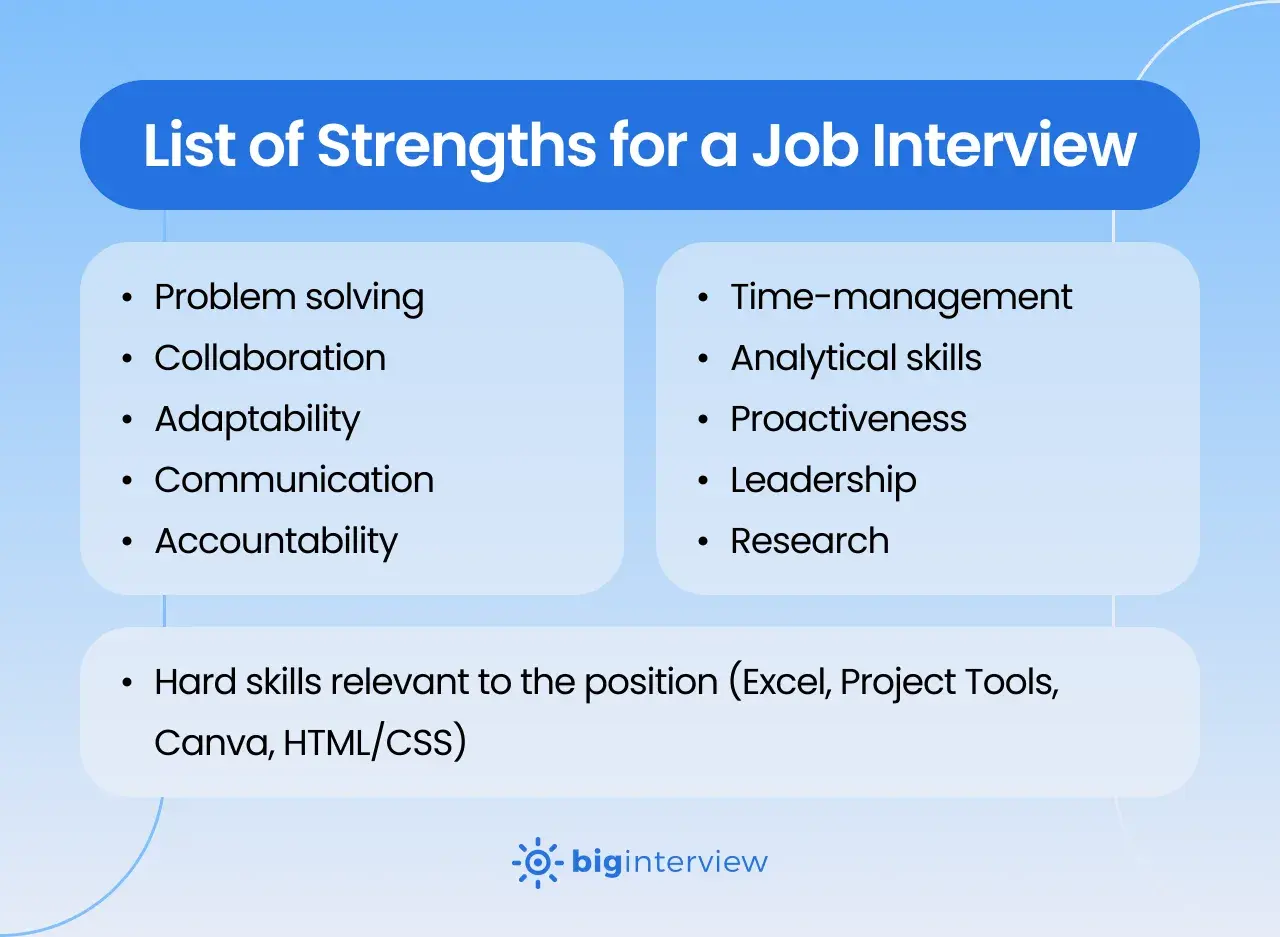
Strong career answers are rarely about sounding impressive. They are about naming a trait that helps you do the work well, then proving it with a real example, a result, or a pattern other people can recognize. That is why the answer to what are some strengths is less about collecting flattering adjectives and more about choosing the ones you can actually demonstrate in a workplace.
The strongest answers connect a real trait to a real result
- Employers usually want strengths that improve performance, teamwork, or decision-making.
- The best answers are specific to the role, not a generic list of good qualities.
- Evidence matters more than confidence alone, especially in interviews.
- In inclusive workplaces, traits like empathy, listening, and collaboration are practical strengths, not soft extras.
- Some strengths become liabilities when overused, so context matters.
What employers are really asking when they ask about strengths
When I hear this question in a hiring context, I do not hear a request for self-promotion. I hear a request for judgment. Employers want to know whether you understand your working style, whether your strengths fit the role, and whether you can talk about yourself in a grounded way without overselling.
That matters because a strong candidate is not just capable on paper. They are predictable in the best possible sense: they know what they do well, where they need support, and how their habits affect the team around them. In other words, the question is partly about self-awareness and partly about risk. The more clearly you can explain your strengths, the easier it is for a manager to picture you in the job. That leads naturally to the more practical question of which strengths actually help most.

Strengths that matter most in U.S. careers right now
If you need a practical answer to what are some strengths worth naming, start with the ones employers can see in daily work. These are the traits that tend to travel well across industries because they make work easier for other people too.
| Strength | Why it matters | Best use case | Watch-out |
|---|---|---|---|
| Communication | Helps people understand priorities, updates, and expectations | Client work, leadership, cross-functional roles | Can become talkative without real clarity |
| Problem-solving | Shows you can move from confusion to action | Operations, analysis, product, project work | Needs examples, not just claims of being “good with issues” |
| Adaptability | Signals calm under change and openness to new tools or priorities | Fast-moving teams, startups, hybrid roles | Can sound vague unless tied to a real change you handled |
| Dependability | Builds trust because people know you will follow through | Any role with deadlines or handoffs | May sound ordinary, but it is often what teams value most |
| Collaboration | Shows you can work across perspectives without creating friction | Team-based, matrixed, and leadership roles | Needs boundaries; being agreeable is not the same as being effective |
| Empathy | Helps you understand people, not just tasks | People management, customer work, inclusive leadership | Can turn into hesitation if you avoid hard feedback |
| Attention to detail | Reduces errors and improves quality | Finance, admin, compliance, reporting | Can slow you down if perfection takes priority over progress |
| Initiative | Shows ownership and a bias toward action | Growth roles, small teams, ambiguous projects | Works best when initiative supports the team, not personal momentum alone |
My short version is this: choose strengths that make someone else’s job easier too. That is usually a better test than asking whether the trait sounds “strong.” Once you can see the options clearly, the next step is matching them to the role you actually want.
How to choose the right strengths for your career path
The best strength is not the one that sounds most impressive in a vacuum. It is the one that matches the work. A payroll specialist, a sales manager, and a people operations lead may all need communication, but they use it differently. One uses it to reduce errors, one to influence decisions, and one to keep people aligned and supported.
I usually recommend narrowing your choice with three checks:
- Role fit - Look at the job description and notice the repeated verbs. If the role says coordinate, prioritize, support, or analyze, your strengths should map to those actions.
- Evidence fit - Pick strengths you can prove with a work story, a measurable result, or a pattern from past roles.
- Culture fit - In inclusive teams, strengths like listening, fairness, curiosity, and follow-through matter because they shape whether people feel heard and respected.
For example, if you are moving into a leadership role, “I am collaborative” is weaker than “I create space for quieter people to contribute and I turn that input into decisions.” The second version shows behavior, not just attitude. That distinction matters, because interviewers and managers are not just trying to hear that you are a good person; they are trying to predict how you will work. From there, the real challenge is saying it in a way that sounds natural rather than rehearsed.
How to describe strengths in an interview without sounding scripted
The easiest way to sound credible is to keep the structure simple. I like this sequence: name the strength, give one short example, explain the result, and connect it back to the job. It is enough detail to feel real, but not so much that the answer turns into a speech.
- Name the strength - “One of my strengths is attention to detail.”
- Give context - “In my last role, I reviewed client reports before they went out.”
- Show the outcome - “That helped us catch recurring errors and improve accuracy.”
- Make it relevant - “That is useful here because this role also depends on clean handoffs and reliable data.”
Here is where many people slip: they list traits instead of showing behavior. “I’m organized,” “I’m hardworking,” and “I’m a team player” are fine as starting points, but they do not say much on their own. The stronger version is much more concrete: “I keep projects moving by breaking them into clear milestones and following up before deadlines slip.” That gives the listener something they can picture. It also makes your strength transferable across roles, which is especially useful if you are changing industries or moving toward a more collaborative function. The next question, then, is how those strengths affect the culture around you.
How strengths support inclusive leadership and healthier workplace culture
In inclusive workplaces, strengths are not only about individual performance. They shape whether people feel safe enough to speak, disagree, ask questions, and contribute ideas. Psychological safety means people can speak up without worrying that a small mistake or unpopular view will be punished. That does not happen by accident; it is built through everyday behavior.
| Strength | What it does for the team | Where it can backfire |
|---|---|---|
| Empathy | Helps people feel understood and supported | Can become conflict avoidance if hard feedback never happens |
| Active listening | Brings out better ideas and catches concerns early | Can look passive if listening never turns into action |
| Fairness | Builds trust across different people and roles | Can become rigid if every situation is treated the same |
| Curiosity | Encourages learning, improvement, and better decisions | Can slow execution if questions replace decisions |
| Accountability | Makes expectations and ownership clear | Can turn punitive if mistakes are handled harshly |
I think this is where career advice gets more honest. A strength is not useful just because it looks good on a resume. It is useful when it improves the experience of other people in the room. That is why inclusive leadership often looks ordinary from the outside: clear communication, fair judgment, steady follow-through, and the habit of making room for different voices. Those are not decorative traits. They are operational strengths. Once you see them that way, the final step is identifying your own most credible ones.
A simple way to find your strongest career traits before the next interview
If you are still unsure which strengths to use, I would start with evidence instead of personality labels. Ask three people who know your work what they rely on you for most. Then compare that with the tasks that feel easiest, fastest, or most natural to you. The overlap is usually where your real strengths live.
- Look for repeated feedback, not one-off compliments.
- Notice the work that energizes you because that often signals a strength, not just a preference.
- Keep one or two examples ready for each strength so you can explain it without overthinking.
- Be honest about the edge of the strength. A useful strength can still create problems if it is pushed too far.
The people who answer this question well are usually not the most polished speakers. They are the ones who know themselves, choose relevant traits, and explain them with enough evidence to feel real. If you can do that, you are not just answering a common interview question; you are showing that you understand how you work and how you help a team succeed.
