
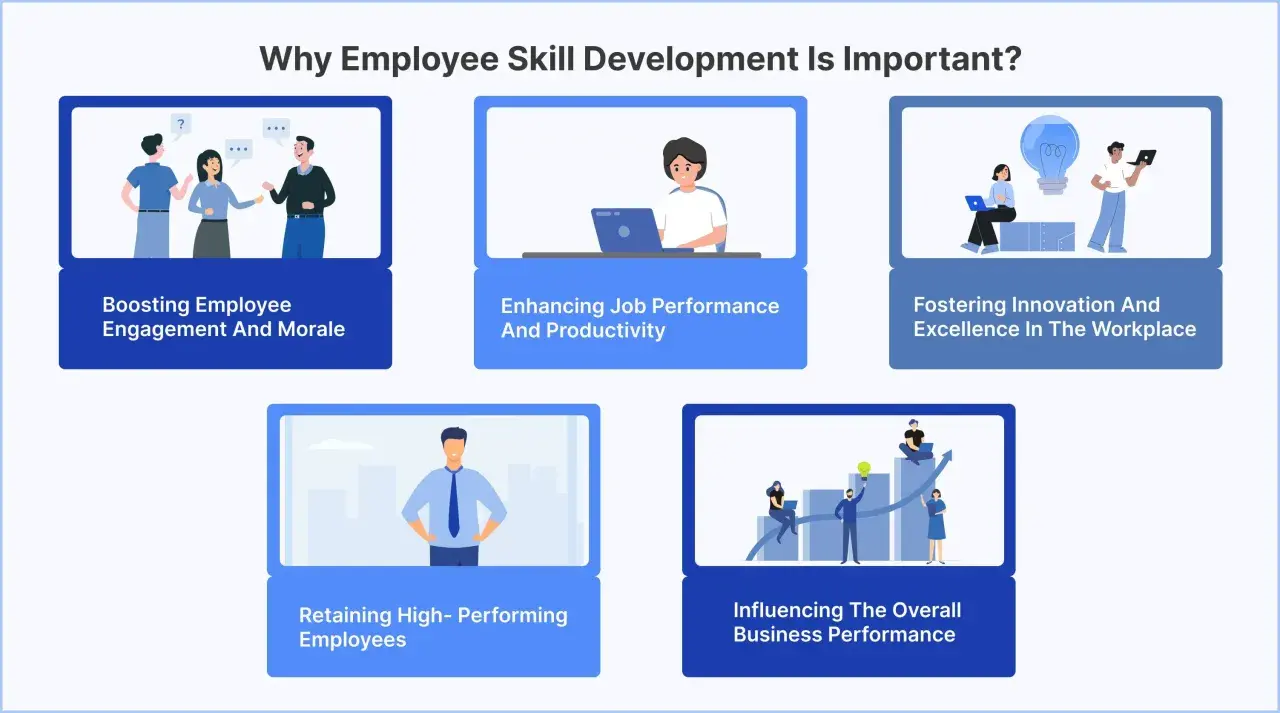
Strong corporate skill development is no longer just a training issue; it is a careers issue, a retention issue, and an inclusion issue. In a business setting, the real question is whether employees can grow into more complex work without waiting for a lucky opening or a manager’s personal favor. In this article, I explain what the model should include, which capabilities matter most, how to build a program people actually use, and how to keep growth opportunities fair across roles and demographics.
The most effective skill strategy connects learning to real career movement
- Development works best when it is tied to promotions, lateral moves, and stretch assignments, not just course completion.
- The strongest programs mix training, coaching, practice, and internal mobility instead of relying on one format.
- Managers shape outcomes because they control time, feedback, and access to visible work.
- Fairness matters: if only already-visible employees get opportunities, the company is not building a stronger talent bench.
- The right metrics track skill use on the job, internal hiring, retention, and promotion equity, not only attendance.
What corporate skill development looks like when it works
I think of this as a system, not a class. It includes the ways people learn to do better work now, prepare for the next role, and move across functions without starting from zero. That means formal training, yes, but also manager coaching, stretch projects, peer learning, shadowing, and internal transfers.
When the system is healthy, employees can answer three questions with confidence: What am I expected to get better at? How will I practice it? What new opportunity does it lead to? If those answers are vague, the company has a learning library, not a development strategy. Once that definition is clear, the next question is why this matters so much right now for U.S. careers.
Why it matters more for careers than a generic training budget
Development has become a career signal. People do not just want a paycheck; they want proof that the company can still imagine a future for them. According to Gallup, fewer than half of U.S. employees participated in training for their current job in 2024, and the organization estimates that doubling access to growth opportunities could lift profit by 18% and productivity by 14%. That is a serious business case, but it also explains why employees are so sensitive to whether development feels real.
There is another reason the topic has become urgent: job content keeps shifting. AI adoption, automation, hybrid work, and changing customer expectations are rewriting many roles faster than traditional career ladders can keep up. In 2026, SHRM expects greater AI integration in workforce operations and more AI-specific upskilling across organizations. I read that as a sign that companies can no longer treat learning as a side benefit. They need to treat it as part of workforce design. That brings us to the question of which skills deserve priority first.
Which capabilities deserve priority
I would not start with a giant list. The better move is to focus on capabilities that improve performance now and keep careers flexible later. The most useful programs usually combine four buckets.
Technical fluency
This includes AI literacy, data comfort, workflow tools, and role-specific digital systems. The goal is not to turn everyone into a specialist. The goal is to make employees confident enough to use modern tools without waiting for hand-holding every time the software changes.
Transferable execution skills
Project management, analytical thinking, clear writing, and decision-making travel well across roles. These are the skills that help someone move from one department to another without losing momentum. In practice, they often matter more for mobility than a narrow technical credential.
People and leadership skills
Feedback, coaching, conflict resolution, delegation, and inclusive leadership are easy to underestimate until a team starts to wobble. I treat these as core infrastructure. They affect retention, trust, and whether employees feel safe enough to take on stretch work.
Read Also: How to Negotiate a Raise - Get the Pay You Deserve
Mobility skills
This is the part many companies miss. Employees also need to learn how to map their own strengths, tell a career story, ask for opportunities, and build internal relationships. In other words, talent development should prepare people to move, not just to stay put. Once you know what to build, the next challenge is designing a program that employees will actually use.

How to build a program people actually use
The mistake I see most often is launching too many courses and too little application. A usable program is narrower, clearer, and more tied to business demand. It starts with role gaps, not content catalogs.
- Map the skills that matter for the next 12 to 18 months, not the last 12 to 18 months.
- Choose a few priority role families, then define what “good” looks like at each level.
- Blend learning formats so people can learn, practice, and get feedback in the same cycle.
- Require managers to create time for development, because “learn on your own time” usually means “do not learn.”
- Connect each learning path to internal openings, projects, or promotions so the payoff is visible.
| Method | Best for | Strength | Limitation |
|---|---|---|---|
| Live workshops | Shared baseline skills | Fast to scale and easy to standardize | Can stay theoretical if there is no follow-up practice |
| Mentoring and coaching | Career transitions and leadership growth | Personalized and context-aware | Quality depends heavily on the mentor or coach |
| Stretch assignments | Applied learning | Strongest transfer to real work | Needs guardrails so the assignment does not become unpaid overload |
| External courses and certifications | Deep technical upskilling | Useful when the skill has an industry standard | Can feel disconnected from the company’s actual jobs |
| Internal talent marketplaces | Cross-functional movement | Matches people to projects and roles faster | Only works well when skills data is accurate and current |
If I had to start small, I would not build all five at once. I would combine one learning path, one stretch project, and one manager checkpoint, then expand from there. That said, even a good program can fail if access is uneven, which is where inclusion comes in.
How to keep access fair and inclusive
This is where skill development becomes a workplace culture issue. If opportunities go only to people who are already visible, already connected, or already close to leadership, the company will reproduce the same hierarchy it claims to be changing. Transparent criteria matter more than most leaders realize. People should know how programs are selected, who approves them, and what evidence counts.
I also think sponsorship deserves more attention. A mentor gives advice; a sponsor advocates for someone when opportunities are being discussed. Both matter, but sponsorship is often what moves a career forward. If a company wants development to be equitable, it needs to look at who gets access to high-visibility projects, who receives stretch roles, and whether managers are encouraging growth for everyone or only for employees they instinctively relate to.
Promotion gaps tend to show up early, especially at the first step into management, and they often widen for women of color and other underrepresented groups. That is why I prefer development systems that are auditable: participation by level, function, location, and demographic group should be reviewed regularly. Fairness is not a separate value added after the fact; it is part of whether the program actually builds capability. Once access is fair, measurement becomes much more meaningful.
What to measure beyond course completion
Completion rates are convenient, but they do not tell you whether anyone got better at the job. I look for a mix of leading and lagging indicators so the dashboard shows behavior change, not just attendance.
- Participation rate by team, level, and location.
- Skill demonstration on the job, not only test scores.
- Internal fill rate for open roles and project assignments.
- Time to productivity after a move or promotion.
- Retention of employees who entered development paths.
- Promotion and pay outcomes across demographic groups.
- Manager quality scores for coaching and growth support.
If participation is high but internal mobility is flat, the program is probably decorative. If promotion rates rise but access is uneven, the company is improving for a narrow slice of the workforce. The best measurement approach shows whether learning is expanding opportunity, not just generating activity. From there, the real question becomes how to start without overbuilding the first version.
The smallest version worth launching in the next quarter
If I were launching this in a U.S. organization right now, I would keep it simple and specific. Pick one business problem, such as slower internal hiring, weak frontline manager readiness, or low AI confidence in a key function. Then define five skills that will actually matter in that area, and build one learning path for each skill cluster.
- Choose one role family where growth matters and turnover hurts.
- Map the top three skill gaps that block performance or promotion.
- Assign managers a concrete development duty, not a vague encouragement to “coach more.”
- Reserve real work for practice, because skills change when people use them.
- Review outcomes monthly so the program can be adjusted before it drifts.
That is the practical version of corporate skill development: connected to work, visible in careers, and designed so more people can benefit from it. When the system is built that way, it does more than close a skills gap; it makes the organization more adaptable, more inclusive, and more credible to the people it wants to keep.
