
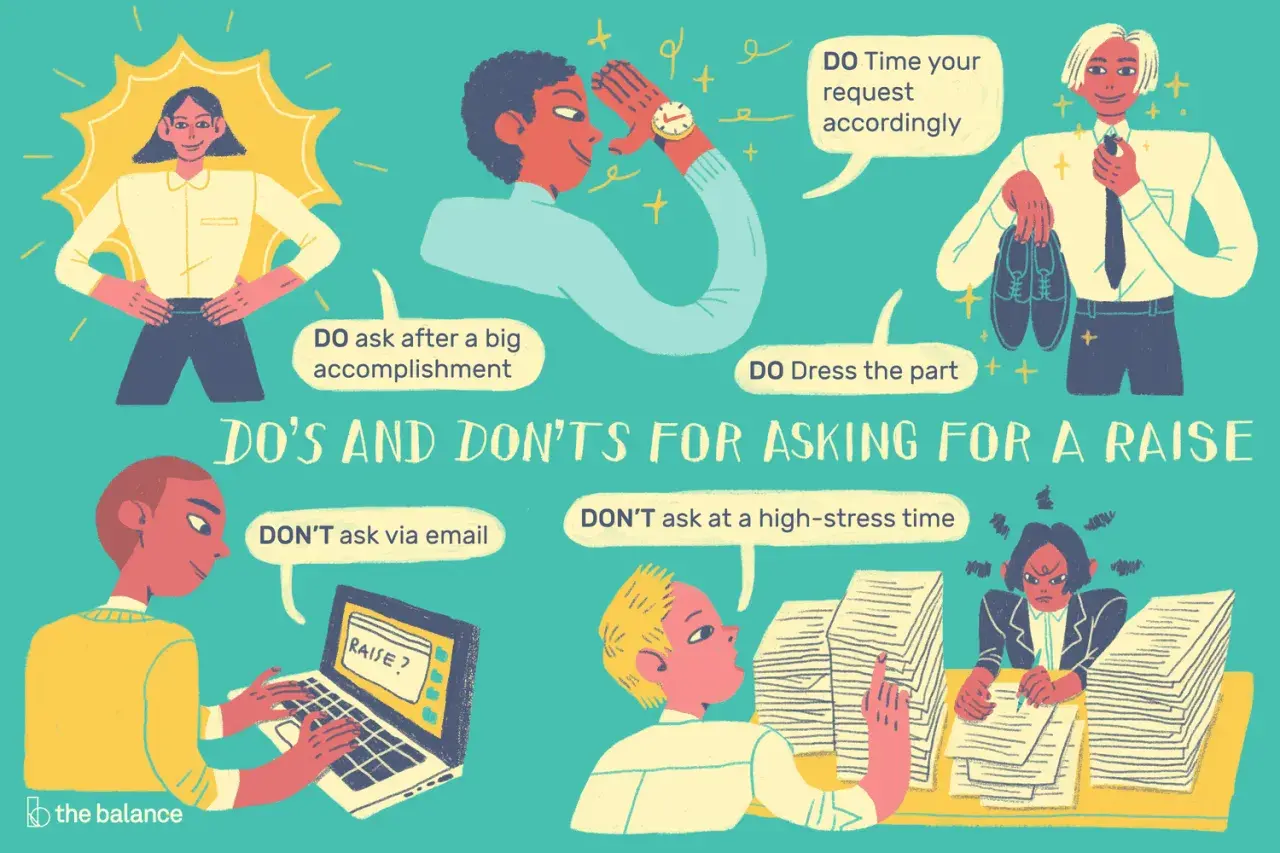
Knowing how to negotiate a raise is less about asking for more money and more about making a calm, evidence-based case for why your compensation should change. The strongest conversations connect your results, the market value of your role, and a clear next step for the company. In this guide, I’ll cover preparation, timing, wording, fallback options, and the mistakes that quietly weaken an otherwise solid ask.
Three things that make a raise request easier to approve
- Proof of impact matters more than general effort. Bring measurable results, expanded responsibilities, or saved time and money.
- Timing can change the outcome. The best moment is usually after a clear win, before budget decisions close, or during a scheduled review.
- A specific ask keeps the conversation grounded. Know your target, your minimum acceptable number, and what you will trade for if base pay cannot move.
- Backup options matter. If salary is frozen, negotiate bonus, title, PTO, flexibility, learning budget, or a written review date.
- Tone matters too. Direct, professional language works better than apologizing, hinting, or sounding defensive.
What your manager needs to hear before approving more pay
Most managers do not approve a raise because someone “feels underpaid.” They approve it when they can justify the increase to their own leadership, their budget, or their compensation framework. That means your request has to answer three questions fast: What changed, why does it matter, and why now?
I like to frame the conversation around business value, not personal frustration. If your role has expanded, if you are consistently delivering above scope, or if the market rate for your work has moved, say so plainly. If those things are not true yet, the request is harder to win and you may need to wait, build a stronger case, or negotiate a different form of compensation instead. Once you see the conversation through your manager’s lens, the next step is collecting the right proof.
Build your case with evidence, not frustration
Before you ask, gather evidence that shows your work has created value. I usually recommend bringing three to five concrete proof points, because more than that often turns into a long speech and less than that can feel thin.
- Results - revenue influenced, costs reduced, deadlines met, errors prevented, process time saved, or customer satisfaction improved.
- Scope changes - new responsibilities, mentoring, cross-functional work, emergency coverage, or ownership of a project no one expected you to absorb.
- Market context - current U.S. salary ranges for similar roles, especially if your title has shifted or your company recently expanded the role.
- Internal evidence - praise from clients, performance reviews, promotion feedback, or repeated requests to take on higher-level work.
- Your floor and target - know the lowest number you would accept and the number you will ask for first. Glassdoor’s advice to set a floor is practical here; without one, you can negotiate yourself into a vague maybe.
If you want a simple rule, use this: do not walk into the conversation with a story alone. Walk in with a story plus numbers, examples, and a clear ask. That preparation also makes the timing decision much easier.
Choose the right moment and meeting format
Raise conversations work better when they are planned, not squeezed in between other topics. Ask for a dedicated meeting so your manager has time to prepare and you have time to present your case without interruption. I would usually request it one to two weeks in advance, especially if the discussion depends on budget or a review cycle.
The best timing is often tied to one of these moments:
- After a completed project with visible results.
- After a performance review or promotion-related conversation.
- When your responsibilities have expanded in a way that no longer matches your current pay.
- Before the company finalizes merit or compensation planning.
- After a manager has seen a recent win that is easy to connect to your work.
The worst moments are usually the obvious ones: during layoffs, right after bad financial news, when your manager is underwater, or when you have been in the role only a short time and have not yet built a track record. The exception is when your scope changed abruptly and materially. Otherwise, timing is leverage, and leverage matters before you even say the number.

Use a script that sounds firm, not emotional
You do not need a dramatic speech. In fact, the cleaner the script, the better. I prefer a structure that is short, specific, and easy for the other person to repeat to their own stakeholders if needed.
Sample script: “I’d like to revisit my compensation based on the impact I’ve delivered over the last few months, the additional scope I’ve taken on, and current market data for this role. Based on that, I’d like to discuss adjusting my base salary to $X.”
Then stop. Let the silence do some work. People often weaken their own ask by overexplaining, apologizing, or filling the air with nervous detail. A stronger version sounds like a business case, not a confession.
If you expect pushback, prepare one follow-up sentence for each common objection. For example: “I understand budgets are tight. If base salary cannot move now, I’d like to discuss what can be revisited and by when.” That keeps the conversation open instead of ending it on a hard no.
When base pay is capped, negotiate the full package
A no on base salary is not always a no on compensation. If your manager cannot move your salary today, negotiate the elements that still have value. I’ve seen people get more out of a raise conversation by asking for the right mix of timing, cash, and flexibility than by forcing a single base-pay number.
| What to ask for | When it makes sense | Why it helps | Watch out for |
|---|---|---|---|
| Written salary review in 6 months | Budget is frozen or the manager needs more evidence | Creates a real checkpoint instead of a vague promise | Make sure success criteria are specific |
| Spot bonus or retention bonus | You just delivered a major project or are covering urgent work | Creates immediate upside without changing base pay | One-time cash does not replace long-term salary growth |
| Title or scope adjustment | Your responsibilities have clearly outgrown the current role | Can set up a stronger raise later | Do not accept a bigger title with no path to pay |
| Extra PTO | You value time more than a small cash difference | Easy to understand and often easier to approve | Confirm that the policy is written down |
| Learning budget | You need certification, training, or conference access | Supports growth and future bargaining power | Ask for a usable amount, such as $2,000 to $5,000 |
| Flexible schedule or remote arrangement | Your role can be done well with more autonomy | Improves quality of life without waiting for payroll changes | Be precise about expectations, not just preferences |
SHRM has noted that the biggest pay jumps often come from changing employers, which is useful context if your current company has a hard ceiling. Still, many people want to stay where they are, and in that case the smartest move is to negotiate the most valuable package available now, then set a concrete review date.
Common mistakes that quietly weaken the conversation
Most raise requests fail for predictable reasons. The good news is that most of those errors are fixable before you ever get in the room.
- Leading with personal need alone - rent, inflation, and life costs are real, but they are not enough on their own.
- Asking without a number - “Can you do something?” puts the burden on your manager to make the case for you.
- Comparing yourself to a coworker - that usually turns the conversation into a fairness debate with no clean outcome.
- Sounding apologetic - if you do not sound convinced, it is harder for someone else to be convinced.
- Threatening to leave unless you mean it - bluffing creates distrust, and trust is part of your leverage.
- Ignoring next steps - if there is no follow-up plan, the conversation fades and nothing changes.
Those mistakes matter because they shift the discussion away from evidence and toward emotion, uncertainty, or discomfort. Once you remove them, the conversation becomes much easier to navigate.
How to keep the conversation fair and inclusive
There is also a workplace-culture side to this that people do not talk about enough. Raise conversations often reward whoever is most comfortable self-promoting, not necessarily whoever is doing the strongest work. Inclusive leaders know that, so they make compensation decisions more transparent, more structured, and less dependent on a single loud voice in the room.
If you are advocating for yourself, anchor your case in measurable criteria rather than personality. If you manage people, use the same standards across the team: clear performance expectations, documented scope changes, and regular review points. That reduces bias and gives quieter employees, caregivers, and people from underrepresented groups a more usable path to fair pay.
- Ask what specific results would justify a raise if the answer is not yes today.
- Request written criteria for promotion or salary bands when possible.
- Keep your examples tied to outcomes, not style or charisma.
- Make sure the review process is consistent, not dependent on who happens to push hardest.
That matters if you want compensation decisions to reflect contribution rather than just confidence. The final piece is making sure the meeting ends with something you can actually act on.
Turn the meeting into a follow-up plan you can actually use
The conversation is not finished when the meeting ends. A good next step is to send a brief recap within 24 hours: what you asked for, what was discussed, what was agreed, and when you will revisit it. If your manager said yes, confirm the effective date. If they said not yet, confirm the criteria that would change the answer.
- Write down the exact number or package you asked for.
- Capture the reason for the decision in plain language.
- Set a calendar reminder for the follow-up date.
- Track the metrics that support your next conversation.
That is the part people miss most often. A raise request should not be a one-time emotional event; it should become a documented path to a better-compensated role. If you leave with clarity, evidence, and a date on the calendar, you have turned a difficult conversation into a workable plan.
