
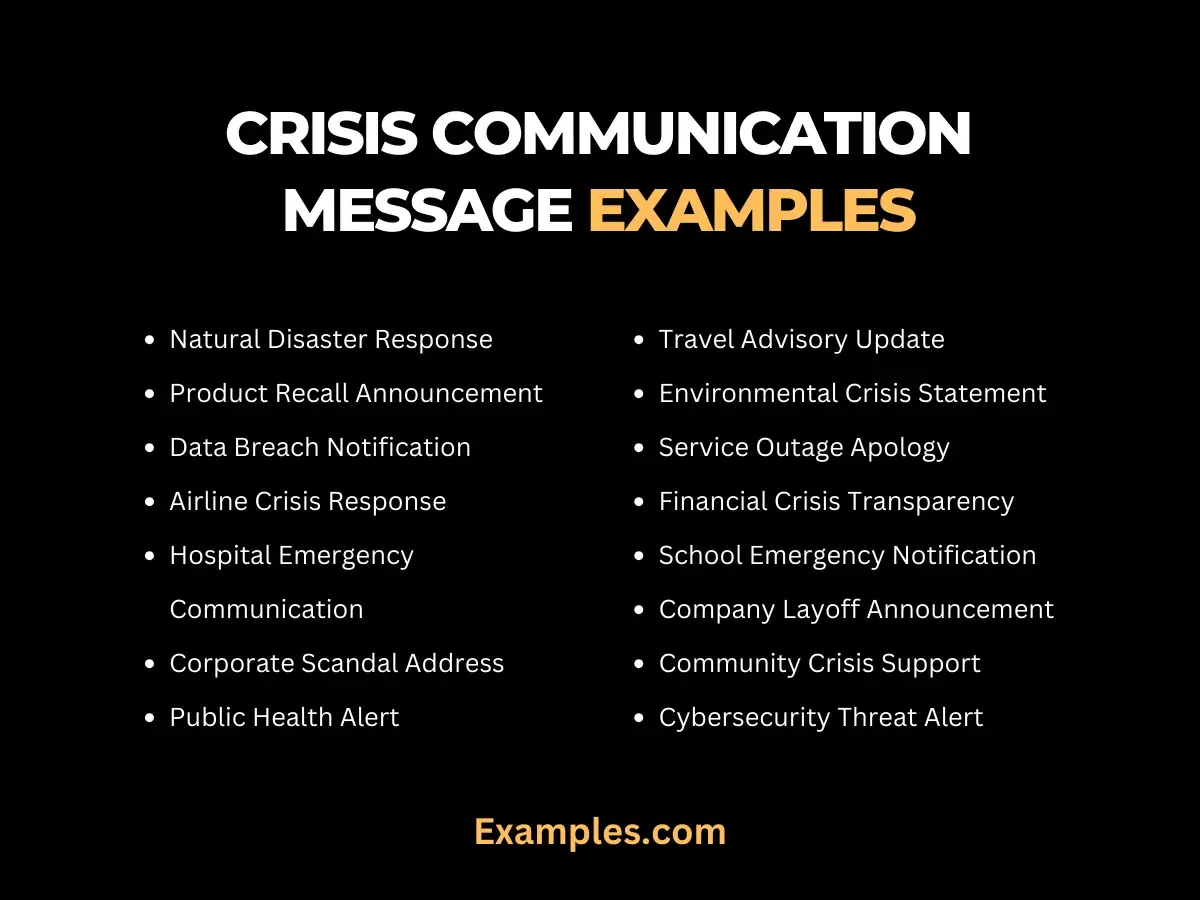
What effective emergency communication must do in the first hour
- Lead with verified facts and say clearly what is still unknown.
- Give one immediate action, not a long explanation.
- Use more than one channel so a single outage does not block the response.
- Keep language plain, direct, and free of jargon.
- Build in multilingual and accessibility support from the start.
- Assign one owner for approval and one backup for speed.
What crisis communication really means in an emergency
I treat this as an operational function, not a branding exercise. The job is to move trustworthy information quickly enough that people can act before rumor, fear, or delay does the damage for you. The CDC's CERC framework is useful because it keeps speed, accuracy, empathy, and action in the same lane instead of treating them as separate priorities.
In practice, that means every message should answer four questions: what happened, who is affected, what should people do now, and when will the next update arrive? If one of those pieces is missing, people fill the gap themselves, and that is where confusion starts.
Once the purpose is clear, the next step is to shape the first message so it actually helps.
The first message should answer three questions
I like to build the first alert around a simple rule: say what is known, say what to do, and say when to expect the next update. That is enough to start a coordinated response without pretending you know more than you do.
- State the facts. Keep this short and concrete. Name the incident, the location, the time frame, and any immediate impact.
- Give one clear action. Tell people to evacuate, shelter in place, stop using a system, avoid an area, or wait for further instruction. If you ask for three actions at once, the message weakens.
- Set the update rhythm. People handle uncertainty better when they know when the next message is coming. A specific window is more useful than a vague promise to share more later.
A holding statement is not a sign of weakness. It is a disciplined way to buy time while facts are verified. I would rather see a clean, brief alert in the first minutes than a polished paragraph that arrives after people have already guessed wrong.
That only works, though, if the message reaches people through channels they can still access when pressure rises.

Choose channels that still work when systems are strained
I prefer a two-layer setup: one channel for the immediate alert and one stable location that holds the living record. The alert needs to be short and hard to miss; the record can carry the full details, updates, and instructions.
| Channel | Best for | Strength | Limit |
|---|---|---|---|
| Text alert | Immediate safety instructions | Fast, direct, easy to skim | Very limited space and device dependency |
| Follow-up detail and documentation | Good for longer explanations and attachments | Slower and easier to ignore under stress | |
| Intranet or app page | Source-of-truth updates | Can hold the full timeline and links | Only useful if people can reach it |
| Voice call or hotline | Critical staff who need direct confirmation | Useful when people cannot check text or email | Hard to scale quickly |
| Social or public page | External audiences and broad notice | Wide reach and quick visibility | Public noise and less control over context |
| Manager cascade | Frontline team alignment | Trusted relay from a familiar leader | Consistency varies if managers are not trained |
The weak point in most emergency setups is not the channel list; it is the assumption that one channel will cover everyone. I would not rely on a single inbox, a single app, or a single spokesperson. If a channel cannot be updated quickly, it should not be the only place people are told to look.
Channel choice also matters because accessibility is not an afterthought in a real emergency.
Make the message accessible, multilingual, and culturally clear
A message can be technically correct and still fail if it is hard to read, hard to hear, or hard to understand. The California Governor's Office of Emergency Services is blunt about the basics here: plain language, multilingual formats, high contrast, large text, and captions are part of usable emergency information, not decorative extras.
- Use short sentences and one action per sentence.
- Replace acronyms, idioms, sarcasm, and local shorthand with plain words.
- Translate into the languages your workforce actually uses, not the languages you assume it uses.
- Add captions, transcripts, and visual alternatives when video or live audio is involved.
- Design for mobile screens, screen readers, and low-bandwidth conditions.
- Test messages with people outside the communications team, especially frontline staff.
I think this is where inclusive workplace culture becomes very practical. In an emergency, accessibility is not a nice-to-have policy layer; it is the difference between informing the whole workforce and informing only the people who already have the easiest access to information.
Once the message is understandable, the next risk is organizational: who gets to send it, and who is responsible if the facts change?
Decide who speaks, who checks facts, and who pushes send
In a fast-moving event, ownership has to be visible. I prefer one communication lead, one operational lead, and a small group of approvers who know their role before the incident starts. If everyone can comment, no one really owns the release.
| Role | Primary job | Backup rule |
|---|---|---|
| Incident lead | Decides whether the event is a safety, operational, or reputational issue | Names the escalation level and the next decision point |
| Communication lead | Drafts the message, selects channels, and sequences updates | Keeps a ready-to-use template library |
| Subject matter expert | Verifies technical, medical, legal, or facilities details | Stays available for quick fact checks |
| Legal or HR reviewer | Checks sensitive employee, privacy, or compliance language | Uses pre-approved wording where possible |
| Local managers | Relay instructions to teams and collect field feedback | Use the same message, not a rewritten version |
I also like a simple timing rule: life-safety updates should not sit in approval for more than 10 minutes if the facts are already stable enough to release. That does not mean publishing sloppy information; it means building a process that matches the speed of the event instead of the speed of committee thinking. A message log, a backup approver, and pre-written templates make that much easier to achieve.
After the incident, the real work is making the next response less improvisational than the last one.
What to keep ready before the next alert arrives
The strongest response plans look boring on paper because they are already assembled. That is the point. The people who move well in a crisis are usually the people who prepared the unglamorous parts in advance.
- A one-page message bank for evacuation, shelter-in-place, outage, closure, and rumor-control scenarios.
- A contact tree with primary and backup numbers reviewed every 90 days.
- Quarterly tabletop exercises for leadership, communications, HR, facilities, and IT.
- One full-scale drill each year that tests translation, captions, and mobile delivery.
- An after-action review within 72 hours, with named owners and due dates for fixes.
- Basic metrics such as time to first alert, reach by channel, and time to correction when a false claim appears.
In my experience, the best emergency messaging systems are not the loudest; they are the ones people can understand, trust, and act on without delay. If your team can get the facts out quickly, route them through redundant channels, and make them usable for everyone, you already have the foundation for calmer decisions when the pressure rises.
