
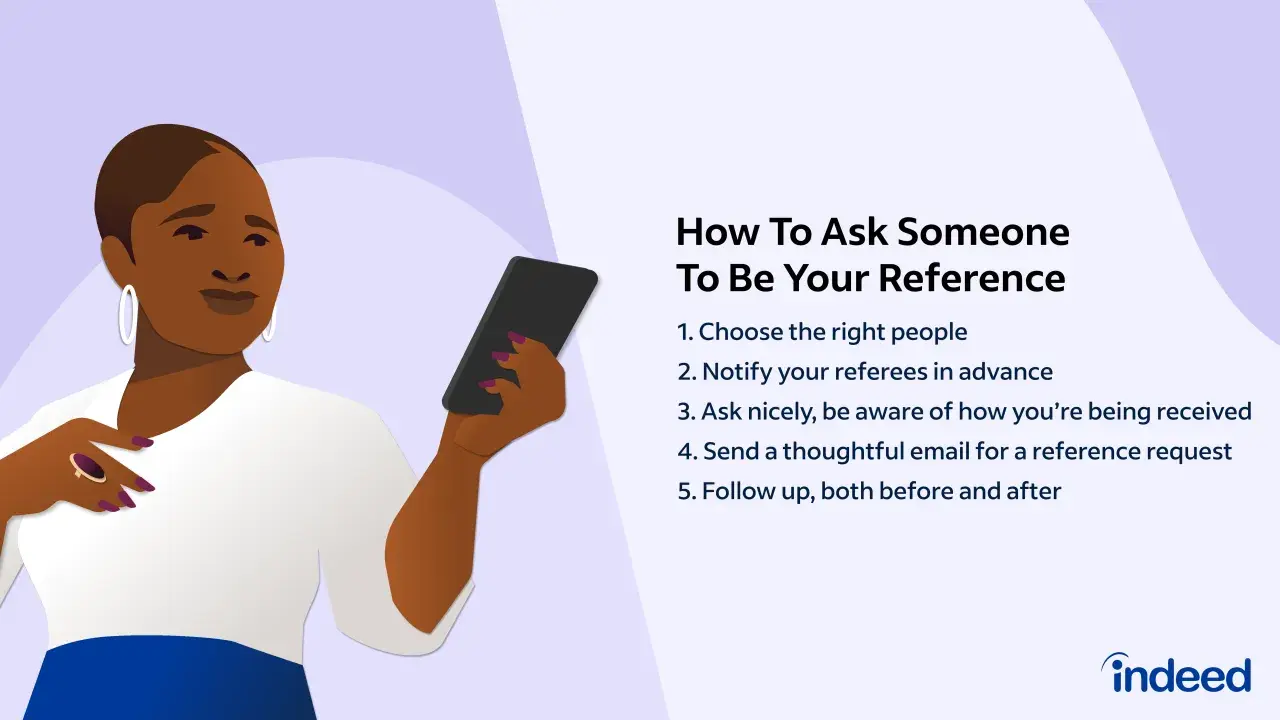
Asking for a reference is easier when the request is specific, respectful, and backed by the right context. If you are working out how to ask for a reference, the details matter more than a perfect script: who you ask, when you ask, and what you send with the request. In my experience, those three choices determine whether the answer is a confident yes or a polite delay.
The safest way to ask is specific, polite, and easy to answer
- Choose someone who saw your work directly and can speak to results, not just personality.
- Give at least 2 weeks’ notice; 3 to 4 weeks is better for a written recommendation.
- Say exactly what you need: a phone reference, an email reference, or a formal letter.
- Share the role, deadline, and 3 to 5 points you want emphasized.
- Make it easy to decline without pressure if the timing or fit is not right.
What a reference request is supposed to do
I usually separate the ask into two decisions: who can credibly speak about your work, and what kind of support you need from them. In U.S. hiring, a reference is often a person who can answer questions about your performance, while a recommendation letter is a written endorsement for a job, fellowship, or academic program. That distinction matters because a good manager might be willing to take a short call but not have time to write a long letter.
The purpose is not to collect compliments. It is to give a hiring manager, recruiter, or admissions team a reliable third-party view of your skills, judgment, and reliability. That is why the strongest requests are specific: they tell the other person what you are applying for and what part of your work history they can honestly support. Once that is clear, the next step is choosing the right person.
Who to ask and who to leave out
I prefer evidence over hierarchy. A senior leader who barely knows your work is usually a weaker reference than a manager, client, or collaborator who can name specific outcomes. In more inclusive workplaces, that rule matters even more, because the best reference is the person who actually saw your contribution, not the person with the most impressive title.
Good people to ask
- A direct manager or supervisor who observed your work closely.
- A project lead who can describe the results you delivered.
- A client, vendor, or external partner who depended on your reliability.
- A mentor, professor, or volunteer lead if you are early in your career.
- A cross-functional teammate who can speak to collaboration and follow-through.
Read Also: Am I Getting Fired? Spot Real Signs vs. Anxiety
People I would usually skip
- Someone who only knows you socially.
- A manager who barely interacted with your work.
- A senior contact who cannot name any of your actual contributions.
- Anyone who has already shown hesitation or discomfort about serving as a reference.
- A person you have not spoken to in years unless you have rebuilt the relationship first.
Once you know who belongs on the list, timing and channel decide whether the request feels considerate or rushed.
When and how to make the request
Harvard University guidance suggests giving recommenders 3 to 4 weeks when possible, and I think that is the right standard for a written letter. For a straightforward job-search reference, I treat 2 weeks as the minimum. Indeed’s career advice also emphasizes telling the person which role you are pursuing and what responsibilities matter most, because context helps them tailor the response.
| Channel | Best for | Why it works | Main drawback |
|---|---|---|---|
| A standard reference or recommendation request | Gives them time, a written record, and room to reply thoughtfully | Can be ignored if the message is vague or too long | |
| Phone or video call | A former manager or mentor with whom you already have a warm relationship | Feels personal and lets you answer questions immediately | Harder to use if they are busy or prefer written communication |
| In person | Someone you still work with or will see soon | Useful for sensitive asks and quick clarification | Can feel abrupt if you spring it on them without warning |
| LinkedIn DM or text | Only when that is the person’s normal channel | Low-friction and easy to read on mobile | Too casual for a detailed ask if the relationship is formal |
My rule is simple: choose the channel the person actually uses, not the one that feels easiest for you. If the ask is sensitive, a brief conversation followed by a written note is usually the most respectful path. With the channel chosen, the wording of the ask becomes the part that either lowers friction or creates it.

A message that makes saying yes easy
Email example: “Hi Jordan, I’m applying for a Client Success Manager role, and I thought of you because you led the rollout with me and saw how I handled the transition. Would you be comfortable serving as a reference? The deadline is April 12, and I can send the job description, my resume, and a short note on the projects I’d like you to mention. If now is not a good time, I completely understand.”
Short message version: “Would you be open to being a professional reference for a role I’m pursuing? I can send the details and make it easy.”
Those examples work because they do four things well: they say why you chose that person, what you need from them, when you need it, and how they can decline without awkwardness. That last part matters more than people think. A graceful exit keeps the relationship intact, which is especially important in workplaces that value trust and psychological safety.
- State the role or opportunity clearly.
- Explain why their perspective matters.
- Include the deadline up front.
- Offer to send the job description and supporting materials.
- Give them an easy out if the timing is bad.
A polished request is only half the job; the other half is giving them enough context to be useful.
What to send after they agree
Once someone says yes, I like to send a compact reference packet. Keep it lean. Too much material turns a helpful favor into homework, and most people will not digest a bulky file anyway.
| What to include | Why it helps |
|---|---|
| Job description or program details | Shows which skills, results, or traits matter most |
| Updated resume or profile | Refreshes dates, titles, and recent accomplishments |
| 3 to 5 accomplishments to highlight | Gives them concrete examples instead of vague talking points |
| Deadline and submission method | Prevents missed calls, forms, or upload windows |
| Preferred contact details | Makes it easier for a recruiter to reach the right person |
If the request is for a recommendation letter, include the exact prompt, portal instructions, and any word limit. I also suggest sending no more than a handful of talking points. Five strong bullets beat twelve weak ones every time. That keeps the burden manageable and makes the final reference sharper.
What to do if the answer is uncertain
Not every request gets an immediate yes, and that is not automatically a problem. A hesitant response is often useful information. It may mean the person is too busy, does not know your work well enough, or would rather not give a lukewarm reference. I would rather hear a cautious no than discover a weak endorsement later.
- If the person is a current manager, ask only if the relationship is stable and the risk is acceptable.
- If they sound unsure, ask whether they would prefer to be a backup contact instead of a primary reference.
- If they decline, thank them and move on without trying to persuade them.
- If they do not reply, send one polite follow-up after about 5 business days, then stop.
- If you suspect a weak reference, do not list that person at all.
For people with career gaps, nontraditional paths, or less linear experience, this step matters a lot. You are often better off asking someone who saw your actual output, even if that person is not the highest-ranking title in your network. The goal is a credible account of your work, not a ceremonial name on a list. Once you have that clarity, the last step is preserving the relationship after the ask.
Leave them with a story they can confidently tell
After someone agrees, send a thank-you the same day. If the process takes weeks, give them an update when you reach the interview stage or when the role closes. People remember being kept in the loop, and that small courtesy says a lot about how you operate.
I also recommend keeping a simple reference log: who agreed, how they know you, when you last spoke, and which roles they are best positioned to support. That habit saves time later and helps you avoid asking the same person for every opportunity. If you eventually land the job, let them know. A short note with the outcome turns a one-time favor into a long-term professional relationship.
The strongest reference request is the one that feels fair to the other person. When you give enough context, enough notice, and an easy way out, you usually get a better answer and protect the relationship for the next opportunity.
