
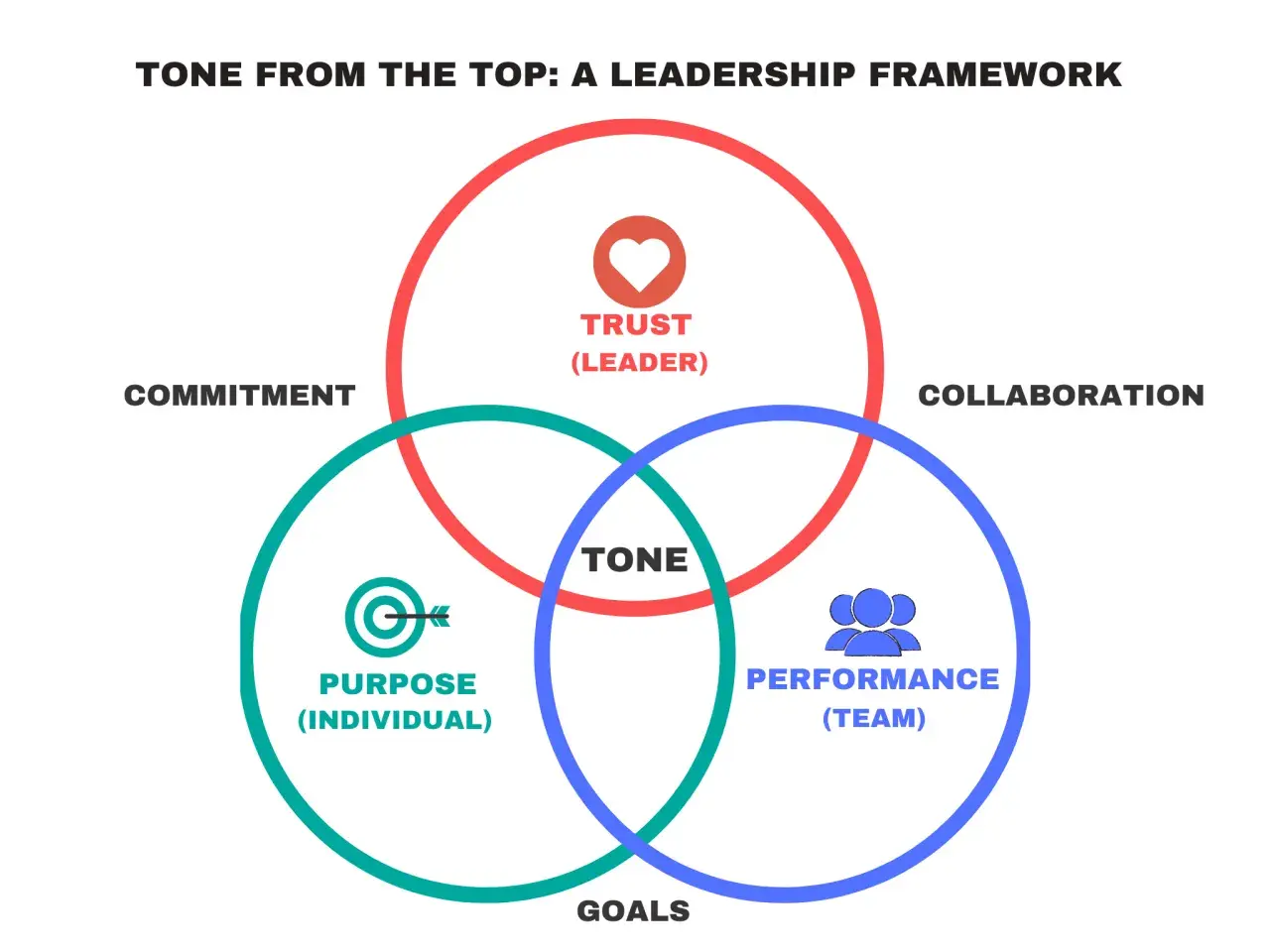
Senior leadership sets the standard long before any code of conduct is opened. When executives and managers behave with consistency, fairness, and restraint, people learn what is rewarded, what is tolerated, and what will quietly end a career. This article breaks down how that leadership signal shapes ethics, trust, and inclusion in U.S. workplaces, and what leaders can do to make it credible. That is the real meaning of tone at the top.
Senior behavior becomes the operating system for ethics, trust, and inclusion
- The concept is about visible conduct, not slogans or annual compliance training.
- Employees read what leaders reward, excuse, ignore, and repeat.
- It affects speak-up culture, retention, fairness, and the credibility of DEI commitments.
- The strongest version combines clear standards, consistent decisions, and fast follow-through when something goes wrong.
- Weak leadership signals often show up first in promotions, meeting behavior, and how mistakes are handled.
What the phrase means in practice
A healthy tone at the top is not a poster on the wall or a values statement no one uses. It is the daily pattern of decisions senior leaders make when there is a tradeoff between speed, profit, comfort, and doing what is right. The OECD frames integrity leadership as both behavior and resource allocation, which is the right lens: leaders do not just describe values, they decide which values get budget, time, and attention.That is why the phrase matters in leadership conversations. It points to the difference between a company that talks about ethics and a company that makes ethics visible in hiring, promotions, feedback, and accountability. Once you see it this way, the rest of the topic becomes much more concrete. The question is no longer whether leadership cares, but what employees actually observe when pressure rises.
Why it changes trust, performance, and risk
People rarely copy policy language; they copy the pattern they see. If a senior leader praises teamwork but rewards lone-hero behavior, the organization learns the real rule. If a manager says speak up but punishes bad news, people stop reporting early warning signs. That is how trust, retention, and risk all move together.
In the U.S., that connection is not abstract. The EEOC treats leadership, accountability, and complaint systems as essential to preventing harassment, which tells you something important about culture: it is not separate from compliance, it is part of it. When employees believe leaders will respond fairly, they are more likely to raise concerns early, stay engaged, and extend the benefit of the doubt when mistakes happen.
For inclusive workplaces, the effect is even broader. Employees from underrepresented groups watch closely for consistency in voice, access, and advancement. If the message from the top is inclusive but the outcomes look biased, people do not hear the message for long. They notice the gap first. That is why the quality of leadership behavior is not just an HR issue; it is a business risk and a culture issue at the same time.

Behaviors people notice before they believe the message
If I had to reduce this to one rule, it would be simple: employees judge leadership by repeated behavior under pressure. The moments that matter most are usually small - a credit given in a meeting, a complaint handled without defensiveness, a promotion decision explained clearly, or a mistake admitted without blame shifting.
| Leadership move | What employees infer | Why it matters |
|---|---|---|
| Admitting a mistake publicly | Accountability applies to everyone | Reduces cynicism and makes learning safer |
| Responding quickly to bias or harassment concerns | Inclusion is real, not symbolic | Improves trust in reporting channels |
| Explaining pay, promotion, or staffing decisions | Fairness can be inspected | Lowers rumor, resentment, and hidden attrition |
| Listening across levels, not just to favorites | Frontline experience counts | Surfaces blind spots before they become problems |
| Sharing credit and decision context | Collaboration is rewarded | Prevents a hero culture that sidelines others |
In 2026, hybrid work makes those signals even louder, because many employees see leaders through a handful of meetings, written updates, and decisions rather than constant face time. That means the moments that carry the most weight are often the least dramatic. Once those behaviors are visible, the next challenge is avoiding the mistakes that quietly weaken them.
Where leadership credibility usually breaks down
I see four failures over and over. First, leaders say ethics matters but only promote the fastest producers. Second, they tolerate one star performer who violates the rules, which teaches everyone that status buys exceptions. Third, they make inclusion a campaign instead of a management habit. Fourth, they ask people to speak up and then delay or soften responses when problems surface.
- Mixed incentives reward the wrong behavior, especially when bonuses or praise ignore how results were achieved.
- Selective enforcement makes rules feel optional for senior people and mandatory for everyone else.
- Performative listening creates surveys, listening tours, or town halls without visible follow-through.
- Silence on hard topics leaves bias, conflict, and misconduct to spread in private conversations.
The biggest problem with these failures is that they are cumulative. One exception can be explained away; a pattern becomes culture. Once people notice that the stated standard is negotiable, the real standard becomes whatever senior people get away with. That is why a practical system matters more than a polished speech.
How to make the standard real in a U.S. workplace
When I work with this topic, I usually recommend starting with a few non-negotiables rather than a long ethics program that nobody remembers. The goal is to make leadership expectations observable in hiring, performance management, and day-to-day decisions.
- Define three to five non-negotiable behaviors, such as respectful challenge, transparent decisions, and timely follow-through.
- Put those behaviors into manager scorecards, promotion reviews, and succession planning so values affect advancement.
- Give employees safe ways to speak up, then close the loop quickly so they can see that reporting leads somewhere.
- Review high-stakes decisions for fairness, especially pay, promotion, stretch assignments, and disciplinary actions.
- Train managers on how to handle conflict, bias, and mistakes without defensiveness or delay.
- Measure more than completion rates; look at complaints, retention, internal mobility, and whether underrepresented employees advance at the same pace.
Inclusion works best when it is treated as operational discipline, not as a slogan. If senior leaders model fairness, take concerns seriously, and make room for dissent, middle managers have permission to do the same. If they do not, every training deck in the world will feel cosmetic.
What to protect when the pressure rises
The best test of leadership is not the easy quarter; it is the messy one. When revenue slips, restructuring starts, or an incident lands in your inbox, people watch whether leaders stay consistent on respect, honesty, and fairness. If the answer is yes, the culture gets stronger. If the answer is no, the gap between stated values and lived reality becomes impossible to ignore.
So I would treat leadership behavior as the operating system: small signals, repeated often, that determine what the organization actually runs on. Protect those signals, and the rest of the culture has a chance to hold. Ignore them, and even the best policy language will eventually sound thin.
