
Leadership styles matter because teams rarely need the same behavior twice. A person guiding a crisis, a new strategy, a morale problem, and a growth conversation should not lead in the same way. This article breaks down the six common approaches, shows when each one is useful, and explains how inclusive leaders adapt without losing accountability or clarity.
The six styles work best as a range, not a label
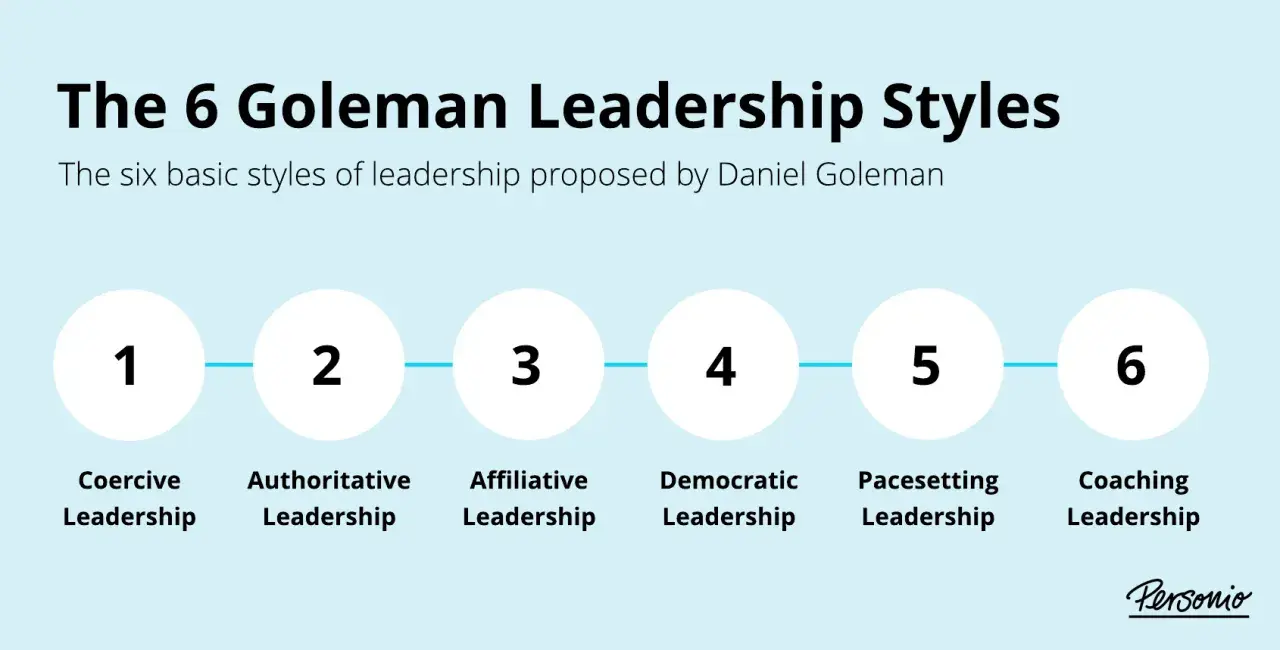
- The framework most readers mean here is Daniel Goleman’s model: coercive, authoritative, affiliative, democratic, pacesetting, and coaching.
- Each style solves a different problem, from urgent control to long-term development.
- Overusing any one style creates predictable damage, especially in trust, voice, and morale.
- Inclusive leadership is not a seventh style; it is the discipline that keeps the other six fair and effective.
- The best leaders switch styles deliberately instead of treating one approach as their personality.

How the six styles compare in practice
The easiest way to understand this framework is to compare each style by the problem it solves, not by the personality it suggests. The model popularized by Daniel Goleman in Harvard Business Review is useful precisely because it avoids the fantasy that one leadership behavior fits every situation.
| Style | Best when | Main upside | Main risk |
|---|---|---|---|
| Coercive | A crisis needs immediate compliance | Fast control and clear direction | Silences input and erodes trust |
| Authoritative | People need direction and a shared vision | Creates momentum and purpose | Can become one-way messaging |
| Affiliative | Trust, morale, or belonging need repair | Strengthens relationships and loyalty | Avoids hard performance calls |
| Democratic | The team has expertise and buy-in matters | Improves decision quality and commitment | Can slow action or dilute ownership |
| Pacesetting | The team is strong and the deadline is tight | Raises standards quickly | Creates pressure, burnout, and fear of mistakes |
| Coaching | Growth and capability matter most | Builds future performance | Takes time and patience |
Coercive leadership is a tool for emergencies
I reserve coercive leadership for moments when delay creates real harm: a safety incident, a major compliance failure, or a situation where one decision must be made immediately. In that narrow window, the leader gives clear direction, closes the debate, and protects the team from confusion.
The trouble starts when emergency mode becomes the default. People stop volunteering ideas, they wait for permission, and the culture gets quieter in exactly the wrong way. In a diverse team, that silence is especially expensive because it chips away at psychological safety, meaning people no longer feel safe to raise problems before they get worse.
Used sparingly, this style can restore order. Used often, it teaches the team that speed matters more than judgment, which is the opposite of a healthy culture. That makes the next style, which gives direction without constant control, far more useful in everyday leadership.
Authoritative leadership works when people need a clear direction
Authoritative leadership is not authoritarian leadership. Authoritative leaders set a vision, explain the destination, and then give people room to move toward it. This is the style I reach for when a team knows it has to change but does not yet agree on what the change should look like in practice.
It is especially effective during reorganizations, new strategy rollouts, and moments when people are busy but unaligned. The best version sounds like, “Here is where we are going, here is why it matters, and here is the space you have to solve the details.” The worst version turns into speeches without follow-through.
This style builds energy because it connects daily work to something bigger. That said, if the leader never checks whether the vision makes sense to the people doing the work, it stops feeling inspiring and starts feeling remote. When direction is clear but trust is frayed, relationship-centered leadership becomes the next tool.
Affiliative leadership repairs trust and strengthens belonging
Affiliative leadership puts relationships first. I use it when morale is low, conflict has left residue, or a team needs to feel seen before it can be asked to move faster. Recognition, empathy, and genuine listening matter more here than speed.
This style is underrated in workplaces that obsess over output and forget that people produce better work when they feel respected. It is also one of the most useful approaches after layoffs, a difficult merger, or a period of public pressure, because it gives people enough emotional stability to re-engage.
The risk is obvious: if harmony becomes the goal, underperformance gets politely ignored. A healthy version of affiliative leadership supports people without lowering the bar. Once the team is steadier, the next question is how to involve people in the actual decisions.
Democratic leadership improves decisions when the team has real expertise
Democratic leadership is about participation, not indecision. When the people closest to the work have good information, bringing them into the decision usually improves both the quality of the decision and the level of commitment afterward. That is why this style is valuable in product teams, project groups, and cross-functional work where no single manager sees the whole picture.
The culture benefit is real: people are more likely to support what they helped shape. But the leader still has to own the final call. Otherwise the team gets the worst of both worlds: long meetings, vague ownership, and the illusion of consensus.
For inclusive teams, this style only works if participation is structured. If the loudest voices dominate the room, the process is democratic in name only. When the work is already in motion and the bar is high, leaders sometimes reach for more speed.
Pacesetting leadership can raise the bar fast, but it burns hot
Pacesetting leadership is the style of high standards, strong personal example, and rapid delivery. In the right setting, it can be effective with a skilled team that already knows the work and needs a short burst of intensity. If I am leading a launch week, a turnaround sprint, or a situation with a hard deadline and a mature team, I may use pacesetting behavior carefully.
The problem is that pacesetting is easy to admire and easy to overdo. Leaders can mistake relentless speed for excellence, and teams can start hiding mistakes instead of learning from them. In the long run, that creates anxiety, not performance.
This style is also the one most likely to sideline people who need context, coaching, or a different working rhythm. High standards matter, but high standards without support become a stress test, not leadership. When you want performance that lasts, though, the next style matters more.
Coaching leadership builds the team you want next quarter
Coaching leadership is the most future-oriented of the six. It focuses on growth: feedback, stretch assignments, skill building, and honest conversations about what someone can do next. I rely on it when the goal is not just to finish the work, but to make the team stronger after the work is done.That makes coaching especially important in inclusive workplaces. When development is offered consistently, not only to people who already look polished or senior, it helps close opportunity gaps and creates a healthier internal pipeline of talent. It also signals that potential is something leaders develop, not something they merely notice in people who remind them of themselves.
The catch is time. Coaching is slower than directing, and it is not the right move when a decision has to be made in minutes. Still, if you want durable performance, this is the style that compounds. Knowing when to use it is what keeps the rest of the framework honest.
How I choose the right style in a real situation
When I am deciding how to lead, I usually ask four questions: How urgent is this? How much expertise is already in the room? Do we need speed or buy-in? Are we solving a problem today or building capability for later?
- If the risk is immediate, start with more directive behavior.
- If the team needs direction, use a vision-first approach.
- If trust is broken, repair the relationship before pushing for more output.
- If the group is experienced and the issue is complex, invite participation.
- If the work is repetitive but quality is everything, use pacesetting in short bursts.
- If the goal is growth, shift into coaching early.
What inclusive leadership changes in the framework
Inclusive leadership does not replace the six styles. It changes how they are delivered. It means checking whose voice is missing, whether the pace leaves room for reflection, and whether your feedback style invites learning instead of fear. Research on inclusive leadership consistently points to habits such as curiosity, collaboration, courage, commitment, cultural intelligence, and awareness of bias as the behaviors that keep leadership fair and effective.That matters because style without inclusion can become a blind spot. A democratic leader who only listens to the most confident voices is not truly democratic. A coaching leader who only invests in people already marked as high potential is not really developing a broad team. Even a strong authoritative style can lose legitimacy if people feel the vision was handed down instead of built with them.
In practice, inclusive leadership makes the framework more humane and more useful. It turns leadership from a personal preference into a deliberate way of creating trust, access, and accountability at the same time. Once that lens is in place, the framework becomes much more practical.
The range I would build first
If I had to coach a manager who wanted to become more effective quickly, I would focus on three habits: state the outcome clearly, match the style to the real problem, and revisit the approach once the team is stable again. Those three habits prevent most of the damage caused by overusing a favorite style.
- Clarity keeps coercive behavior from becoming chaos.
- Vision keeps authoritative leadership from becoming vague inspiration.
- Trust keeps affiliative leadership from becoming avoidance.
- Structure keeps democratic leadership from becoming drift.
- Standards keep pacesetting from becoming burnout.
- Development keeps coaching from becoming a luxury only some people receive.
That is the practical value of the framework: it gives you language for choosing with intent. Once leaders can do that, teams usually get more of what they actually need, not just more of what the manager naturally prefers.
