
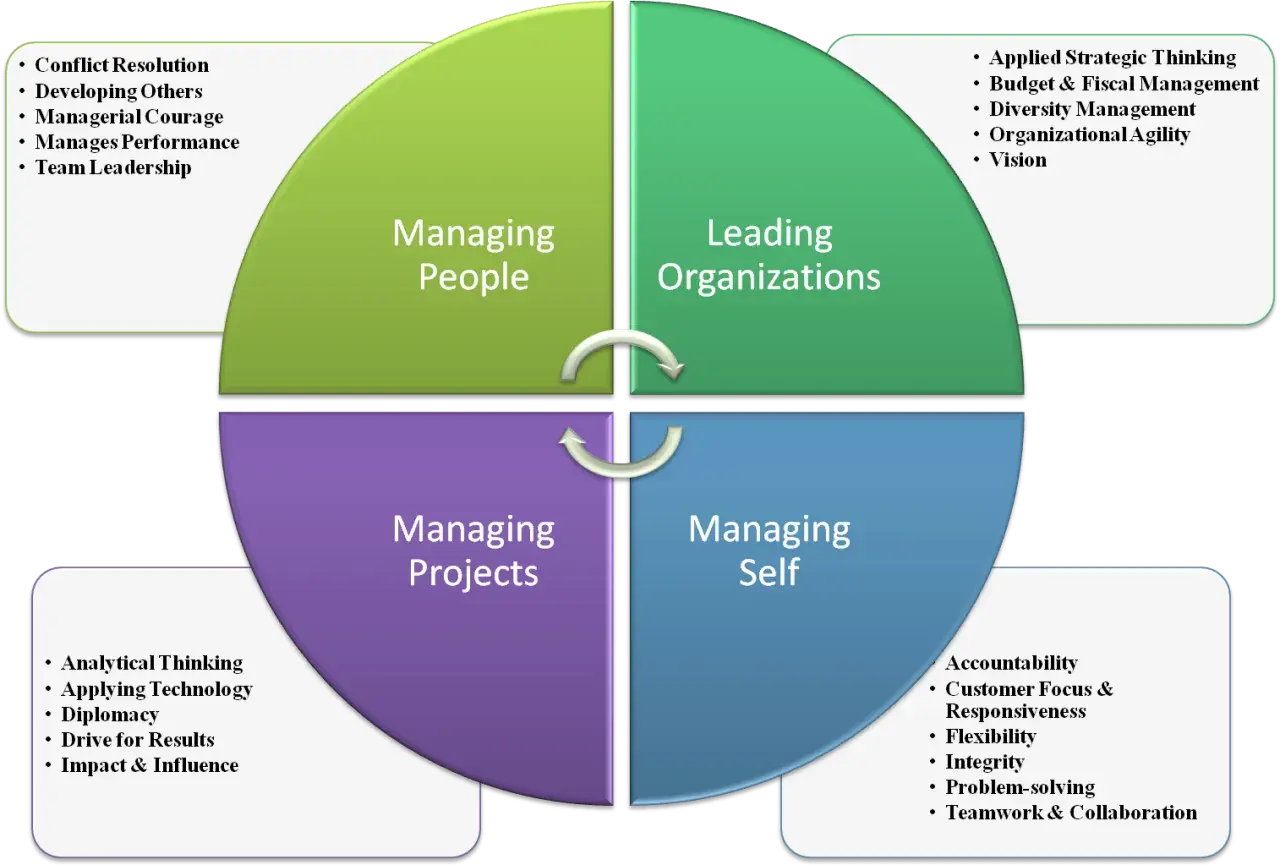
Leadership and management are often discussed as if one should replace the other, but that framing is too simple. In practice, the difference between leadership vs management is less about job titles and more about the problem each person is trying to solve: direction, alignment, execution, and trust. In 2026, with hybrid work, constant change, and higher expectations for inclusion, that distinction matters because teams need both a clear destination and a dependable way to get there.
The short version is that leadership creates direction and management creates reliability
- Leadership answers where the team is going and why it matters.
- Management answers how the work gets done consistently, on time, and with fewer surprises.
- The two functions overlap, but they are not the same skill set.
- Inclusive workplaces need both vision and disciplined execution to feel fair and effective.
- The right approach depends on whether the real problem is clarity, coordination, or commitment.

The two roles solve different problems
I usually separate leadership and management with a simple test: leadership sets direction, management creates conditions for delivery. A leader is trying to move people toward a better future state. A manager is trying to make today’s work repeatable, visible, and under control. Both matter, but they matter for different reasons.
The cleanest way to see the difference is in the kind of questions each role asks. Here is the comparison I use most often when I coach teams:
| Dimension | Leadership | Management |
|---|---|---|
| Core question | Where are we going, and why should people care? | How do we get there without chaos? |
| Time horizon | Forward-looking and change oriented | Present-focused and execution oriented |
| Main output | Vision, alignment, momentum, confidence | Plans, processes, consistency, accountability |
| Primary tools | Storytelling, influence, prioritization, trust | Scheduling, metrics, coordination, follow-up |
| Typical failure mode | Big ideas with no traction | Efficient activity with no direction |
| What success looks like | People understand the purpose and move together | Work gets done predictably and fairly |
That distinction is useful because it stops us from pretending that inspiration alone will ship a project or that process alone will build commitment. I think of leadership as the force that helps people choose a destination, and management as the discipline that helps them arrive there intact. The next question is what happens when organizations blur those two jobs in real teams.
Why the distinction matters in real teams
In U.S. workplaces, I see the confusion most often in middle management. Someone is promoted because they know the work, then expected to motivate people, handle conflict, protect quality, report upward, and keep the schedule intact. That is a lot to ask from one person if the organization has never taught them how to lead as well as manage.
When the roles blur in the wrong way, three problems show up quickly:
- Teams get motion without meaning. People stay busy, but they do not know what matters most, so effort scatters.
- Teams get meaning without structure. The vision sounds good, but deadlines slip and ownership stays fuzzy.
- Managers turn into firefighters. Instead of preventing issues, they spend their week reacting to them.
This is why a product launch, a reorganization, or a culture change can fail for completely different reasons. Sometimes the strategy is weak. Sometimes the execution system is weak. Sometimes both are weak, and the team is trying to cover that up with enthusiasm. Once you see that pattern, the next step is to ask how inclusive leadership keeps direction and execution connected instead of competing.

Inclusive leadership is where the old split starts to soften
McKinsey has made a useful point in its inclusion research: policies matter, but people experience inclusion through daily behavior, not slide decks. I see that play out constantly. A manager can have flawless reporting rhythms and still create a team where only the loudest voices shape decisions. That is management without inclusion, and it is much weaker than it looks on paper.
Deloitte’s inclusive leadership framework is practical because it turns inclusion into observable behavior. The six traits it highlights are commitment, courage, cognizance of bias, curiosity, cultural intelligence, and collaboration. In plain English, that means the leader does not just say inclusion matters; they notice who is missing from the room, ask better questions, and make room for different perspectives before the decision is already locked in.
Read Also: US Leadership Programs - Build Trust & Drive Strategy
What it looks like day to day
- Commitment means inclusion is treated as part of performance, not a side project.
- Courage means addressing exclusion directly, even when the conversation is uncomfortable.
- Cognizance of bias means checking whose ideas are being treated as default.
- Curiosity means asking before assuming, especially across difference.
- Cultural intelligence means adapting communication and expectations to different norms.
- Collaboration means sharing influence instead of hoarding it at the top.
When these behaviors are present, leadership becomes more credible and management becomes more humane. That matters because people are far more willing to execute a plan when they believe they were actually heard while the plan was being shaped. From there, the practical question is not abstract at all: which mode does the current situation require?
How to know which mode the situation needs
I use a simple filter. If the problem is about meaning, start with leadership. If the problem is about repeatability, start with management. If the problem is about both, address trust first, because people rarely buy into a process they do not understand or respect.
| Situation | Start with | What to do first |
|---|---|---|
| The team is unclear on priorities | Leadership | State the destination, the trade-offs, and what will not be done |
| A project keeps slipping | Management | Clarify owners, milestones, dependencies, and escalation points |
| People are skeptical after a change | Leadership | Listen, explain the reason for the change, and reset expectations |
| The team is diverse, distributed, or hybrid | Both | Set shared norms, then invite local judgment and feedback |
The mistake is assuming that every challenge needs the same response. A manager who reaches for control when the team needs meaning will create resistance. A leader who keeps talking vision when the team needs a schedule will create frustration. The better habit is to diagnose the problem before choosing the tool. That brings us to the mistakes that quietly sabotage both roles.
Common mistakes that blur the line in the wrong way
One reason this topic stays confusing is that people like to rank the two roles, as if leadership is the glamorous version and management is the administrative one. I do not think that hierarchy helps anyone. It produces bad promotions, weak training, and a culture where no one wants to own the unglamorous but essential work.
- Confusing charisma with leadership. Charisma can help, but it is not the same as direction, judgment, or follow-through.
- Reducing management to paperwork. Real management is coordination, prioritization, and risk control, not just status updates.
- Promoting high performers without support. Strong individual contributors do not automatically know how to lead people or systems.
- Calling control “accountability.” Accountability is clarity plus ownership, not surveillance.
- Ignoring inclusion and calling it meritocracy. If the same voices always dominate, the process is not neutral just because it feels familiar.
The teams that get this right usually do not sound dramatic. They sound clear. They know who decides, who owns what, how disagreement is handled, and how people can raise concerns without penalty. Once those habits exist, the next step is making them routine instead of accidental.
What strong leaders and managers both do every week
The best teams I see rely on rhythm. Not a grand manifesto, just a small set of repeatable habits that keep direction and execution aligned. Weekly behavior matters because culture is built in the ordinary moments, not only in off-sites or strategy decks.
| Cadence | Leadership behavior | Management behavior | Why it matters |
|---|---|---|---|
| Weekly | Reinforce the current priority and explain what changed | Remove blockers, confirm ownership, and check progress | Keeps the team aligned without drowning them in noise |
| Weekly | Invite dissent and quieter perspectives | Make sure meetings end with decisions and next steps | Protects inclusion and prevents vague agreement |
| Monthly | Check whether the team still believes the work matters | Review metrics, quality issues, and recurring bottlenecks | Shows whether the plan still fits reality |
| Quarterly | Revisit direction, scope, and strategic trade-offs | Adjust staffing, process, and capability gaps | Keeps growth from turning into drift |
If a team has no rhythm, people usually fill the gap with assumptions, and assumptions are expensive. That is especially true when the organization grows, because every inconsistency gets multiplied. The working balance that lasts is not about choosing between inspiration and order; it is about knowing when each one should lead.
The balance that keeps direction and inclusion working together
- Use leadership to define the destination, the purpose, and the case for change.
- Use management to make the work visible, measurable, and dependable.
- Use inclusive habits so people can question, contribute, and disagree without losing standing.
If I had to reduce the whole topic to one sentence, I would say this: leadership gives the work meaning, management gives it structure, and inclusive practice decides whether people feel safe enough to help shape the result. That is the combination I trust most, because it works in real teams, under real pressure, with real differences in perspective.
