
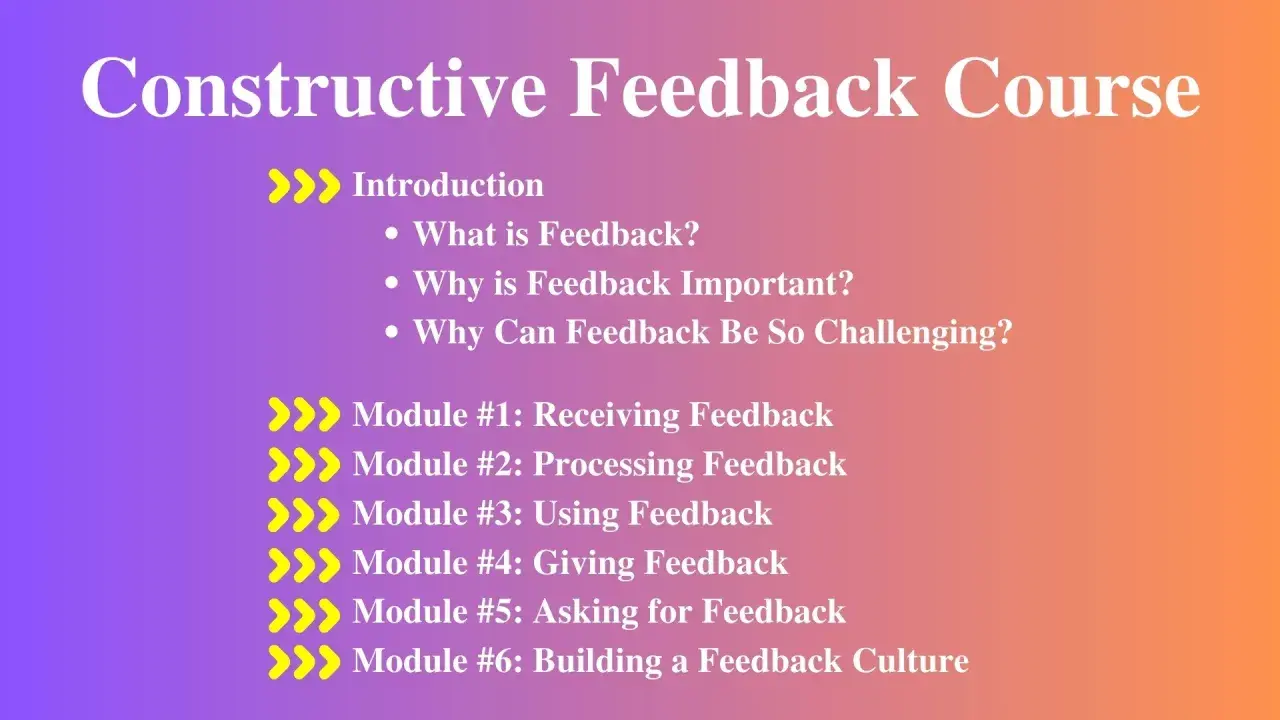
The essentials you need before the conversation starts
- Feedback works best when it is specific, timely, and tied to observable behavior.
- The goal is improvement, not venting, scoring points, or proving who is right.
- A simple structure such as situation-behavior-impact keeps the conversation grounded.
- Receiving criticism well means pausing, clarifying, and choosing one next step.
- Inclusive teams need shared norms so directness does not depend on personality, culture, or seniority.
What effective feedback training is meant to fix
Most feedback breaks down for predictable reasons: it is too vague, it arrives too late, or it gets wrapped in frustration instead of guidance. One Gallup finding I keep coming back to is that only 26% of employees strongly agree the feedback they receive helps them do better work. That tells me the problem is not a lack of comments; it is a lack of useful comments. Harvard Business Review has also noted that many managers find giving negative feedback stressful, which explains why so many teams default to avoidance or sugarcoating. I do not think the answer is harsher language. I think the answer is a clearer process that makes feedback feel less personal and more usable. Psychological safety matters here too, because people learn faster when they can hear correction without fearing humiliation or retaliation.That is why I treat feedback as a two-way coaching conversation, not a verdict handed down from above. Once the purpose is clear, the next step is learning which habits make criticism useful instead of vague.
The habits that make criticism useful instead of vague
When feedback lands well, it usually has the same ingredients: it points to something the other person can actually recognize, it stays on behavior instead of identity, and it ends with a path forward. When it lands badly, it usually sounds like a label, a complaint, or a history lesson.
| Common mistake | Why it fails | Better version |
|---|---|---|
| “Be more professional.” | It is vague and impossible to act on. | Describe the exact behavior and the moment it happened. |
| Bringing up a problem weeks later | The details blur, and the link to the behavior weakens. | Address it soon while the example is still fresh. |
| Listing ten issues at once | The other person cannot tell what matters most. | Focus on one pattern and one next step. |
| “You are careless” | It attacks identity instead of addressing work. | Talk about the missed check, the impact, and the fix. |
| Correcting someone in front of others | It can trigger defensiveness and embarrassment. | Use private correction unless the team needs a shared standard. |
If I had to reduce this section to one sentence, it would be this: be specific, stay behavioral, and leave the other person with something they can do next. That discipline matters because even skilled managers can feel pressure in the moment, and structure lowers the emotional load. Once those habits are in place, the conversation itself becomes much easier to run.

A simple structure for giving feedback well
When I coach managers, I often use the situation-behavior-impact model because it keeps the conversation concrete. In plain English, it means you name the moment, describe the observable action, and explain the effect it had. It is simple, but simplicity is part of why it works.
- Set the context. “Can I share an observation from yesterday’s client review?”
- Name the behavior. “You interrupted three times while the client was explaining the deadline.”
- Explain the impact. “It made the room feel rushed, and we lost a chance to understand their concern.”
- Invite a response. “How did you see it?”
- Agree on the next move. “Next time, let’s pause after the first answer and let the client finish before we respond.”
That sequence works because it keeps people from arguing about motives and pushes the discussion toward a fix. For sensitive topics, I would rather have the first conversation live, even in a hybrid team, and then send a short written recap so the next step is unmistakable. If you must write feedback in chat or email, be even more careful with tone, because text strips away the nuance people rely on.
Once the message is clear, the other half of the skill is making room for the response.
How to receive feedback without getting defensive
Receiving criticism well is not passive. It is an active skill, and in my experience it is often harder than giving the feedback. People hear a sharp comment, assume the worst, and miss the part that could actually help them improve.
- Pause before answering. A short silence is better than a fast defense.
- Paraphrase what you heard. “So you are saying my weekly updates are too thin on details, especially when the project is behind.”
- Ask for one example. Specific examples are easier to learn from than general impressions.
- Separate signal from noise. Not every emotional delivery makes the content wrong.
- Ask for feedforward when needed. That means shifting the conversation from “What went wrong?” to “What should I do differently next time?”
You do not need to agree with every comment to learn from it. Sometimes the useful move is simply to acknowledge the pattern, thank the person for the candor, and decide what to test over the next two weeks. That mindset changes feedback from a threat into information, which matters even more when the team is diverse and the communication styles are not the same.
How to keep feedback fair across different people and teams
On diverse teams, directness and honesty do not always mean the same thing to everyone. What feels clear to one person can feel abrupt, coded, or even unsafe to another. Research on diverse teams has made this point repeatedly: candor helps performance, but only when teams create explicit norms for how to use it.
| Context | What can go wrong | Better practice |
|---|---|---|
| Remote or hybrid work | Short messages can sound colder than intended. | Use voice or video for sensitive topics, then follow up in writing. |
| Cross-cultural teams | People may differ on what “direct” or “respectful” means. | State the team norm explicitly and define what good feedback looks like. |
| Different seniority levels | Junior staff may not challenge a vague critique. | Invite questions and confirm understanding before ending the conversation. |
| Accessibility needs | Jargon, speed, or idioms can make the message harder to process. | Use plain language and give people time to respond. |
| Performance conversations with bias risk | Feedback can drift from behavior into assumptions. | Anchor the discussion in observed work, examples, and outcomes. |
In U.S. workplaces, people often praise bluntness, but blunt is not the same as fair. I have found that fairness improves when everyone knows the rules in advance: what feedback is for, when it should happen, who it should involve, and how disagreement should be handled. Once those norms are visible, the final question becomes whether the practice is actually changing behavior.
How to know the training is actually changing behavior
Training is only useful if it survives the workshop. I look for three kinds of evidence: people are having feedback conversations more often, those conversations are more specific, and the follow-through is visible in day-to-day work.
- Use a 30-day pulse check. Ask whether people have given or received useful feedback recently.
- Review one real example per manager. This is better than asking whether they “understand the model.”
- Watch for fewer surprises. If issues are raised earlier, feedback is probably becoming normal.
- Check the action step. Every conversation should end with one clear behavior to test.
- Compare teams, not just individuals. Consistency matters if you want the culture to shift.
I also like a simple 60- to 90-day manager review, because habits do not change on day one. If the people involved can name the behavior, repeat the next step, and revisit the outcome later, the training is doing real work. If they can only describe the workshop slides, the organization has not changed much at all.
That is why I think the real measure of progress is not whether people became more polite. It is whether they became more precise, more consistent, and more willing to speak early enough to matter.
The part most teams miss after the workshop
The biggest gap is usually reinforcement. Teams attend a session, like the framework, and then drift back to old habits because no one turns the lesson into a routine. Good feedback culture is built by repetition, not inspiration.
- Write down a short team norm for feedback and revisit it in meetings.
- Model the behavior in both directions, especially from managers to executives.
- Keep corrective feedback private unless the whole team needs the lesson.
- Use one issue, one example, and one next step as the default pattern.
- Celebrate useful feedback publicly when someone handles a hard conversation well.
That is the difference between a one-off session and a durable communication habit: people know what good feedback sounds like, when to use it, and how to act on it without making the conversation personal. If you want the culture to shift, keep the language simple, the expectations visible, and the follow-up regular. That is where feedback stops being a tense event and starts becoming part of how the team works.
