
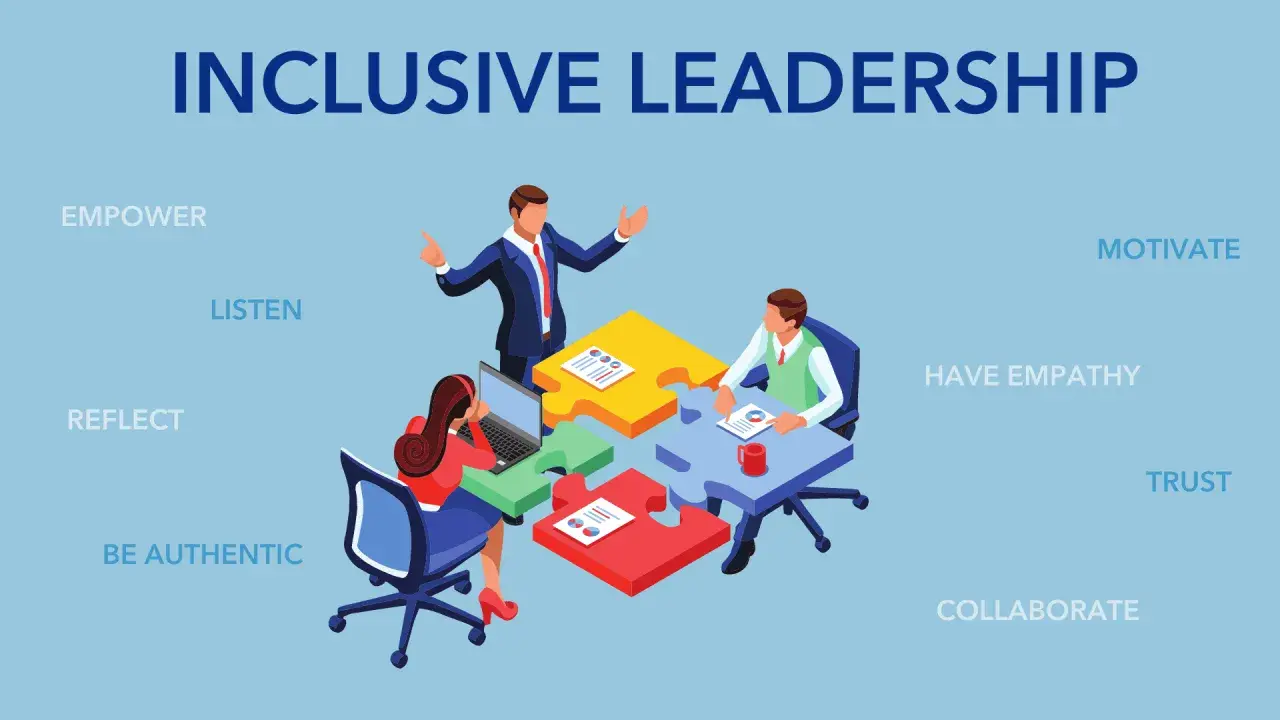
Strong leadership is not the same as hard-edged management. The best managers I see are usually the ones who can read the room, understand pressure without dramatizing it, and respond in ways that feel fair and steady. This article breaks down empathetic leadership, why it matters for inclusive workplace culture, what it looks like day to day, and how to keep it from turning into vague niceness.
What busy leaders need to know first
- It is a management style, not a mood. It depends on listening, perspective-taking, and follow-through.
- It works best with clarity. Empathy without expectations creates confusion; empathy with standards builds trust.
- It matters most in modern teams. Hybrid work, burnout, and diverse teams make misunderstandings easier and trust harder to earn.
- Its biggest failure mode is inconsistency. People may feel heard, but if nothing changes, the goodwill fades fast.
- The strongest version is humane and direct. It protects dignity without lowering the bar.
Why this leadership style matters now
I do not think empathy became important because workplaces became sentimental. It became important because work became more compressed, more distributed, and more visible. People are expected to collaborate across time zones, identities, and stress levels, often while carrying a lot of uncertainty about role changes, performance, and belonging.
That is why this approach is not a soft extra. Gallup has found that managers account for 70% of the variance in team-level engagement, and employees who trust their leaders are 61% more likely to stay. In plain terms, the daily behavior of a manager affects whether people keep contributing, quietly disengage, or start looking elsewhere.
For inclusive workplaces, the pressure is even sharper. When people feel overlooked, interrupted, or treated as interchangeable, they rarely announce it dramatically. They answer less, share less, and take fewer risks. This style matters because it helps leaders notice what is usually invisible: overload, hesitation, exclusion, and the small signals that a team is getting brittle. That is the difference between a team that looks fine and a team that actually works. To make that concrete, I want to show what it looks like in practice.
What empathetic leadership looks like in daily work
In practice, this is less about being endlessly agreeable and more about being accurately attentive. I think of it as a discipline of attention, explanation, and follow-through. Leaders who do it well do not just “care”; they make sure people feel understood in the moment and respected after the conversation ends.
| Behavior | What it sounds like | Why it matters |
|---|---|---|
| Listening for context | “What changed for you this week?” | Reduces guesswork and helps you respond to the real problem, not the loudest one. |
| Naming what you notice | “You seem stretched. Let’s look at the load.” | People feel seen before they feel judged. |
| Holding standards | “I understand the pressure, and the deadline still stands.” | Prevents empathy from turning into drift or favoritism. |
| Closing the loop | “Here is what I can change, and here is what I cannot.” | Stops the common experience of being heard and then ignored. |
| Making space for difference | “Let’s hear from the people who have not spoken yet.” | Improves inclusion and often leads to better decisions. |
The point is not to soften every decision. The point is to make decisions in a way people can understand, even when they do not love the outcome. Once those behaviors are visible, the harder work is turning them into habits that people can rely on.
The habits that turn empathy into trust
Trust is built in repetition. One thoughtful conversation does not change a culture, but the same small behaviors done consistently do. When I coach leaders, I usually push them toward a few habits that are simple enough to repeat and strong enough to matter.
- Start one-on-ones with energy and workload. A question like “What feels heavy this week?” surfaces strain early, before it becomes a performance issue.
- Ask follow-up questions before solving. “Say more about that” or “What would make this easier?” keeps you from reacting to the loudest voice in the room.
- Separate the person from the problem. You can challenge the work without humiliating the worker. That distinction protects dignity.
- Explain decisions in plain language. People accept hard calls more readily when they understand the reasoning behind them.
- Respond after the conversation. A check-in, an adjustment, or a clear no tells people their input was real, not performative.
These habits create psychological safety because people learn that speaking up does not end in embarrassment or silence. They also make a team easier to lead during change, because the leader is not relying on authority alone. The next risk is more subtle: leaders often want to be humane, but they end up making the wrong moves.
Where leaders go wrong
Most failures are not about bad intent. They are about imbalance. A leader can sound caring and still make people feel unstable, overlooked, or unfairly treated. I see five common mistakes over and over again.
| Common mistake | What it causes | Better move |
|---|---|---|
| Confusing empathy with agreement | Conflict avoidance and vague decisions | Acknowledge the feeling, then state the decision clearly. |
| Skipping difficult feedback | Stagnation and resentment | Be direct, specific, and respectful about the gap. |
| Over-indexing on the most emotional person | Uneven treatment and perceived favoritism | Use the same standards and process for everyone. |
| Being flexible without explanation | Confusion about what is expected | Explain the boundary or the exception so it feels fair. |
| Performing care without action | Skepticism and low trust | Make fewer promises, and keep the ones you do make. |
The biggest tell is whether people leave a conversation with more clarity. If they only leave feeling consoled, the leadership move is incomplete. In diverse teams, that incompleteness becomes expensive quickly, because uneven treatment gets noticed fast. That is also why this approach cannot stop at the manager level; the system around the manager has to support it.
How to build it across a team or organization
I would not try to scale this through slogans. I would scale it through manager expectations, meeting design, and promotion criteria. A leader may be naturally warm, but organizational habits decide whether that warmth turns into a reliable culture.
- Train for specific behaviors. Listening, conflict handling, feedback, and decision explanation are learnable skills, not personality quirks.
- Design meetings for participation. Use agendas, clear goals, and room for quieter voices so inclusion is not accidental.
- Make follow-through visible. If people raise a concern, they should know what happens next and who owns the next step.
- Reward retention and development, not only speed. A manager who gets work out the door but burns out the team is expensive in the long run.
- Align policy with practice. If flexibility is only available when a manager bends the rules, the culture will feel arbitrary.
The version that lasts under pressure
If I had to compress the whole approach into one rule, I would call it care with structure. Care tells people they matter; structure tells them the work still has to move. Without structure, empathy becomes vague. Without care, structure turns cold and brittle.
- Say what you see. Name the pressure, the workload, or the tension instead of hoping it disappears.
- Say what you can change. Make the support concrete, even if it is modest.
- Say what will not change. Clarity about the boundary is often what makes the empathy believable.
That balance is what holds teams together during change, especially in workplaces that depend on belonging as much as output. In practice, the strongest leaders are not the ones who feel everything for everyone; they are the ones who understand people well enough to lead them clearly.
