
Strong leadership goals are less about sounding ambitious and more about changing how a team experiences clarity, trust, and accountability. The best ones are specific enough to measure, human enough to motivate, and practical enough to survive a busy week. In this article, I break down what those goals should cover, how to set them, and how to track progress without turning leadership into a paper exercise.
The essentials for leadership that people can feel in everyday work
- Set goals around behavior, not just results.
- Balance performance targets with inclusion, coaching, and talent development.
- Use concrete evidence such as feedback cadence, retention, and meeting participation.
- Keep the number of goals small so the team can actually act on them.
- Review progress regularly enough to correct drift before it becomes culture.
What strong leadership goals should actually change
I usually separate leadership goals into three layers: the work the team delivers, the way the team works, and the next layer of talent the leader is building. That matters because a leader can hit a quarterly number while quietly creating confusion, burnout, or unfair opportunity access.
| Goal type | What it changes | Example |
|---|---|---|
| Performance | Speed, quality, and results | Reduce project handoff time by 20% without lowering quality |
| People | Coaching, trust, and retention | Hold a weekly 1:1 with every direct report and close each meeting with one next step |
| Culture | How decisions are made and heard | Make sure every recurring meeting includes input from at least two voices beyond the most senior speaker |
| Growth | Future readiness and succession | Create stretch work for two team members who are ready for more responsibility |
The goals that matter most for inclusive leadership
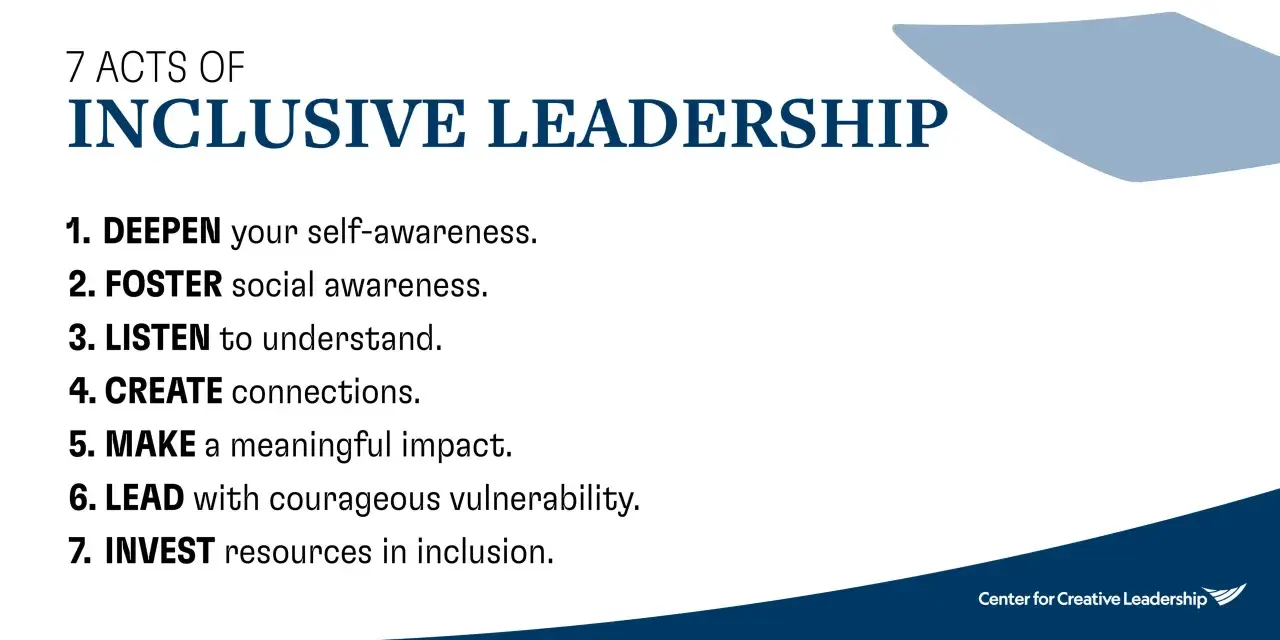
For inclusive leadership, I focus on four behaviors that consistently shape whether people feel safe, respected, and able to contribute. In U.S. teams especially, this is where good intentions are often exposed: either people get clear direction, fair access, and usable feedback, or they get slogans and a lot of hope.
Clarity that removes guesswork
People should know what success looks like, who decides what, and when a decision is final. Ambiguity burns time, and it tends to hit newer employees and quieter contributors hardest.
Feedback that arrives before the review cycle
Monthly or biweekly coaching gives people something they can use now. I prefer short, specific feedback loops because they prevent small problems from turning into personality conflicts.
Inclusion that changes who gets heard
Inclusive leadership means actively seeking out different perspectives and making sure people are treated fairly, feel a sense of belonging, and have the support they need to do their best work. Psychological safety means people can speak up without fearing embarrassment or punishment. In practice, that shows up as balanced airtime, careful crediting, and decisions that do not depend on who speaks loudest.
Read Also: Mentoring in Leadership - Build Trust & Boost Growth Now
Development that opens the next opportunity
Sponsorship is different from mentorship: mentorship gives advice, while sponsorship uses influence to open doors. Good leaders make growth visible through stretch assignments, rotation opportunities, and honest readiness conversations.
CCL's research on inclusion points in the same direction: when people perceive their workplace as inclusive, they are more likely to report healthier boundaries and less burnout. That is a useful reminder that culture work is not decorative; it changes how sustainable the job feels. From there, it becomes much easier to turn those behaviors into measurable goals.
How to turn ambition into goals people can actually follow
When I write these goals, I start with one observable change, not a slogan. If I cannot imagine what I would see in a calendar, meeting, or review, the goal is still too vague.
- Pick one business result and one team experience result.
- Translate the desired change into a behavior you can observe.
- Set a number, cadence, or deadline.
- Name the evidence you will review.
- Decide who owns the follow-through.
For example, "improve communication" is weak. "Run a 20-minute weekly check-in with each direct report, log one action item, and review completion at the next meeting" is usable because someone can actually do it and verify it. If a goal cannot survive that test, it is probably not ready yet.
I also like to use a simple filter: specific, measurable, time-bound, and behavior-based. The last part is the one many leaders miss, because leadership is not only an outcome; it is the pattern of decisions that produces the outcome. That difference becomes much easier to see when you look at concrete examples.

Examples of goals for different leadership levels
Good goals look different depending on scope. A new manager needs habits and consistency; a senior leader needs system-level decisions that shape opportunity, promotion, and culture. The table below shows the difference more clearly than any abstract definition can.
| Leadership level | Sample goal | Why it works |
|---|---|---|
| New manager | Hold a 30-minute 1:1 with every direct report every two weeks for the next quarter and close each meeting with one written follow-up. | Builds trust, creates accountability, and gives people a reliable place to raise issues. |
| Mid-level manager | Cut decision lag on cross-functional work by 25% by clarifying owners, deadlines, and escalation paths. | Removes friction and makes collaboration less political. |
| Senior leader | Review promotion slates and stretch assignments quarterly to make sure opportunity is distributed transparently across the team. | Connects culture to advancement instead of leaving growth to informal networks. |
| Team lead in hybrid work | Design every recurring meeting so remote participants have equal access to context, airtime, and decisions. | Prevents proximity bias, where the people closest to the room get the most influence. |
These examples are useful because they force a leader to define what better looks like in real life. If the goal does not change how people interact, learn, or get chosen for opportunities, it is probably too abstract to matter. Once the goal is concrete, the question becomes how to know it is working.
How to measure progress without turning leadership into a spreadsheet
I prefer to pair at least one leading indicator with one lagging indicator. Leading indicators tell you whether behavior is changing now; lagging indicators show the result after enough time has passed.
| Metric | What it tells you | Watch out for |
|---|---|---|
| 1:1 completion rate | Whether coaching is happening consistently | Completion alone does not prove the conversation was useful |
| Employee pulse feedback | How people experience clarity, trust, and inclusion | Small sample sizes can distort the signal |
| Meeting airtime or participation balance | Whether more than one voice shapes decisions | Equal airtime is not always the right target for every meeting |
| Internal mobility and stretch assignments | Whether development is broad or reserved for a few people | Track access, not just final promotions |
| Regrettable turnover | Whether strong performers are leaving for preventable reasons | One number can hide good and bad exits together |
I also look at qualitative evidence: what people say in skip-level conversations, what comes up in exit interviews, and whether the same friction points keep returning. Numbers are useful, but they are not a replacement for listening. That matters because the most common leadership mistakes are usually design mistakes, not effort problems.
The mistakes that quietly weaken good intentions
Most weak leadership plans fail for predictable reasons. The problem is rarely a lack of talent; it is usually vague scope, too many priorities, or no real follow-through.
- Too many goals at once - Three or four meaningful goals usually beat a long list that nobody remembers.
- Only outcome goals - If you do not define the behavior, the result can be achieved in ways that hurt the team.
- Vague inclusion language - "Be more inclusive" sounds good, but it is not actionable until you name what changes in meetings, decisions, or development access.
- One annual check-in - Leadership habits drift quickly unless you review them often enough to catch problems early.
- Confusing fairness with sameness - Treating everyone identically is not the same as leading fairly; inclusive leadership adapts support while keeping standards consistent.
The fix is usually small, but it has to be deliberate. Fewer goals, clearer evidence, and a tighter review rhythm make leadership easier to sustain, which is exactly why the final step should be a practical reset instead of another abstract framework.
A 30-day reset when your team needs better leadership habits
If I had to restart a leadership plan today, I would do three things in the first 30 days: pick one performance goal, pick one inclusion goal, and tell the team exactly how progress will be reviewed. That is enough to create momentum without overwhelming people.
- Week 1: define the two goals and the evidence for each.
- Week 2: tell the team what will change in meetings, feedback, and decisions.
- Week 3: collect one round of feedback and remove friction.
- Week 4: review the data, adjust the goal if needed, and decide what continues.
The strongest leaders I work with do not chase every possible improvement. They keep the list short, make their standards visible, and return to the same habits often enough that the team can trust them. That is what turns leadership from a personal intention into a culture people can feel.
