
Developing managers and leaders is less about a one-off course and more about changing how people make decisions, coach others, and shape culture under pressure. In practice, the best programs start before promotion, use real work as the training ground, and make inclusion part of everyday management rather than an extra initiative. This article breaks down what actually works, where most programs fall short, and how to build a development path that fits a modern U.S. workplace.
The essentials at a glance
- Promotion is only the beginning; readiness should be assessed before someone gets the title.
- The strongest development mix combines stretch work, coaching, and focused learning.
- Inclusive leadership affects trust, retention, and performance, not just culture messaging.
- Training alone rarely changes behavior unless it is reinforced on the job.
- Progress should be measured by behavior change, team health, and business outcomes.
Why promotion is only the starting point
Promotion often rewards the wrong signal: past individual performance. Strong management requires a different toolkit altogether, including prioritization, delegation, feedback, conflict handling, and the ability to create clarity for other people. I separate three jobs in my mind: managing the work, leading the people, and influencing the wider organization. A person can be strong in one layer and shaky in another, which is why title changes do not automatically produce good leaders.
The safer move is to define readiness before the promotion happens. I look for learning agility, self-awareness, and the ability to coach instead of simply solving every problem alone. If someone still needs every answer handed to them, the promotion becomes an expensive training ground for the team. Once that baseline is clear, the next question is what kind of development will actually change day-to-day behavior.
That distinction matters because the program should fit the stage the person is in, not the org chart alone.

What strong development actually builds
The managers and leaders who make the biggest difference usually grow in four areas first.
Clarity and prioritization is the ability to decide what matters, what can wait, and what should be delegated. New leaders often try to keep doing everything themselves, which makes them a bottleneck. I want them to learn how to set direction in plain language and keep the team focused on outcomes rather than activity.
Coaching and feedback means helping others think better, not just telling them what to do. Good managers know how to ask sharper questions, correct mistakes without humiliating people, and recognize progress before morale drops. This is where many technically strong employees struggle after promotion, because expertise is not the same thing as people development.
Decision-making under pressure matters because leadership rarely shows up on quiet days. Teams need someone who can make a call with incomplete information, explain the tradeoff, and revisit the choice when new facts appear. I have found that this skill improves fastest when people are given responsibility for a real problem, not a hypothetical exercise.
Inclusion and trust are what make the rest of the work stick. Psychological safety means people can raise risks, disagree, or admit mistakes without being punished for honesty. A leader who dominates the room, overlooks quieter voices, or rewards only people who mirror them will eventually weaken the whole system. These are the behaviors that move the work forward, and they are easier to change when the learning mix is built around real experience rather than theory alone.
That leads directly to the question of method, because not every development format changes behavior in the same way.
Which learning methods change behavior
SHRM’s widely used 70-20-10 model is still a useful design lens: most growth comes from real work and relationships, while formal learning plays a smaller but still important role. I treat it as a heuristic, not a law. If the program leans too heavily on workshops, people may understand the language of leadership without changing how they lead on Tuesday morning.
| Method | Best for | Strength | Limitation |
|---|---|---|---|
| Stretch assignments | Building judgment and confidence | Forces real decisions in real conditions | Can overwhelm people if support is missing |
| Coaching and mentoring | Personalized growth and reflection | Targets the exact behavior that needs work | Quality varies a lot by coach |
| Formal workshops | Shared language and core concepts | Scalable and easy to standardize | Behavior change fades without follow-up |
| Peer learning and case clinics | Decision practice and perspective-sharing | Normalizes candor and reduces isolation | Needs a skilled facilitator to stay useful |
| 360 feedback | Self-awareness and blind spots | Shows how a leader is experienced by others | Can become discouraging without coaching |
The strongest programs combine those methods instead of choosing just one. A manager might get a short workshop for language, a stretch assignment for practice, a coach for reflection, and a peer group for reality checks. That mix is what turns knowledge into behavior, which is why I prefer a development rhythm that is short, specific, and measurable.
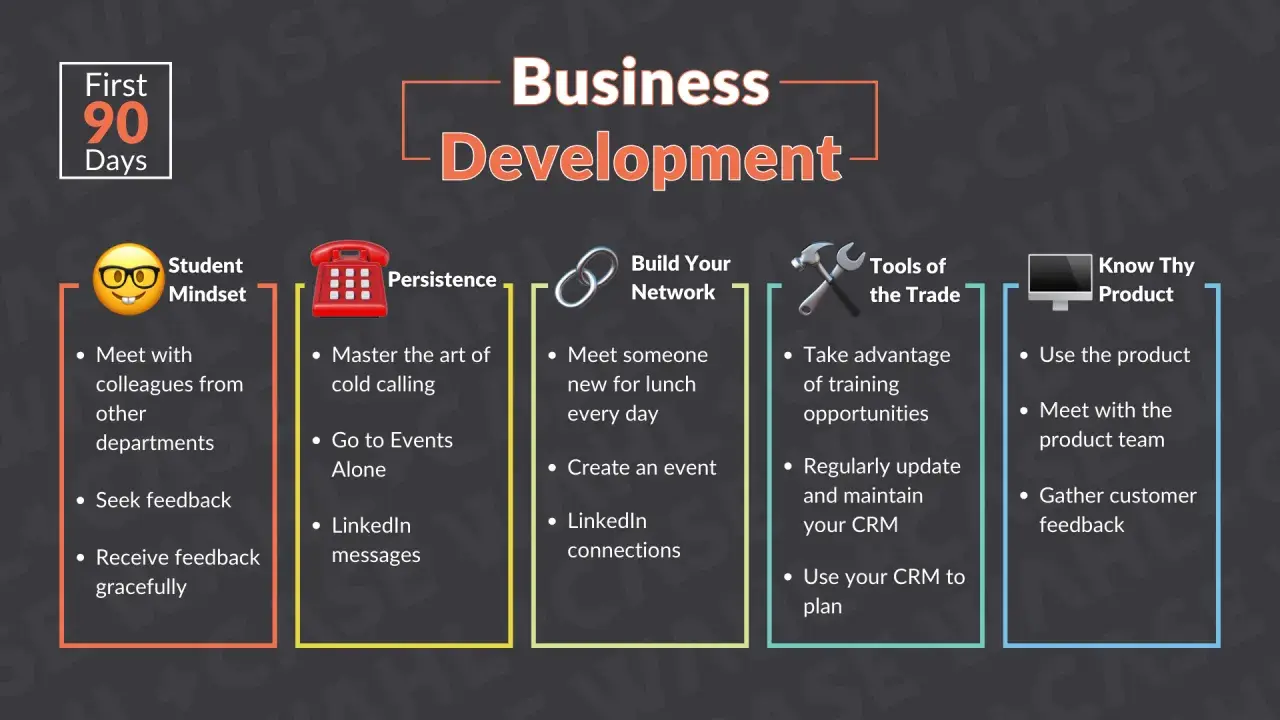
A practical development rhythm for the first 90 days
I prefer a 90-day cycle because it is long enough to see behavior change and short enough to correct course. Anything much longer tends to drift; anything much shorter usually measures confidence, not capability.
- Start with a baseline. Identify the two or three behaviors that matter most in the new role. For a first-time manager, that may be delegation and feedback. For a senior leader, it may be cross-functional influence and decision quality.
- Choose one real stretch assignment. Give the person a live business problem with visible stakes. A cross-functional project, a difficult performance conversation, or a new team process will teach more than a generic case study.
- Set a weekly coaching cadence. Short check-ins keep the learning tied to actual decisions. I like one question every week: what happened, what did you learn, and what will you do differently next time?
- Limit the priorities. If you try to improve ten things at once, you usually improve none of them. Two or three behaviors is enough to create momentum without fragmenting attention.
- Review at 30, 60, and 90 days. At each checkpoint, ask for feedback from the manager, peers, and direct reports. The point is not to grade the person; it is to see whether the new habits are becoming stable.
This kind of cadence works best when the organization gives the manager enough room to practice. If every decision still has to be escalated, development gets throttled at the source. The next issue, then, is whether the system itself gives people fair access to growth.
How to make it inclusive instead of uneven
In U.S. workplaces, access to development is often uneven: some people get stretch assignments, sponsor relationships, and useful feedback, while others get only a title and a checklist. That is a talent risk, not just a fairness issue. McKinsey’s work on inclusive workplaces has long emphasized that leaders matter when they act as role models, translators, and signals of what the organization values, and I think that framing is useful because it connects inclusion to daily management, not slogans.
To make development more equitable, I would put a few guardrails in place.
- Publish promotion criteria. People should know what readiness looks like before decisions are made.
- Track opportunity, not just outcomes. Watch who gets the visible projects, coaching, and succession exposure.
- Use calibration. Calibration is the process of comparing ratings and opportunities across managers so bias and inconsistency are easier to catch.
- Offer multiple learning formats. Not everyone benefits equally from a lecture, a retreat, or a live workshop.
- Build sponsorship into the system. Mentors give advice; sponsors create access. Both matter.
- Teach specific inclusive behaviors. Rotate meeting airtime, invite quieter voices, document decisions, and challenge subtle exclusions quickly.
When those practices are in place, manager development stops being a privilege for the visible few and becomes part of the culture. The problem is that many programs still fail for predictable reasons, and those mistakes are worth naming directly.
Common mistakes that waste time and money
- Training the title, not the behavior. A workshop on leadership language will not fix weak delegation or poor feedback habits.
- Promoting top performers without checking people skill. Strong output does not guarantee the ability to coach, align, or de-escalate conflict.
- Overloading new managers. Too many competencies at once turns development into noise.
- Ignoring the team experience. If direct reports feel less clear, less supported, or less safe, the program is failing even if the manager feels confident.
- Treating inclusion as a side project. If the organization says it values equity but promotion, feedback, and access remain inconsistent, people notice the gap fast.
- Giving responsibility without authority. A manager cannot be held accountable for outcomes if policy, staffing, or budget decisions are still blocked everywhere else.
These mistakes are common because they are easy to miss from the inside. That is why I always want a measurement system that looks beyond attendance and satisfaction scores.
How I would measure whether it is working
I measure manager development in layers. Attendance matters least; behavior change matters most. If a program does not alter how people run meetings, give feedback, or make decisions, it is mostly a communication campaign with a training budget attached.
| Signal | What to look for |
|---|---|
| Team clarity | People can explain priorities, decision rights, and near-term goals without guessing |
| Feedback quality | Managers give clearer, more frequent, and more useful feedback |
| Retention | High performers stay, especially on teams that used to lose people |
| Internal mobility | More people from different backgrounds get stretch work and promotion opportunities |
| Speaking up | Teams raise problems earlier and challenge weak ideas without fear |
| Manager confidence with evidence | Leaders can point to specific decisions and results, not just say they feel more prepared |
A 30-60-90 review cycle makes these signals easier to see. If the numbers improve but the team experience does not, I assume the surface metrics are hiding a deeper issue. If the team experience improves but performance still lags, the organization may need better support around workload, systems, or role clarity. That is why development has to continue after the first promotion, not end there.
The habits that keep new leaders growing after the first promotion
The first promotion is only the beginning. The best managers keep a short learning loop: reflect weekly, ask for direct feedback monthly, and revisit team norms every quarter. I also like peer circles because they reduce the isolation that often makes new leaders defensive and overly certain.
- Keep one running note on decisions you handled well and decisions you would revisit.
- Ask one direct report what is making their work easier and one thing that is slowing them down.
- Review one metric and one real story, not just dashboards.
- Retire one habit each quarter that no longer fits the role.
If I had to reduce the whole approach to one line, it would be this: develop the person, the team, and the system around them at the same time. That is the difference between a program that sounds good and one that actually grows better managers, stronger leaders, and a more inclusive workplace.
