
Authentic work is not about being unfiltered or turning every meeting into a personal diary. It works when people can align what they say and do with their values, while still respecting role, context, and other people’s boundaries. That balance is what makes trust possible, and it is the real answer to how does authentic work in a healthy workplace culture.
In U.S. workplaces, especially in 2026 hybrid teams, people judge authenticity less by big speeches and more by consistency, fairness, and how leaders handle pressure. That means the practical question is not whether people should "be themselves," but what kind of environment makes honest, responsible behavior possible.
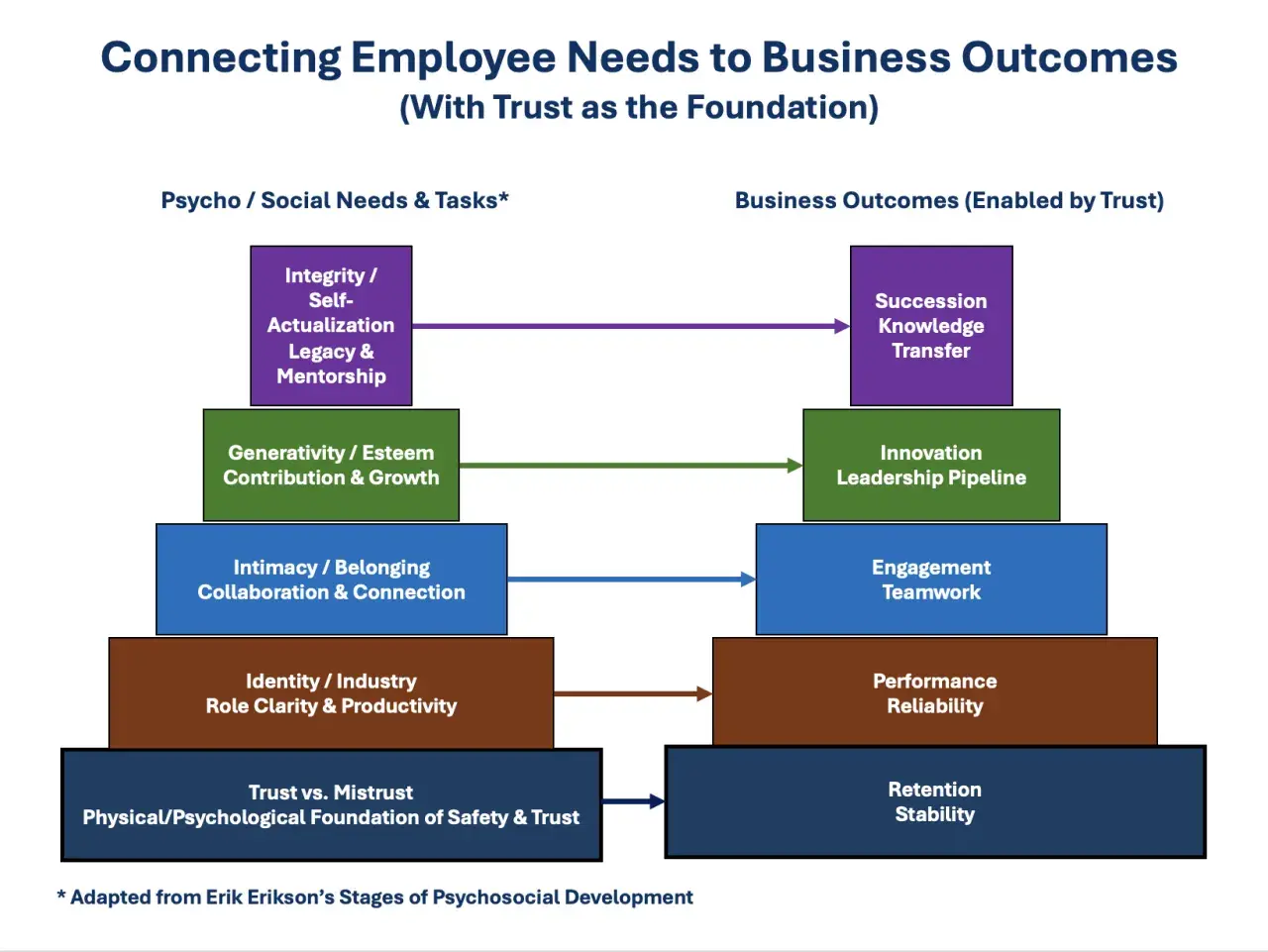
The core idea is that authenticity only works when trust, clarity, and inclusion are built into the culture
- Authenticity at work is congruence, not oversharing.
- It shows up in self-awareness, transparent communication, and consistent decisions.
- It improves trust and engagement, but only when the organization makes it safe.
- It breaks down fast when people are rewarded for performance theater instead of honesty.
- Inclusive leadership is what keeps authenticity from becoming a privilege for only a few employees.
What authentic work means in a workplace culture
I define authentic work as the space between a person’s inner values and their outward behavior. When that space is narrow, people feel coherent and easier to trust; when it is wide, employees waste energy managing impressions, second-guessing themselves, or code-switching just to get through the day.
This is where a lot of workplace advice goes wrong. Authenticity is not the same as saying everything that comes to mind, and it is not a license to ignore professionalism. In practice, it means people can act like themselves without having to fake values they do not hold or hide identity traits that are irrelevant to the work.
| Authentic work | What it looks like | What it is not |
|---|---|---|
| Aligned behavior | People speak honestly, keep their promises, and explain decisions clearly | Personal oversharing or impulsive reactions |
| Values in action | Leaders make tradeoffs that match stated principles | Brand language that disappears under pressure |
| Relational trust | Colleagues can disagree without losing status or belonging | Forced positivity or scripted agreement |
| Bounded expression | People can be real without making others carry emotional labor | Using authenticity as an excuse for poor judgment |
The important part is that authenticity is relational, not absolute. One person’s freedom to speak openly should not become another person’s burden to absorb it. That distinction matters, because it leads directly to the everyday behaviors that make authenticity visible.

How it shows up day to day
When authentic work is functioning properly, you do not see a dramatic personality shift. You see smaller, steadier signals: clearer meetings, cleaner feedback, fewer hidden agendas, and less emotional wear from pretending to be someone else at work.
Self-awareness keeps people from running on autopilot
Self-awareness means knowing your triggers, strengths, blind spots, and the effect your behavior has on others. A self-aware manager does not confuse intensity with leadership, and does not assume that silence means agreement. They notice when pressure is making them defensive and adjust before the team has to absorb the fallout.
Relational transparency reduces confusion
Relational transparency is the habit of sharing information, motives, and reasoning in a way people can actually use. It does not require revealing everything. It does require that people understand why a decision was made, what is still uncertain, and what matters most right now.
Balanced processing makes room for real disagreement
Balanced processing means you actively seek views that challenge your own before deciding. In a workplace culture, that is often the difference between a team that performs loyalty and a team that solves problems. If every meeting ends in polite agreement, the culture may be calm, but it is probably not very honest.
Read Also: Positive Work Environment - Build a Thriving Team
Values hold the line under pressure
Internalized moral perspective is a technical phrase, but the idea is simple: you use your values as a decision filter instead of bending to convenience, fear, or status. That is what keeps authenticity from becoming mood-based or personality-based. It gives employees a stable standard for how to behave when stakes are high.
When those four behaviors are present, authentic work becomes visible in routine things, like how feedback is given, whether people can say "I do not know," and whether a manager explains a hard call without hiding behind jargon. That is also the point where culture starts to decide whether authenticity will be rewarded or punished.
Why culture decides whether authenticity helps or hurts
Authenticity is not equally safe everywhere. In teams where people are penalized for dissent, marginalized employees often learn to edit themselves more heavily than others. That is why I pay less attention to slogans like "bring your whole self to work" and more attention to whether the company has fair promotion criteria, consistent feedback, and real consequences for bias.
According to Inclusive Leadership, 93% of respondents said authenticity at work was important, and 71% said they were able to be authentic at work. Those numbers matter because they show the value is widely recognized, but they also leave room for a significant minority who are still spending workdays performing rather than contributing.Gallup reported that U.S. employees felt more detached from their employers in 2023, with less connection to mission and purpose. I read that as a culture signal, not just an engagement metric. People rarely disengage because they lack personality; they disengage because they do not trust the environment enough to be honest in it.
- Safe cultures make it easy to ask questions, disagree respectfully, and set boundaries.
- Unsafe cultures reward conformity, punish candor, and call that professionalism.
- Inclusive cultures make room for different communication styles without treating them as deficits.
- Exclusive cultures expect one dominant way of speaking, leading, and being seen.
This is why authenticity and inclusion belong in the same conversation. Authenticity without inclusion is just selective freedom. Inclusion without authenticity can become polite compliance. The strong version of both is where people can contribute without hiding the parts of themselves that do not threaten the work.
What authentic leadership changes for teams
In practice, authentic leadership is the engine that makes authenticity feel real instead of decorative. Leaders set the tone through their own consistency, and teams copy what they see far faster than they copy what appears in a values deck.
| Team outcome | What improves | What can go wrong |
|---|---|---|
| Trust | People believe the leader’s words match their actions | Trust collapses if transparency is inconsistent or selective |
| Decision quality | Teams surface risks earlier and challenge weak assumptions | Decisions slow down if leaders invite input but never close the loop |
| Retention | Employees are less likely to leave a place where they feel seen and respected | Retention gains disappear if authenticity is only symbolic |
| Wellbeing | People spend less energy masking and more energy doing the work | People burn out if they are expected to be open without support |
The research base around authentic leadership keeps pointing to the same practical outcome: when people trust leaders, they are more willing to contribute, challenge, and stay engaged. I find that especially relevant in hybrid and distributed teams, where trust has to survive more distance and less face time.
But there is a caveat that matters. Authentic leadership is not charisma, and it is not “I say whatever I think.” The best leaders are often the ones who know when to speak plainly, when to listen, and when restraint is the more responsible choice. That nuance is what separates maturity from performance art.
How to build it without turning it into a slogan
If I were helping a team build authentic work culture from scratch, I would start with behavior, not branding. The goal is to make honesty useful and safe, not just admired in theory.
- Define the non-negotiables. Write down the few values that actually guide decisions, then translate each one into observable behavior.
- Train managers to explain decisions. People do not need every detail, but they do need enough context to understand the logic behind a decision.
- Make disagreement normal. Use routines like red-team reviews, retrospectives, or a simple “what am I missing?” question in meetings.
- Protect boundaries. Make it clear that authenticity does not require self-disclosure about trauma, family life, or identity details.
- Audit bias points. Check who gets interrupted, who gets credit, and whose “style” is praised as leadership potential.
- Measure the climate. Run a short quarterly pulse on trust, speaking up, fairness, and whether people feel they can disagree without penalty.
The most effective teams usually keep this simple. They do not ask everyone to become more emotional or more open in the same way. They ask for consistency, respect, and enough candor to solve real problems. That is a much higher standard than a slogan, and it works better because it is observable.
The part most companies miss when they try to be authentic
The biggest mistake is treating authenticity as an individual performance issue instead of a system issue. If a company tells people to be open but never makes it safe to challenge a manager, talk about caregiving limits, or ask for accessibility, then authenticity is just another corporate phrase with uneven risk attached.
My practical rule is simple: if people can tell the truth, hold boundaries, and still be treated fairly, authenticity is working. If they can only do that when they already have status, then the culture is not authentic, it is merely comfortable for the powerful.
That is why the most useful version of authentic work is disciplined, inclusive, and visible in everyday decisions. Start with behavior, not branding, and the culture will tell you quickly whether it is real.
