
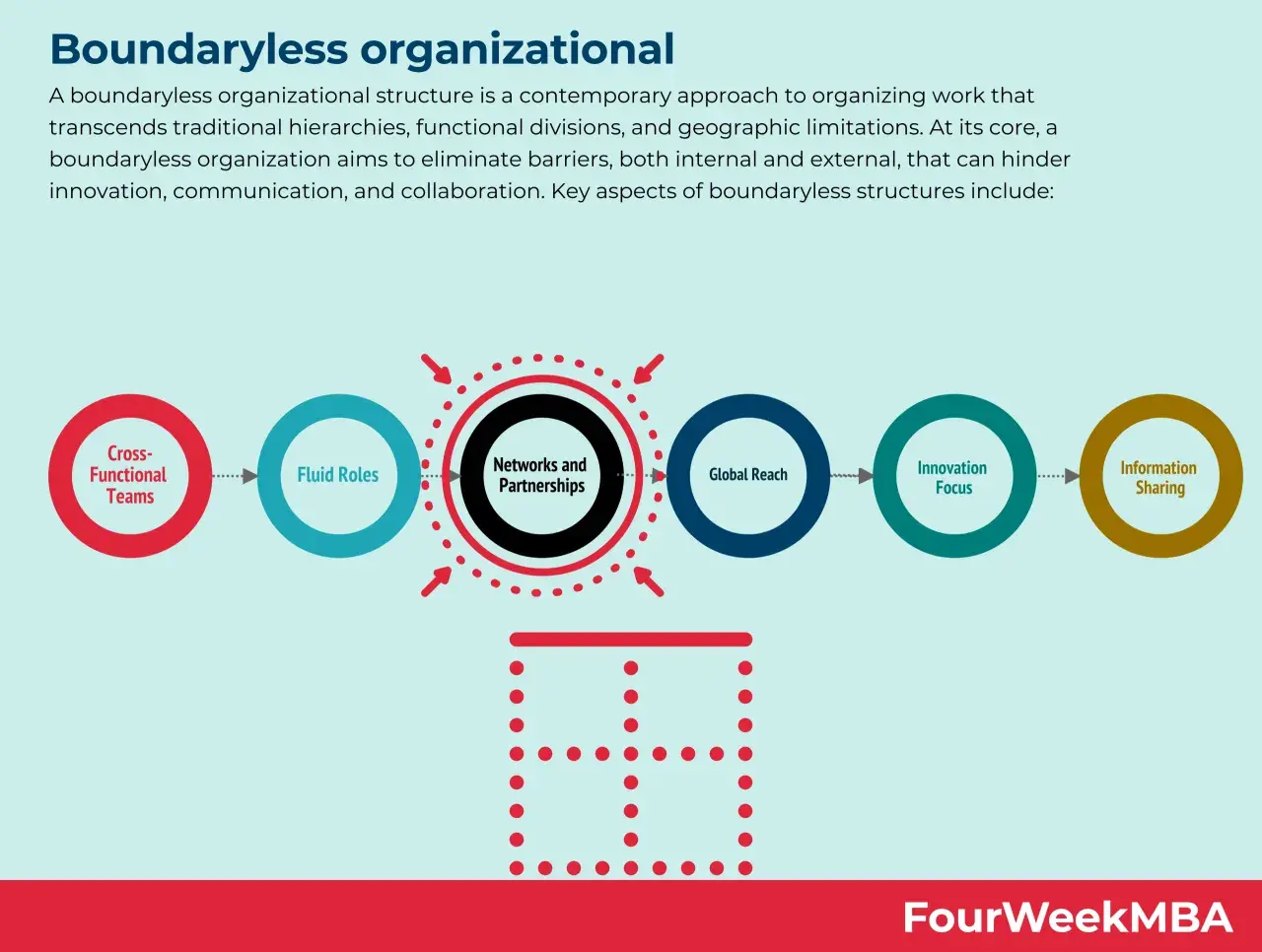
Boundaryless organizations are not about removing every rule. They are about making it easier for people to share information, move work across teams, and solve problems without artificial friction. In a workplace culture context, that matters because the best ideas often die in handoffs, hierarchy, or silence long before they reach customers. This article breaks down what the model really changes, where it helps, where it backfires, and how to build it without sacrificing accountability.
What matters most before you redesign the org chart
- Boundaryless does not mean structureless; it means fewer barriers that slow work and learning.
- The culture shift is bigger than the structural shift: trust, clarity, and psychological safety must rise together.
- The model works best where cross-functional work, customer responsiveness, and innovation matter.
- It can fail fast if role clarity, decision rights, and governance are vague.
- Start small with one process or team, then measure cycle time, handoff quality, and employee voice.
What boundaryless organizations actually change
At the simplest level, boundaryless organizations reduce the barriers that separate functions, levels, locations, and sometimes even outside partners. I see them less as a flat org chart and more as a networked way of working: information moves faster, teams mix more freely, and decisions happen closer to the work. In 2026, that often means hybrid teams, shared digital workspaces, and cross-border collaboration.
The distinction matters. A company can be flat and still be rigid. It can also keep a traditional hierarchy and still behave in a boundaryless way if people can move ideas, escalate problems, and collaborate without waiting for three approvals.
| Dimension | Traditional model | Boundaryless model |
|---|---|---|
| Information flow | Filtered through layers and functions | Shared across teams with fewer bottlenecks |
| Decision making | Top-heavy and slow | Closer to the customer or problem |
| Collaboration | Mostly inside silos | Cross-functional and often cross-company |
| Accountability | Defined by hierarchy | Defined by outcomes and shared ownership |
| Culture signal | Control and consistency | Trust, openness, and adaptability |
That shift in mechanics is important, but the deeper change is cultural: once people no longer rely on walls to organize work, the culture has to do more of the coordinating. That leads directly to the question of how people actually feel inside the system.
Why workplace culture becomes the operating system
When barriers come down, culture stops being a soft concept and starts acting like the operating system of the business. If people trust each other, speak up early, and understand how decisions are made, the model feels energizing. If they do not, the same structure turns messy very quickly.
In practice, three cultural conditions matter most.
- Psychological safety so people can raise problems before they become crises.
- Role clarity so collaboration does not become confusion.
- Shared purpose so teams know why they are working together across boundaries in the first place.
Inclusive leadership is especially relevant here. In a low-boundary environment, the loudest voice can dominate unless leaders deliberately make room for quieter people, newer employees, and colleagues from different functions or identities. I would argue that this is where many organizations overestimate their readiness: they change the chart, but not the habits of listening, credit-sharing, or conflict handling.
Once culture is doing that coordination work, the next practical question is whether the benefits justify the new demands on managers and teams.
The upside and the trade-offs teams should expect
The upside is real, but it is not free. Boundaryless working can improve speed, innovation, and customer responsiveness, yet it also creates new coordination costs that need to be managed deliberately.
Here is the trade-off in plain language: you usually gain less friction and more collaboration, but you also inherit more ambiguity and the risk of overlapping responsibilities. That is why the model is powerful in the right setting and frustrating in the wrong one.
- Faster decisions because the people closest to the issue can act sooner.
- Better innovation because ideas cross functional lines instead of staying trapped inside one team.
- Stronger customer focus because product, operations, and support can work from the same problem view.
- More inclusion potential because voices from different levels and disciplines can surface earlier.
- Higher coordination load because meetings, shared tools, and explicit decision rules become necessary.
- Greater burnout risk if everyone becomes available to everyone all the time.
I see the best results when leaders treat the model as a redesign of collaboration, not a license to be constantly on. Without that discipline, the organization gets flatter on paper and heavier in practice. The next step is learning how to build the system without creating chaos.

How to build the model without creating chaos
If I were rolling this out, I would start with a pilot, not a company-wide declaration. A boundaryless design works best when it is built around one business problem that genuinely requires cross-functional cooperation, such as onboarding, product launches, or customer escalation.
- Define the non-negotiables. Decide what must stay standardized for legal, ethical, security, or brand reasons.
- Clarify decision rights. Spell out who decides, who advises, and who executes. This avoids consensus theater.
- Organize around outcomes. Use squads, pods, or project cells when the goal cuts across functions.
- Reduce approval layers. Remove redundant sign-offs that add time but not quality.
- Set shared metrics. Track cycle time, quality, customer satisfaction, and rework instead of only department-level targets.
- Build regular rituals. Use short cross-functional reviews, retrospectives, and escalation channels so issues do not linger.
- Train managers differently. They need to coach collaboration, not just inspect output.
A useful rule of thumb is to start with a 30-60-90 day pilot: define the problem in the first 30 days, test new working norms in the next 30, and review the process and metrics in the final 30. That gives you enough time to see whether the change is real or just well-branded.
Those mechanics only work when leaders reinforce them consistently, which is where tools and daily behavior matter more than slogans.
Leadership behaviors and tools that keep the culture healthy
In a boundaryless environment, leadership is less about control and more about choreography. In 2026, with hybrid teams and AI-assisted workflows, that choreography matters even more. The job is to keep work moving, protect clarity, and make sure collaboration does not turn into noise.
| Behavior or tool | What it does | Why it matters |
|---|---|---|
| Transparent priorities | Shows what matters this quarter | Stops teams from chasing every request |
| Shared workspaces | Creates one source of truth | Reduces version confusion and duplicate effort |
| Decision logs | Records who decided what and why | Makes accountability visible |
| Cross-functional retrospectives | Reviews what worked and what failed | Turns friction into learning |
| Inclusive meeting design | Gives airtime to different voices | Prevents dominance by hierarchy or personality |
Technology helps, but it does not replace management discipline. Chat tools, project boards, and knowledge bases make openness easier; they do not make people honest, aligned, or fair on their own. I usually advise teams to choose fewer tools and use them consistently rather than stacking five platforms that nobody trusts.
The same is true for inclusion. If leaders want diverse teams to participate fully, they need clear norms for meetings, feedback, and escalation. Otherwise, low-boundary systems can amplify existing power imbalances instead of reducing them. That brings us to the mistakes I see most often.
Mistakes that weaken a boundaryless culture
Most failures do not come from the idea itself. They come from treating the idea as if structure no longer matters.
- Removing hierarchy without replacing it with decision clarity. People end up waiting for someone to step in anyway.
- Assuming collaboration happens naturally. It usually needs shared goals, facilitation, and conflict skills.
- Overloading employees with access. A culture of openness is not the same as permanent availability.
- Ignoring middle managers. They are often the people who make the model work or fail.
- Copying another company’s design without matching its context. What works in a software business may fail in healthcare, finance, or manufacturing.
- Measuring activity instead of outcomes. More meetings and more messages are not proof of better collaboration.
The strongest fix is boring but effective: define the rules of the road, then review them often. If people do not know where decisions live, who owns the work, or how to raise concerns, they will rebuild informal boundaries whether you want them to or not. The final question is when this model is actually worth the effort.
When this model is worth the effort and what to watch next
In my view, boundaryless organizations make the most sense when work is interdependent, change is frequent, and customer needs cut across traditional departments. They are less useful when compliance dominates every move or when tasks are highly standardized and local speed matters more than broad collaboration.
If you are evaluating the shift, I would watch four signals: faster resolution of cross-team issues, better employee voice in meetings and feedback loops, fewer handoff errors, and clearer ownership after the transition. If those signals improve, the model is probably helping. If not, the issue is rarely the idea itself; it is usually the missing discipline around clarity, leadership, or trust.
The practical lesson is simple: keep the boundaries that protect quality and ethics, and remove the ones that only protect hierarchy. That is the version of workplace culture that actually scales.
