
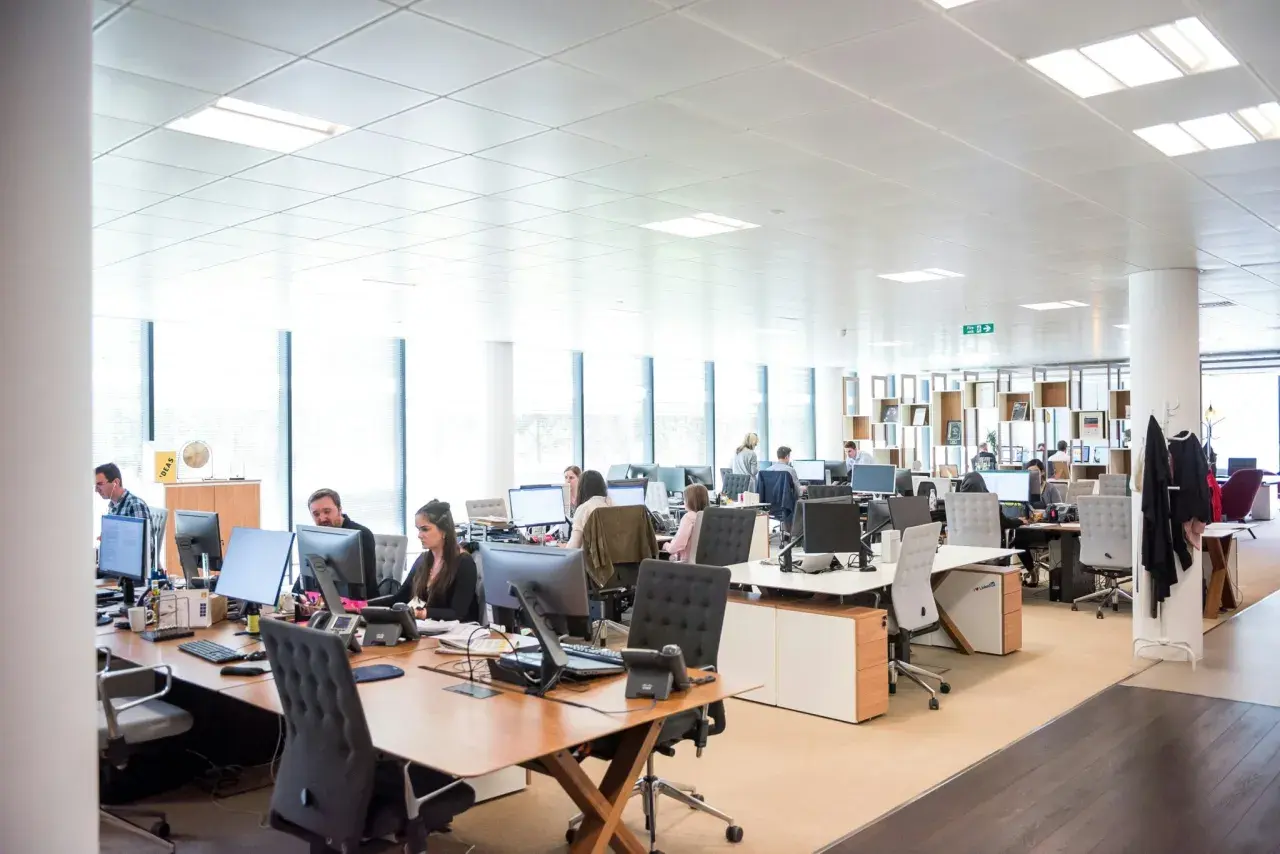
An open office space can make a team feel more connected, but it can also turn every conversation, phone call, and movement into part of the workday. The real question is not whether walls disappear; it is whether the space supports focus, trust, and the everyday habits that shape workplace culture. Here I break down what open layouts do well, where they backfire, and how to shape one so it works for different people, not just the loudest or most visible ones.
What matters most before the layout change
- Open layouts change behavior, not just architecture. They can speed up informal collaboration, but they also raise the cost of distraction.
- Research shows that proximity alone does not guarantee better teamwork. Without norms and acoustic support, people often retreat into email and chat.
- In the U.S., employees increasingly want workplaces that support both social connection and deep focus, not one at the expense of the other.
- Culture matters as much as furniture. The same floor plan can feel inclusive or exposed depending on leadership behavior.
- The best results come from a mix of open areas, quiet rooms, and clear rules for how people use them.
What an open layout really changes in workplace culture
I usually start by separating the floor plan from the culture story. An open layout can flatten hierarchy, make managers easier to approach, and speed up the small exchanges that keep work moving. It can also make people feel exposed, which changes how often they speak up, ask for help, or step away to think. Gensler’s 2025 workplace survey found that in the U.S. in-person collaboration and socializing have risen since the pandemic, so the office now has to support both connection and concentration rather than pretending one replaces the other.
Open plans do not create culture by themselves. They amplify whatever habits already exist: trust, silence, interruption, or mutual respect. That is why the same floor can feel collaborative in one company and exhausting in another. I think of it less as a design trend and more as a behavior system. Once you see it that way, the next question becomes simple: where does the model genuinely help, and where does it quietly fail?
How the layout helps and where it backfires
The tradeoff is real. Harvard Business School field studies found that after two companies moved to more open layouts, face-to-face interaction dropped by about 70%, while email and instant messaging increased. That does not mean every open floor fails, but it does mean proximity alone is not collaboration.
| Work need | What the open layout does well | What can go wrong | Better fix |
|---|---|---|---|
| Fast collaboration | People can spot each other quickly and start informal conversations without scheduling a meeting. | Those same conversations can interrupt nearby work and create constant background noise. | Group teams by work style and give them nearby small meeting rooms for short conversations. |
| Visibility and access | Managers are easier to approach and junior staff can learn by proximity. | Visibility can feel like surveillance if people never get a private place to reset. | Make privacy normal, not suspicious, and give people legitimate reasons to use quiet rooms. |
| Focused work | Quick questions are easy when teammates are nearby. | Deep work becomes harder because speech, movement, and interruptions are constant. | Add quiet zones, acoustic treatment, and clear etiquette for calls and headphones. |
| Hybrid meetings | Teams can gather informally without booking every interaction. | Calls become awkward when there is nowhere private to speak or be heard clearly. | Create enclosed call rooms and meeting spaces with proper audio support. |
Recent survey data also suggests that nearly 60% of employees working in unassigned settings would rather have a dedicated workspace. The practical lesson is not that openness is bad. It is that open layouts work best for fast, visible, social work and backfire when the job depends on quiet concentration, sensitive conversations, or repeated video calls. That is why design details matter more than the slogan on the wall.

How to design the floor so people can still think
If I am trying to improve an open floor, I do not start with furniture catalogs. I start with the soundscape and the work modes. A 2023 review of 60 studies found that irrelevant speech, chatting, and ringing phones were among the main noise sources linked to distraction, stress, and low comfort. In other words, the problem is not just volume. It is speech you cannot ignore.
- Separate work zones by task. Put collaborative tables, quick-touchdown seats, and quiet focus areas in different parts of the floor so the space tells people what belongs where.
- Add enclosed rooms for small tasks. Focus rooms and call rooms give people a place for sensitive conversations, video calls, and work that needs privacy.
- Treat acoustics as a core feature. Carpet, ceiling absorption, panels, and acoustic masking can reduce speech intelligibility. Acoustic masking is controlled background sound that makes nearby conversations less distracting, but it should support the layout, not replace it.
- Use team neighborhoods instead of random scattering. When people sit near others with similar work patterns, they waste less time negotiating noise and availability.
- Give people control over light, storage, and movement. A workspace feels calmer when employees can adjust their immediate environment instead of adapting to a one-size-fits-all setup.
I also look closely at inclusion here. Neuroinclusive design means building for people who process sound, light, and interruption differently, not forcing everyone into the same sensory environment. If a floor only works for extroverts in fast-paced roles, it is not a healthy workplace design. It is a narrow one. That brings us to the part leaders often underestimate: culture rules the room long before the floor plan does.
The leadership habits that make the difference
Space alone cannot make people respectful, but it can make respectful behavior easier to practice. I would treat the open floor as an operating system that needs rules, not as a finished solution. That means leaders have to model the behaviors they want others to copy.
- Make privacy legitimate. People should not have to justify using a quiet room, closing a door, or putting on headphones. If focus space feels like hiding, employees will keep working in the noisiest place available.
- Reward outcomes, not visibility. In open environments, the easiest mistake is to confuse being seen with being productive. Managers need to measure work quality and responsiveness, not how occupied someone looks.
- Set simple etiquette rules. Decide where calls happen, when speakerphone is acceptable, how long people can occupy a focus room, and what “do not disturb” actually means.
- Protect psychological safety. Psychological safety means people can ask questions, disagree, and admit uncertainty without punishment. In an open floor, that only happens when managers show they welcome candor instead of performative confidence.
- Include hybrid workers in the culture. If some people are remote, the open floor should not become an in-room club where side conversations replace shared decision-making.
This is where inclusive leadership and workplace culture meet the physical environment. A space can support belonging, but only if leaders make it safe to use the options the space provides. The next failure mode is usually more mundane: companies skip the obvious mistakes and then act surprised when people stop using the office well.
The mistakes that turn openness into friction
- Designing for headcount instead of work modes. If the main goal is fitting more desks into fewer square feet, the culture cost shows up later as distraction, frustration, and turnover risk.
- Removing walls before solving acoustics. A floor with no partitions and no sound strategy is just a louder floor.
- Mixing confidential work with public pathways. Legal, HR, client, and performance conversations need places where people can speak without being overheard.
- Treating hot-desking as a culture strategy. Unassigned seating can save space, but if people cannot reliably find a good place to work, the office starts feeling temporary and transactional.
- Expecting one layout to suit every team. Sales, finance, design, operations, and people teams do not need the same level of openness or the same amount of quiet.
In my experience, companies usually fix these problems too late, after the complaints become behavioral patterns. The better move is to test the floor before declaring it finished. That leads to the question I would ask before signing off on any redesign.
What I would test before signing off on the design
I would run the same blunt check every time: can people do the real work they were hired to do without fighting the room? If the answer is uncertain, the design is not ready yet.
- Can two people have a private conversation without the whole floor hearing it?
- Can someone do 90 minutes of focused work without being interrupted by noise or movement?
- Is there a nearby place for hybrid calls that does not punish the people around them?
- Do new hires understand where collaboration is welcome and where quiet is expected?
- Would introverts, neurodivergent employees, and caregivers find obvious options instead of hidden workarounds?
My rule of thumb is simple: openness should increase access, not anxiety. If the layout gives people choice, protects concentration, and makes inclusion visible in daily routines, it can support a healthy culture. If it makes people perform availability, hide their needs, or sacrifice privacy to look collaborative, the room is doing the wrong job.
