
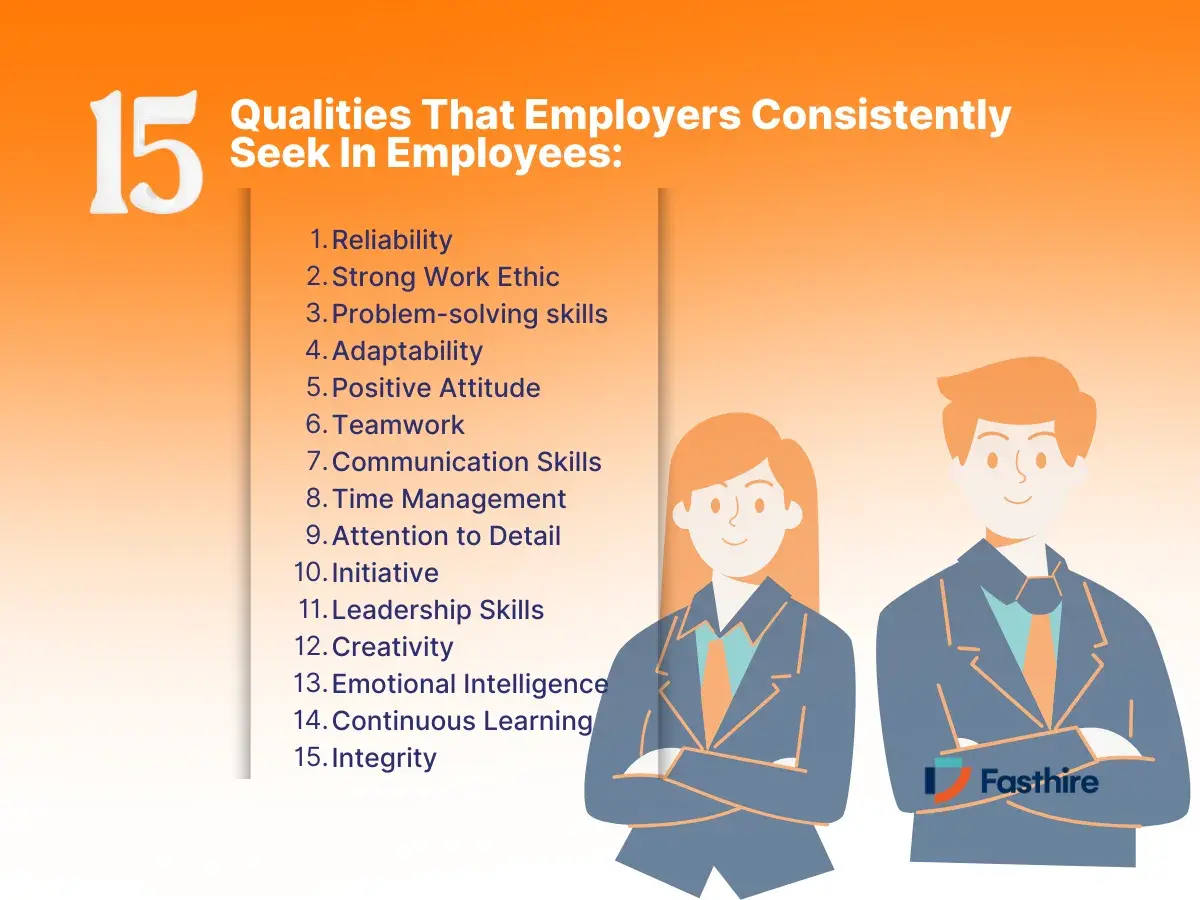
Strong careers are built on more than credentials. The best attributes are the qualities that make you useful in real work: clear communication, reliable follow-through, sound judgment, and the ability to work well with different people. In the U.S. job market, those traits matter whether you are applying for your first role, moving into management, or trying to lead a more inclusive team.
The career attributes employers keep rewarding
- Adaptability and willingness to learn matter because roles, tools, and team structures change quickly.
- Communication, listening, and collaboration are useful in almost every occupation.
- Problem solving and critical thinking help you move from doing tasks to owning outcomes.
- Inclusive leadership skills such as fairness, empathy, and accountability improve trust and retention.
- The right mix depends on your career stage, but the strongest qualities are always easy to demonstrate.
What employers usually mean by strong career attributes
When employers talk about “attributes,” they are usually not talking about personality in the abstract. They mean the habits and behaviors that make someone dependable, effective, and easy to trust under real workplace pressure. That includes how you communicate, how you respond to change, and whether other people can count on you to do what you said you would do.
The U.S. Bureau of Labor Statistics consistently groups in-demand skills around people and management strengths such as adaptability, interpersonal skill, leadership, project management, and speaking and listening. In its 2025 career outlook on those skills, BLS linked them to occupations projected to grow above the 4.0% average for all jobs over 2023 to 2033, with annual openings above the median 4,800 in the selected group. That is a useful reminder: these are not “soft” extras. They are career capital.
I usually think of attributes as the bridge between ability and trust. Technical competence gets you considered; character, communication, and judgment help you stay in the room. That is why the next step is not just naming traits, but understanding which ones show up again and again across roles.
The qualities that show up again and again
| Attribute | Why it matters | What it looks like at work |
|---|---|---|
| Communication | Prevents errors, speeds up decisions, and reduces friction. | You write clearly, ask direct questions, and give updates before people need to chase you. |
| Adaptability | Helps you stay useful when priorities, tools, or teams change. | You adjust without drama, learn new systems quickly, and do not get stuck on “how we used to do it.” |
| Problem solving | Moves you from executing tasks to improving outcomes. | You identify the real issue, compare options, and choose the one that fits the situation. |
| Accountability | Builds trust faster than almost any other trait. | You own mistakes, correct them early, and finish what you start. |
| Collaboration | Makes cross-functional work less painful and more productive. | You share context, respect other roles, and do not treat teamwork as a distraction from “real” work. |
| Learning agility | Signals that you can grow with the role, not just perform it once. | You ask smart questions, seek feedback, and improve after the first attempt. |
| Empathy | Improves leadership, customer relations, and conflict handling. | You notice how decisions affect other people and respond with perspective, not ego. |
| Initiative | Shows ownership instead of passivity. | You spot what needs doing and act before someone turns it into a deadline. |
If I had to rank these, I would put communication, adaptability, and accountability near the top for most jobs because they transfer across industries. The exact mix changes by role, but these qualities do not go out of date when your title does.

How to prove those strengths on a resume and in an interview
Traits only matter when they are visible. A resume full of adjectives is easy to ignore; a resume that shows outcomes is harder to dismiss. I prefer candidates to replace vague labels like “hard-working” or “team player” with proof: a result, a number, or a specific action that demonstrates the trait.
On a resume
Use a simple formula: action + scope + result. For example, instead of saying you are organized, show that you coordinated a 12-person project, reduced missed deadlines, or improved reporting turnaround. Numbers are not required in every bullet, but when you can include them, they make the trait believable.
In an interview
The STAR method still works because it keeps the answer grounded. STAR stands for situation, task, action, and result, and it helps you turn a strength into a concrete story. If you say you are adaptable, tell the interviewer about a time the plan changed late and you still delivered without losing quality.
Read Also: Learning Agility - Your Career Superpower for Constant Change
In a portfolio or reference
Portfolios, case studies, and references can show the same attributes from a different angle. A project write-up can demonstrate problem solving. A manager’s reference can reinforce accountability. A peer recommendation can reveal how you collaborate when no one is watching.
The goal is simple: make it easy for someone else to see the pattern. Once that pattern is visible, the conversation shifts from “Do you have the right attributes?” to “How did you use them?”
Why inclusive workplaces raise the bar
Inclusive workplaces do not lower standards; they raise the quality of the behaviors that count as strong. When people work across differences in background, identity, communication style, or experience, the best attributes become less about similarity and more about respect, clarity, and fairness.
That is where inclusive leadership becomes part of career strength. The EEOC’s best-practice guidance centers on fairness, communication, management accountability, and removing barriers that block equal opportunity. Those ideas map directly to day-to-day workplace behavior. A leader who listens carefully, shares context, credits contributions fairly, and corrects bias early creates better conditions for everyone’s performance.
I also think inclusive leadership exposes weak habits quickly. A manager who only values people who think and communicate exactly like they do will miss strong contributors. A team can be efficient and still feel exclusionary. The better standard is whether people are heard, whether decisions are explained, and whether different working styles can succeed without penalty.
That matters for individual careers, too. If you can build trust across differences, you become more valuable in more rooms. From there, the question becomes which attributes matter most at your stage of work.
How to match attributes to your career stage
| Career stage | What to emphasize | Why it matters |
|---|---|---|
| Entry level | Learning agility, reliability, communication | Hiring teams need proof that you can absorb feedback and operate consistently without constant supervision. |
| Early career | Ownership, collaboration, problem solving | You are expected to handle more ambiguity and contribute beyond your assigned tasks. |
| Mid-career | Judgment, initiative, cross-functional communication | At this stage, the question shifts from “Can you do the work?” to “Can you improve how the work gets done?” |
| Management | Accountability, coaching, fairness, decision-making | People are watching how you handle tradeoffs, conflict, and uneven workloads. |
| Client-facing roles | Empathy, responsiveness, calm communication | Trust is part of the product, and small interactions can shape long-term relationships. |
| Technical roles | Precision, problem solving, collaboration | Strong technical output still depends on shared understanding, clean handoffs, and honest communication. |
If you are changing careers, this table matters even more. In a transition, I would lead with transferable qualities first and role-specific expertise second, because that is what helps a new employer see how you will perform in a different context.
Common mistakes that weaken an otherwise strong profile
- Using broad adjectives without proof. “Motivated” and “detail-oriented” mean little unless you show how they affected results.
- Listing every possible strength. A focused profile is easier to remember than a crowded one.
- Confusing confidence with competence. A polished delivery does not replace evidence of good work.
- Overusing “culture fit” language. It can sound like sameness unless you explain what values and behaviors you actually mean.
- Ignoring inclusive behavior. Someone who performs well with people who are just like them may struggle in a more diverse team.
- Describing busyness instead of impact. Hours worked are not the same thing as outcomes delivered.
The pattern here is simple: vague claims weaken trust, while specific examples create it. That is why the last step is less about collecting more adjectives and more about choosing the right mix for the kind of career you want to build.
The attribute mix I would prioritize for most careers
If I were helping someone strengthen a career profile from scratch, I would start with five attributes: communication, adaptability, accountability, collaboration, and learning agility. Those five travel well across industries, and they support both individual performance and healthy team culture.
From there, I would add one role-specific strength and one people-centered strength. For some roles, that might be analysis and precision. For others, it might be client empathy and persuasion. If you are stepping into leadership, I would add fairness and coaching ability without hesitation, because teams rarely remember the loudest manager for the right reasons; they remember the one who made good work easier to do.
A practical next step is to write down three examples for each of your strongest traits and test them against real job postings, interview questions, and recent work outcomes. If a quality cannot be shown in behavior, it will not help much in a hiring process. If it can be shown clearly, it becomes one of the most useful assets in your career.
