
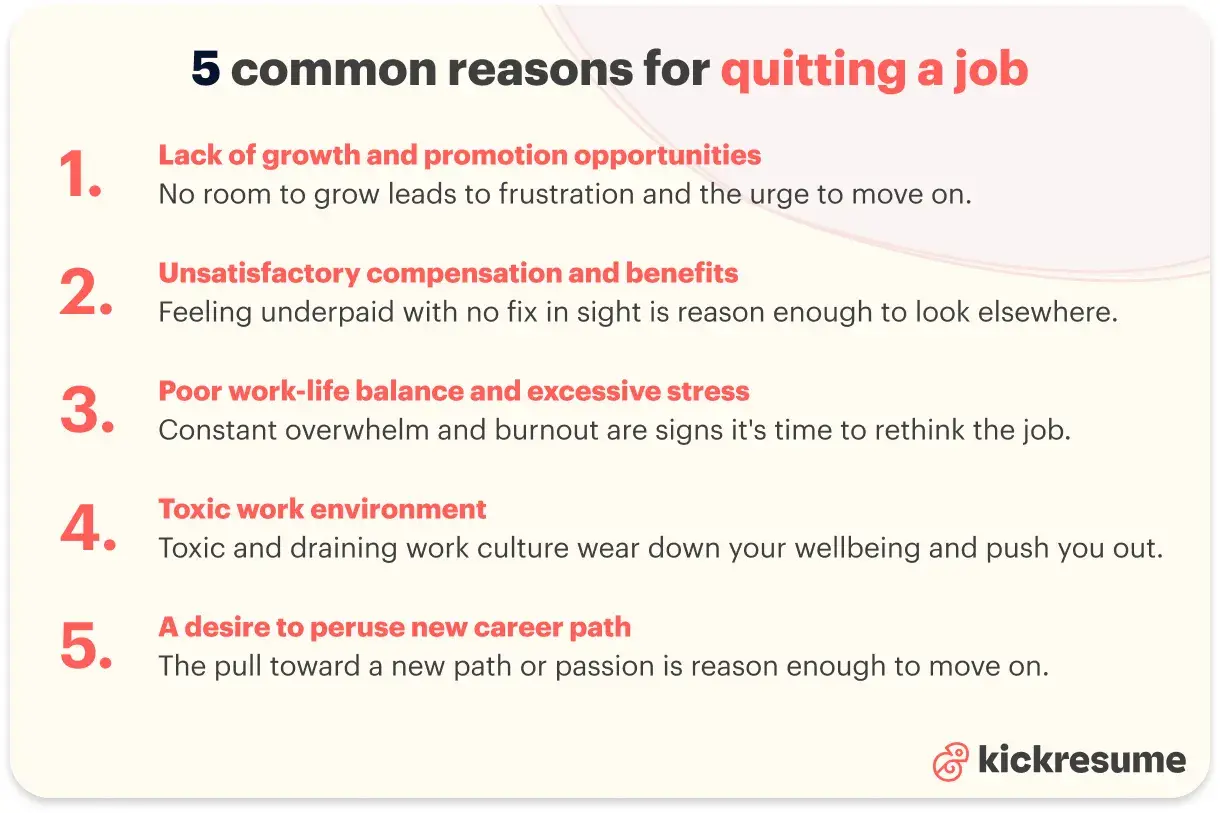
Deciding whether to leave a job is rarely about one bad meeting or one rough month. I look at three things: whether the role still fits your goals, whether the culture is draining your energy, and whether staying is creating a real financial or health cost. This article breaks that decision down into the signs that matter, the situations where staying is smarter, and the checks I would make before resigning in the U.S.
The decision comes down to fit, risk, and timing
- Fit means whether your current role still matches your goals, values, and energy.
- Risk includes savings, benefits, timing, and what you would lose by leaving too soon.
- Timing matters because a good move can still be a bad move if you resign without a plan.
- If work is affecting sleep, health, or relationships, I treat that as a serious signal, not ordinary discomfort.
- When the problem is culture, exclusion, or a manager issue, an internal move or exit may be more rational than trying to tough it out.
Start by naming the real problem
Before I decide whether a job should end, I try to label the actual problem in plain language. Is it pay, the manager, the team culture, lack of growth, a mismatch with my values, or simply a season of overload? That distinction matters because a bad project can be fixed, but a broken pattern usually cannot.
A job can be demanding without being wrong. The red flag is when the same issue keeps repeating and your best effort does not change the outcome. If you are constantly adapting, absorbing extra work, and still feeling behind, underused, or disrespected, the job may no longer be serving you.
Once the real problem is named, the signs become much easier to read.
Signs the job is no longer a healthy fit
Some discomfort is normal in any career. What I watch for is a pattern that starts to shape your health, confidence, or sense of belonging. In a healthy role, you should be challenged, but not routinely diminished.
- Work stress follows you home and starts affecting sleep, appetite, relationships, or focus.
- You no longer feel safe speaking up, which often points to a weak culture or poor psychological safety. That means you hesitate to raise concerns because you expect punishment, dismissal, or mockery.
- Your ideas are routinely ignored while other people get credit for the same kind of thinking.
- Learning has stalled and there is no credible path to better work, better pay, or more responsibility.
- You feel out of alignment with what the company rewards, especially if values like fairness, inclusion, or respect are discussed but not practiced.
- Your pay no longer matches your cost of living and there is no realistic path to a raise or role change.
I give extra weight to culture problems. If you are repeatedly sidelined, stereotyped, or treated like your perspective matters less, the issue is not just frustration. It is a workplace design problem, and it tends to spread unless leadership takes it seriously.
If several of these show up together for months, staying becomes a choice, not a default.
When staying is the smarter move
Not every bad stretch means it is time to move on. Sometimes the better move is to stay long enough to collect a bonus, finish a meaningful project, build a new skill, or wait for a role change that is already in motion. I am more cautious about quitting when the problem is temporary and the upside for staying is concrete.
| Situation | When staying makes sense | When leaving starts to look better |
|---|---|---|
| Short-term workload spike | The end date is clear and support is real | The pressure has become the permanent norm |
| Promotion or raise discussion | You have a written timeline and measurable criteria | You only get vague promises and repeated delays |
| Skill gap | Training, coaching, or a transfer is actually available | You are blamed for the gap but never taught how to close it |
| Industry uncertainty | You need income stability or benefits right now | You have savings, a plan, and evidence that another role is attainable |
In April 2026, the U.S. Bureau of Labor Statistics reported 7.618 million job openings and a 1.9% quits rate. I read that as a reminder that opportunities still exist, but timing and leverage still matter. A healthy labor market does not cancel out the cost of leaving too early.
If the balance is still unclear, I use a scorecard rather than gut feel.
Use a scoring test instead of guessing
When people ask for a simple answer, I usually push them toward a more disciplined one. Score each of these areas from 1 to 5: compensation, growth, manager quality, team culture, and impact on health. Then write one piece of evidence next to each score so you are not just reacting to mood.
| Category | What a low score usually means | What a high score usually means |
|---|---|---|
| Compensation | You are underpaid, underappreciated, or stuck below market | Your pay is fair for the role and your scope |
| Growth | No learning, no feedback, no visible next step | You can see a realistic path forward |
| Manager quality | Confusing priorities, poor support, or inconsistent treatment | Clear direction and usable feedback |
| Team culture | Exclusion, disrespect, or silence around bias and conflict | People can speak honestly and still feel respected |
| Health impact | Sleep, mood, or relationships are taking the hit | Work is demanding but still sustainable |
My cutoff is simple: if three or more categories stay at 2 out of 5 or below for 60 to 90 days, I start planning an exit instead of hoping the feeling passes. If one category is a hard 1, especially around respect, safety, or health, I move faster.
That score only helps if you also check the practical cost of leaving, which is where many people get surprised.
Check the money and benefits before you resign
The emotional case for leaving can be strong while the financial case is still weak. That is why I always look at the runway first. A new job is not just a new title; it is a change in cash flow, health coverage, retirement timing, and day-to-day risk.
- Emergency savings: I prefer 3 to 6 months of essential expenses before quitting without another offer. If you are changing fields, expect volatility, or likely taking a pay cut, 6 to 9 months is safer.
- Health coverage: A short gap can become expensive fast, especially if you have prescriptions, ongoing care, or a family plan.
- Bonus and equity timing: Leaving a few weeks too early can mean walking away from money that is already within reach.
- PTO and final pay: Rules can vary by employer policy and state law, so check how unused vacation, commissions, and final wages are handled before you hand in notice.
- Agreements on file: Review any confidentiality, noncompete, or notice obligations in your employment documents.
Even if the job is bad, I do not recommend resigning before you have a written offer unless there is a clear safety or ethics issue. That gap can turn a thoughtful career move into a scramble. The cleaner move is usually to search quietly, keep performing, and leave once the next step is locked in.
Once the practical side is covered, the last question is how to leave without creating a second problem.
Leave in a way that protects your reputation
How you exit matters almost as much as why you leave. In a small industry, people remember whether you were calm and professional or reactive and careless. If the workplace is already tense, that is even more reason to keep your tone measured.
- Wait until the offer is written before you announce anything.
- Keep your performance steady during the notice period so you do not create avoidable damage.
- Document your work so the handoff is clear and your contributions are visible.
- Avoid venting publicly on social media or in group chats; it rarely helps your long-term position.
- Ask for references strategically after you have handled the transition well, not in the middle of a conflict.
When the departure is handled well, you protect future references, future collaborations, and sometimes even a boomerang path back into the organization. That is especially useful if the issue was a manager or team, not the company as a whole.
If you are still torn after that, one short test usually exposes which direction has the stronger case.
The one-week test that makes the answer clearer
For one week, I ask people to write down three things. First, what would need to change for them to stay another 90 days. Second, what would make them leave immediately. Third, which list is backed by evidence rather than emotion. That exercise sounds simple, but it usually separates temporary frustration from durable mismatch.
- Write the reasons to stay, and be specific about what would have to improve.
- Write the reasons to leave, and note whether they are about the role, the manager, the culture, or the pay.
- Re-read both lists after seven days, not at the peak of a bad afternoon.
If the second list is still stronger, I would stop treating the decision as hypothetical and start searching quietly while I protect my savings, health, and work quality. If the first list is realistic and you can name a deadline for change, staying is not settling; it is a deliberate choice. Either way, the right answer is the one that respects both your career and the life around it.
