
A career shift gets easier when you treat it like a project instead of a leap of faith. I think the most useful career transition plan is one that connects three things at once: the work you want, the skills you already have, and the financial runway you can realistically support. In this article, I break down how to choose a direction, map transferable skills, budget for the move, and present your story in a way employers can understand quickly.
The roadmap in brief
- Decide whether you are changing role, industry, or both, because each move has a different level of risk.
- Use current U.S. labor-market signals to sanity-check demand before you invest time or money.
- Translate past achievements into transferable skills and proof, not just job titles.
- Build a timeline and savings buffer before you commit to training, applications, or a resignation.
- Shape your resume, LinkedIn profile, and interview narrative around the next role, not the old one.
- Choose employers with structured hiring and inclusive culture, especially if your path is nontraditional.
What a career move really involves
Not all transitions are the same, and I would not plan them as if they were. A change can mean moving into a different industry, shifting to a new function, or doing both at once. Those three versions look similar on paper, but they demand very different levels of proof, retraining, and patience.
| Type of move | What changes | Typical difficulty | Best when | Main risk |
|---|---|---|---|---|
| Same role, different industry | Your function stays the same, but the business context changes | Low to moderate | You already have strong operational, sales, finance, or project skills | Underestimating industry language and stakeholder expectations |
| Same industry, different role | Your domain knowledge stays useful, but the work itself shifts | Moderate | You know the field and can show adjacent capability | Not proving you can handle the new responsibilities |
| Different industry and different role | Both the subject matter and the function change | High | You have time, savings, or a strong bridge role to step through | Trying to move too fast and looking underprepared |
When I work through a transition with someone, I often recommend choosing only one major variable at a time if possible. That is where a bridge role helps: it is a job that sits between the old path and the new one, reducing the distance you have to cross at once. Once you know which kind of move you are making, the next decision is whether the destination actually fits your life and values.
How to choose the right next path
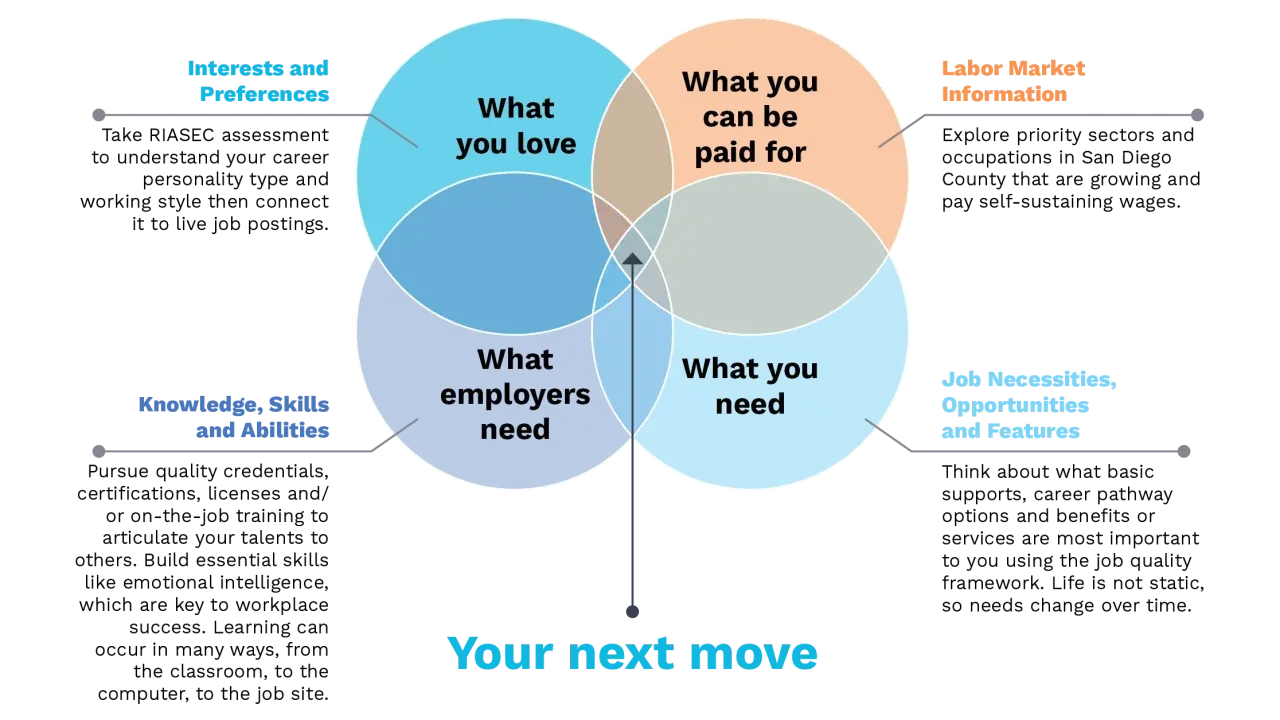
The fastest way to waste months is to chase a title that sounds better without checking whether it solves the real problem. I start with four questions: what work gives you energy, what work drains you, what constraints you cannot ignore, and what trade-offs you are willing to accept for the next 12 to 24 months. If a new path improves your schedule but cuts income sharply, or raises your pay but recreates the same stress, that is not progress.
I like to separate the decision into a few practical filters:
- Values fit - Does the new path match what you care about now, not five years ago?
- Lifestyle fit - Do the hours, location, travel demands, and pace actually work for your life?
- Learning fit - Can you realistically acquire the missing skills without burning out?
- Market fit - Is there enough demand in the U.S. market to justify the pivot?
That last point matters more than many people admit. BLS projects total U.S. employment to grow by 4.0% from 2023 to 2033, with about half of projected job gains concentrated in healthcare and social assistance plus professional, scientific, and technical services. I would not treat that as a personal recommendation, but it is a useful sanity check when you are choosing where to aim your effort. A career move becomes much less guesswork when the labor market is pulling in the same direction as your own goals.
After the target gets clearer, I move to the question that saves the most money: what can you already carry with you?
How to map transferable skills without underselling yourself
This is where many strong candidates accidentally talk themselves down. They describe old job titles instead of the capabilities those jobs built. That is a mistake, because most employers in a transition are not buying your history page by page; they are looking for evidence that you can solve their problems quickly.
LinkedIn’s career-transition guidance keeps coming back to transferable skills and network-building, and that emphasis is right. I would add one more layer: do not just list skills, attach proof to each one. For every capability you claim, I want a short example, a result, or a metric that makes it real.
- Leadership - How many people, projects, or moving parts did you coordinate?
- Communication - Did you simplify complex information, reduce confusion, or get decisions unstuck?
- Problem-solving - What process, workflow, or customer issue did you improve?
- Stakeholder management - Who did you align, and what changed because you did?
- Analysis - What data, trend, or pattern did you use to make a better decision?
I usually advise people to build a simple three-column skill map: old experience, transferable skill, and new-role proof. For example, a program coordinator moving into people operations might translate event logistics into process management, vendor coordination into stakeholder management, and scheduling into workload prioritization. The point is not to pretend the jobs are identical; the point is to make the bridge obvious. When the bridge is visible, the plan becomes a timeline rather than a wish list.
How to build a timeline and budget that hold up in real life
This is the part that turns ambition into something executable. A transition fails most often when the person underestimates the time, the money, or the emotional load involved. I prefer to map the move in phases so the work does not feel endless.
| Phase | Focus | What you should finish |
|---|---|---|
| Weeks 1 to 2 | Direction | Choose a target role, define your constraints, and confirm whether the move is role, industry, or both |
| Weeks 3 to 4 | Gap analysis | List missing skills, required credentials, and the exact proof employers will want |
| Weeks 5 to 8 | Build | Complete focused learning, create work samples, update your materials, and start networking |
| Weeks 9 to 12 | Market | Apply, interview, refine your story, and track where you are getting traction |
If the move is lateral and you are staying employed, a 3 to 6 month effort window is often enough to gain traction. If the pivot requires a certificate, portfolio, apprenticeship-style proof, or a serious industry reset, I would plan for 6 to 12 months and a larger savings buffer. If you are leaving a stable role before the next one is in hand, I want at least 3 to 6 months of essential expenses saved; for a deeper retooling, 6 to 12 months is safer. That is not glamorous advice, but it keeps a career move from becoming a financial emergency.
Cost matters too. Public programs, employer-funded learning, and community college options can keep training relatively accessible, while private bootcamps or specialty courses can get expensive quickly. My rule is simple: only pay for training after you have confirmed that the target role actually values that credential or skill. BLS projections can help here as well, because they tell you where demand is likely to stay strong, but they do not replace local research, salary checks, or conversations with people already in the field. A realistic timeline matters because employers will not read your intent unless your resume, profile, and conversations make it obvious.
How to present the switch in resumes, LinkedIn, and interviews
Once you know where you are headed, your application materials need to tell the same story. I prefer a skills-first resume summary, a LinkedIn profile that points clearly toward the target role, and interview answers that explain the move without sounding defensive. The goal is not to hide the transition; it is to frame it as deliberate.
- Resume - Lead with outcomes, scope, and skills that map directly to the new role. Trim details that only support the old identity.
- LinkedIn - Rewrite the headline and about section so they point to the next path, not just the last job title.
- Interview - Use a simple three-part story: why this change, why now, and why you are ready.
- Portfolio or work samples - Show one or two concrete artifacts if the field rewards proof, especially in design, content, operations, tech, or analytics.
I would avoid overexplaining why you are leaving. Spend more time on why you are prepared to contribute. A strong transition narrative sounds like this: you learned something useful in your previous role, you identified a new problem you want to solve, and you have already taken steps to close the gap. That is much more persuasive than a vague story about wanting a fresh start. The presentation works best when the culture on the other side can evaluate you fairly, which is where the employer’s process matters.
How to judge whether the destination is inclusive enough
This is the part many career guides skip, but I do not think they should. A move can be technically smart and still land you in a workplace that wastes your skills or excludes people who do not fit the default mold. If your background is nontraditional, if you have caregiving gaps, if you are returning after a break, or if you are changing fields later in life, you need more than goodwill. You need a process and a culture that can actually recognize ability.
These are the signs I look for:
- Structured interviews - Clear questions and scorecards reduce bias and make comparison fairer.
- Transparent pay ranges - You should not have to guess whether the role is worth the move.
- Visible internal mobility - If people can grow there, the company usually understands development.
- Accessible application steps - Simple forms, reasonable accommodations, and clear instructions matter.
- Mentorship or sponsorship - One helps you learn; the other helps you move.
- Real flexibility - Not just a policy page, but managers who can make it work in practice.
In inclusive workplaces, candidates are not punished for having a different path if they can demonstrate value now. That is important because career mobility is not equally easy for everyone. Networks, visibility, and confidence are distributed unevenly, and some people have to do more work to be seen as credible. The best employers make that easier by judging skills directly, not by assuming the most linear path is the best one. Even with the right employer, though, the first quarter in the role is where many people either settle in or drift, so the last step is measuring whether the move is actually working.
What to watch in the first 90 days after the move
Landing the job is not the end of the transition. It is the first real test. I tell people to track whether the new role is building confidence, reducing stress, and creating room for growth, because those are the things that decide whether the move holds up over time.
- Skill fit - Are you using the skills you came to use, not just surviving the day?
- Learning curve - Are you picking up the tools and language fast enough to feel steady?
- Manager support - Do you get feedback, clarity, and enough room to ask questions?
- Culture fit - Are you respected in meetings, decisions, and day-to-day communication?
- Growth path - Can you see a next step that is more than vague encouragement?
- Personal cost - Is the role sustainable for your health, family life, and finances?
If the answer stays yes across most of those measures, the transition is working. If not, I would rather adjust early than spend a year trying to force fit a role that was wrong from the start. A good transition is not just a new job title; it is a better match between your skills, your values, and the way you want to work. That is the standard I would use for myself, and it is the one I would use for anyone building a smarter next chapter.
