
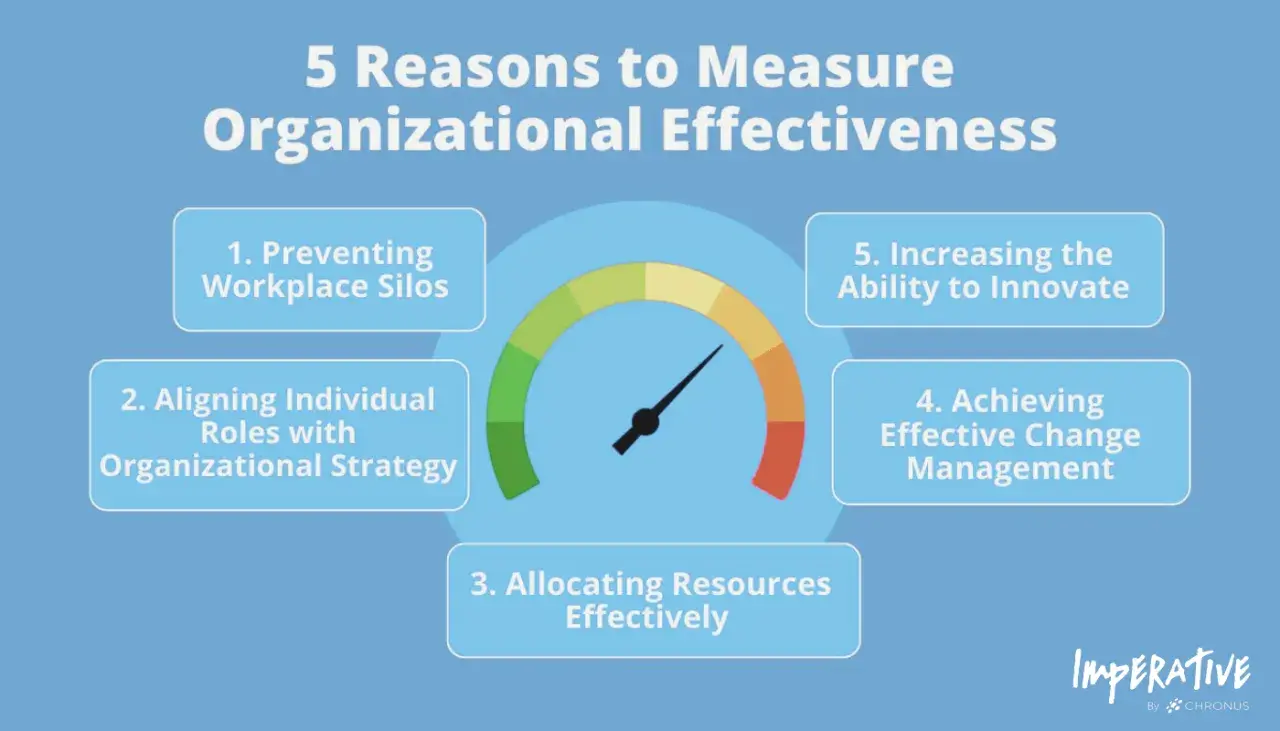
An organization becomes effective when strategy, structure, and behavior point in the same direction. The real test is whether it can hit its objectives without creating extra friction, confusion, or burnout; that is where organizational effectiveness either improves or quietly erodes. In this article, I break down how strategy and change shape that outcome, what to measure, and the practical moves that help a team stay aligned while it evolves.
The main test is whether change improves results without draining the system
- Strategy matters most when it forces clear choices, not when it adds another layer of ambition.
- Change succeeds through behavior, so managers and team leads need practical guidance, not just a launch memo.
- Culture is the operating system; if it resists the new direction, results will stall.
- Measure leading indicators like adoption, decision speed, and workload before you expect final outcomes.
- Inclusive leadership improves execution because more risks and better ideas surface earlier.
What effectiveness looks like when the organization is changing
I define this as more than meeting a quarterly target. A company is effective when it consistently converts intent into outcomes, and it can do that again after the next shift in market conditions, technology, or workforce expectations. That is why I treat organizational effectiveness as a system property, not an HR slogan.
When I assess it, I look for a few simple signals:
| Signal | What it tells me |
|---|---|
| Goals are met without constant heroics | The system is doing the work, not just a few overextended stars. |
| Managers can explain priorities in one sentence | Strategy has been translated well enough for daily execution. |
| People raise risks early | Psychological safety is real enough to improve decision quality. |
| New behaviors persist after launch | The change has become part of how work gets done. |
This matters because a strategy that lives only in presentations does not change performance, and a change effort that depends on enthusiasm alone rarely lasts. When those signals are weak, the problem is usually clarity, capability, or culture rather than effort. From there, the next question is not whether to change, but how to design the change so the strategy can actually land.

The strategy moves that make change stick
I start with the strategy layer because many transformation problems are actually focus problems. If leaders are trying to do too many things at once, even strong teams end up delivering average results. The goal is not more activity. The goal is a cleaner line from decision to action to outcome.
- Choose three outcomes and kill the rest. If the organization cannot name its top three priorities, it does not have a strategy problem so much as a concentration problem.
- Translate strategy into decision rights. People should know who decides, who inputs, and who needs to be informed. Ambiguity here creates delays fast.
- Allocate resources to the work that changes behavior. Training, manager coaching, process redesign, and communication all matter, but not every initiative deserves equal weight.
- Cut initiative overload. Every new effort should push something lower value out of the portfolio. Otherwise the change load keeps growing while attention keeps shrinking.
- Tie each initiative to one leading indicator. I want to see adoption, cycle time, quality, or retention move before I claim the strategy is working.
McKinsey’s recent work on transformation is useful here because it reminds leaders that employees can experience around ten planned change programs in a year. That is a serious load, which means portfolio discipline is not a luxury; it is the difference between momentum and fatigue. Once the strategy is cleaner, the people side becomes much easier to handle.
People and culture are not soft issues here
This is where inclusive leadership starts paying off in a hard-nosed way. When people from different roles, identities, and levels can speak early, leaders get better information and fewer surprises. I care about culture because it decides whether people trust the change enough to act on it.
Recent Gartner research in 2026 found that fewer than half of CHROs say their culture drives employee performance, while only 43% of employees believe the culture helps them succeed. That gap tells me culture is often talked about as a value statement but experienced as an operational constraint. If you are trying to improve results, you cannot leave that gap untouched.
In practice, I look for five things:
- Plain-language communication that explains why the change matters now, why this team, and what success looks like.
- Manager readiness so leaders at the middle can answer questions without improvising.
- Visible behavior from senior leaders because people watch what gets rewarded, not what gets said.
- Workload protection so the change does not land on already exhausted teams.
- Room for dissent before decisions harden, which is especially important in hybrid and cross-functional environments.
I also pay attention to who speaks first, who speaks last, and whose concerns get acted on. That is often the clearest signal of whether the culture is truly inclusive or just using inclusive language. Once the cultural layer is visible, measurement becomes far more honest.
How I measure whether the change is actually working
I do not trust a dashboard with too many metrics. More than seven, and most leaders stop reading it; more than that, and the numbers start competing with each other. I prefer a small set of indicators that connect behavior to business results.
| Metric | Why it matters | What good looks like |
|---|---|---|
| Adoption rate | Shows whether people are using the new process, tool, or behavior. | Steady week-over-week growth across the first 30 to 90 days. |
| Decision cycle time | Reveals whether the structure is making execution faster or slower. | Fewer handoffs and shorter approval loops. |
| Employee pulse and workload | Shows whether people can absorb the change without burning out. | Stable or improving sentiment, not a silent drop in energy. |
| Internal mobility and retention | Helps confirm whether the organization still feels like a place to grow. | No sudden spike in regrettable attrition. |
| Customer or operational outcome | Connects the change to real value outside the organization. | Measurable improvement in speed, quality, service, or cost. |
I usually check for three milestones. At 30 days, I want awareness and manager readiness. At 60 days, I want to see pilot adoption and less confusion. By 90 days, at least one business outcome should be moving, even if modestly. If nothing changes by then, I assume the issue is design, incentives, or overload before I blame communication. Measurement is also where weak assumptions get exposed, which makes the next section hard to ignore.
The mistakes that quietly erode results
The easiest way to lose momentum is to mistake motion for progress. Another common failure is adding one more initiative to teams that are already saturated. McKinsey’s recent work on change fatigue is a reminder that many employees are already carrying a heavy change load, so the margin for error is small.- Measuring activity instead of outcomes. Training completed is not the same as behavior changed.
- Treating communication as a one-time announcement. People need repetition, examples, and local context before change feels real.
- Ignoring middle managers. They translate strategy into daily reality, and they are often the most overloaded layer in the organization.
- Changing behavior without changing incentives. If rewards still favor the old way, the new way will fade.
- Calling every problem a culture problem. Sometimes the issue is structure, process, or capacity, and culture talk is just a convenient shortcut.
What I would do in the first 90 days of a change
- Name the three business outcomes that matter most and publish them in plain language.
- Assign one executive sponsor and one operational owner to each outcome so accountability is visible.
- Pause or remove one low-value initiative for every meaningful new initiative you launch.
- Give managers a weekly message and a feedback loop so they can answer questions consistently.
- Review five metrics every two weeks and make one adjustment based on what the data says.
If I had to reduce the whole topic to one idea, it would be this: durable performance comes from alignment, pace, and follow-through, not from intensity alone. The organizations that handle change well are usually the ones that make work clearer, leadership more inclusive, and measurement more honest. That combination is what turns strategy into results without wearing the system down.
