
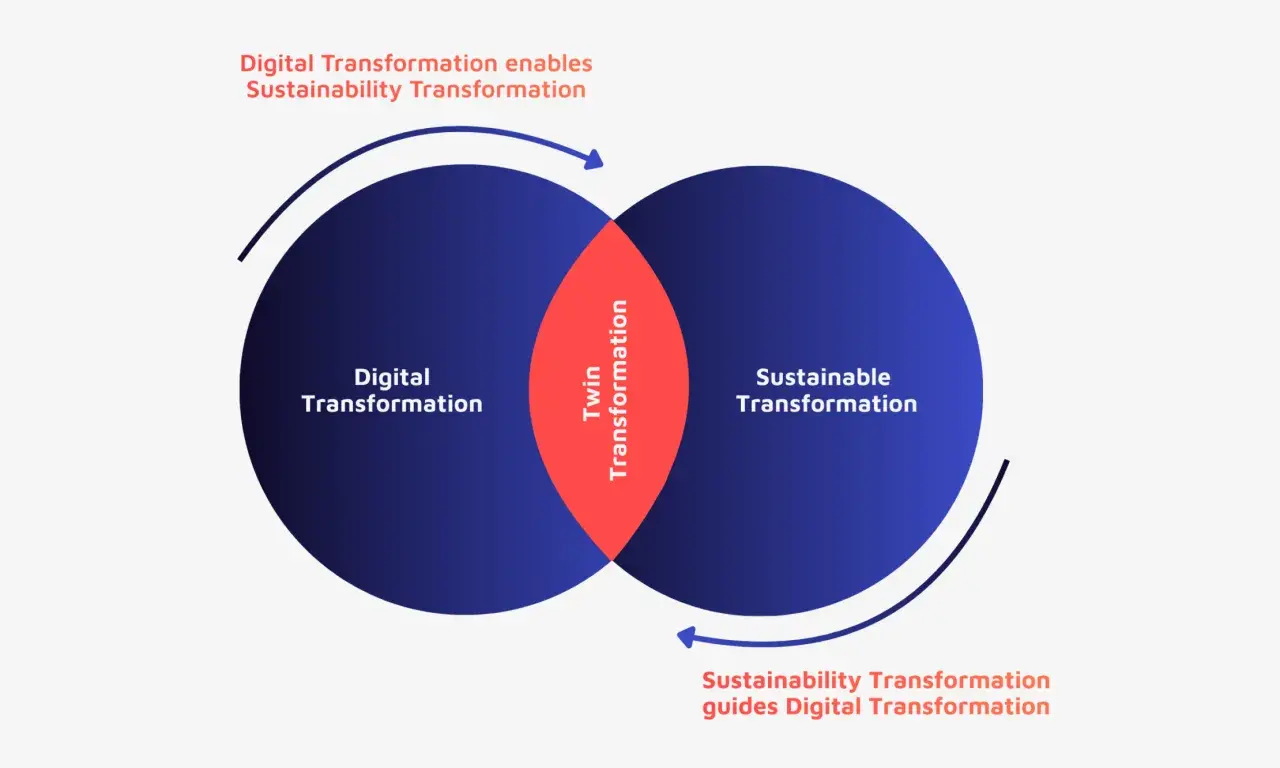
Real sustainability work starts when a company changes how it buys, builds, hires, ships, and measures performance. Sustainable business transformation is not a branding exercise; it is a redesign of daily decisions so lower waste, lower risk, and better resilience become part of normal operations. In this article, I break down what that shift means, how leaders can sequence it, and what to measure so the effort produces more than a polished report.
What matters most before you start
- The biggest gains usually come from a few high-impact areas: procurement, product design, logistics, facilities, and people practices.
- Strategy has to lead. If priorities are vague, teams spread effort too thin and the work stalls.
- The transformation sticks only when it is built into budgets, KPIs, manager routines, and decision rights.
- For U.S. companies, the plan needs to survive a patchwork of customer, investor, and regulatory expectations.
- You need to track both environmental and business results, or the program will struggle in finance reviews.
What sustainable business transformation really changes
This kind of change reaches into the operating logic of the business. It changes what gets purchased, how products are designed, how energy is used, how suppliers are selected, how talent is developed, and which risks get treated as urgent instead of optional.
I do not treat that as a communication campaign or a side initiative. Offsets, annual reports, and public commitments matter, but they only become credible when the core system shifts. A U.S. manufacturer may get most of its impact from energy, scrap, and industrial heat. A retailer may get more leverage from packaging, returns, and distribution. A services firm may need to focus on travel, real estate, and supplier standards. The shape of the work changes by sector, but the principle stays the same: sustainability has to be embedded where decisions actually happen. That is why the next step is choosing priorities, not slogans.
How to set priorities without trying to fix everything
I like to start with three filters. First, how material is the issue to the business and the planet? Second, does the change strengthen cost, resilience, reputation, or access to talent and capital? Third, can the organization realistically execute it in the next 12 to 18 months?
McKinsey's guidance on change is useful here: treat sustainability like any other large-scale change effort and be explicit about what you will and will not prioritize. That sounds simple, but it prevents one of the most common mistakes I see, which is trying to solve every issue at once. If you want a practical test, ask these questions before you approve a roadmap:
- Which 20% of activities create the largest share of emissions, waste, or supplier risk?
- Which changes can improve margins or resilience within one budget cycle?
- Which commitments are measurable with the data you already have?
- Which business units are ready to pilot, and which need more capability first?
When those answers are clear, the program stops feeling abstract. The next task is turning those priorities into operating routines people can repeat.

The operating model changes that make progress repeatable
Strategy only matters if the operating model supports it. In practice, that means redesigning the routines, tools, and ownership structures that shape day-to-day work. I usually look at five functions first, because they influence the most decisions and create the fastest knock-on effects.
| Function | What changes | What working looks like |
|---|---|---|
| Procurement | Supplier standards, total cost of ownership, preferred materials, and traceability expectations | Sustainability criteria are part of sourcing decisions, not an afterthought |
| Product and operations | Design for durability, repair, lower energy use, and lower material intensity | Fewer defects, less scrap, and better product performance over time |
| Supply chain and logistics | Route optimization, packaging reduction, inventory discipline, and supplier collaboration | Fewer empty miles, less waste, and better service consistency |
| Finance and planning | Capital allocation, scenario analysis, and sustainability assumptions in business cases | Investment memos include energy, waste, and resilience impacts |
| People and culture | Training, incentives, role clarity, and manager expectations | Frontline teams know how to raise issues and suggest improvements early |
The World Economic Forum recently pointed to AI as a structural lever for sustainability because it can help optimize processes, reduce waste, and improve resource efficiency at scale. I think that matters, but only if the data, workflows, and decision rights are already in place. Tools do not transform a company on their own. They make a better operating model faster. Once the operating model is set up, the real question becomes whether the culture can carry it without constant top-down pressure.
How to lead the change without burning out the workforce
I have rarely seen a sustainability program succeed when only the executive team owns it. The people who translate strategy into daily behavior are middle managers, frontline supervisors, procurement leads, plant managers, finance partners, and team members who notice process waste before anyone else does. That is why inclusive leadership matters here. It widens the source of ideas, reduces blind spots, and makes the transformation feel shared instead of imposed.
McKinsey's work on change is blunt about this: behavior change at scale depends on visible role models, aligned processes, and upskilling. In other words, you cannot ask people to work differently and then leave their incentives, tools, and workload untouched. I would focus on five leadership moves:
- Name the trade-offs openly instead of pretending every sustainability goal is frictionless.
- Involve people from different levels and functions early, not after decisions are already fixed.
- Use change agents in each business unit so the work has local ownership.
- Train managers with scripts, examples, and decision rules they can use immediately.
- Reward progress, not just ambition, so teams see that the behavior is real.
If you get the leadership layer right, people are far more willing to change habits, question old assumptions, and carry the work forward. That makes measurement much more useful, because the numbers start reflecting a real shift instead of performative activity.
What to measure so the program survives finance review
If the dashboard only tracks emissions, the business case often gets too narrow. If it only tracks cost, the long-term transition gets ignored. I prefer a balanced scorecard with three to five core metrics that connect environmental progress to business performance. Review them monthly at the team level and quarterly at the executive level.
| Metric | Why it matters | Typical review cadence |
|---|---|---|
| Emissions intensity | Shows whether output is becoming cleaner, not just whether absolute emissions moved | Monthly or quarterly |
| Energy or water use per unit | Captures operational efficiency and cost pressure | Monthly |
| Waste, scrap, or returns rate | Reveals quality issues and hidden margin loss | Monthly |
| Supplier coverage or audit completion | Shows how much of the supply chain is actually under control | Quarterly |
| Employee participation or engagement | Indicates whether the culture is absorbing the change | Quarterly |
| Revenue from sustainable offers | Tests whether sustainability is creating commercial value, not only compliance value | Quarterly |
The point is not to collect more data. The point is to make better decisions faster. When I see teams tracking only carbon, they often miss the operational friction that will make the plan harder to scale. When I see teams tracking only cost, they lose the strategic horizon. The balance matters because it keeps both the finance team and the operating team engaged.
The mistakes that stall progress in U.S. companies
The U.S. context adds a layer of complexity because expectations come from different directions at once: customers, investors, employees, suppliers, and a changing policy environment. I would not build a plan that assumes one stable rulebook. I would build a plan that can absorb uncertainty.
The most common mistakes are usually predictable:
- Treating sustainability as messaging instead of operational redesign.
- Starting too many initiatives and finishing none of them.
- Putting the work inside one team and calling it enterprise-wide.
- Ignoring suppliers, contractors, and logistics partners.
- Assuming culture will change because leadership said it should.
My practical fix is to run a scenario-based roadmap. One version should work if disclosure pressure increases, another if customer demand is the main force, and another if cost and resilience dominate the business case. That approach is more honest than pretending the future is fixed, and it makes the transformation harder to derail when conditions shift. From there, the final step is choosing a first 90-day sequence that creates real momentum.
What I would do in the first 90 days
If I were starting now, I would keep the first phase deliberately narrow. The goal is to prove that the company can change how it operates, not to announce a perfect vision. A good 90-day plan usually has five parts:
- Baseline the largest footprint, cost, and risk drivers across the business.
- Pick two priorities that are both material and executable.
- Assign one executive sponsor and one cross-functional owner for each priority.
- Define three metrics that the team can review every month.
- Launch one pilot in a real business unit, not a lab or slide deck.
That is enough to test the organization’s appetite, capability, and discipline. If the pilot works, scale it into the planning and budgeting cycle. If it stalls, the problem is usually not the concept itself; it is the operating model, the incentives, or the level of leadership attention. Either way, you learn something useful quickly, and that is the difference between a good sustainability ambition and a business transformation that actually lasts.
