
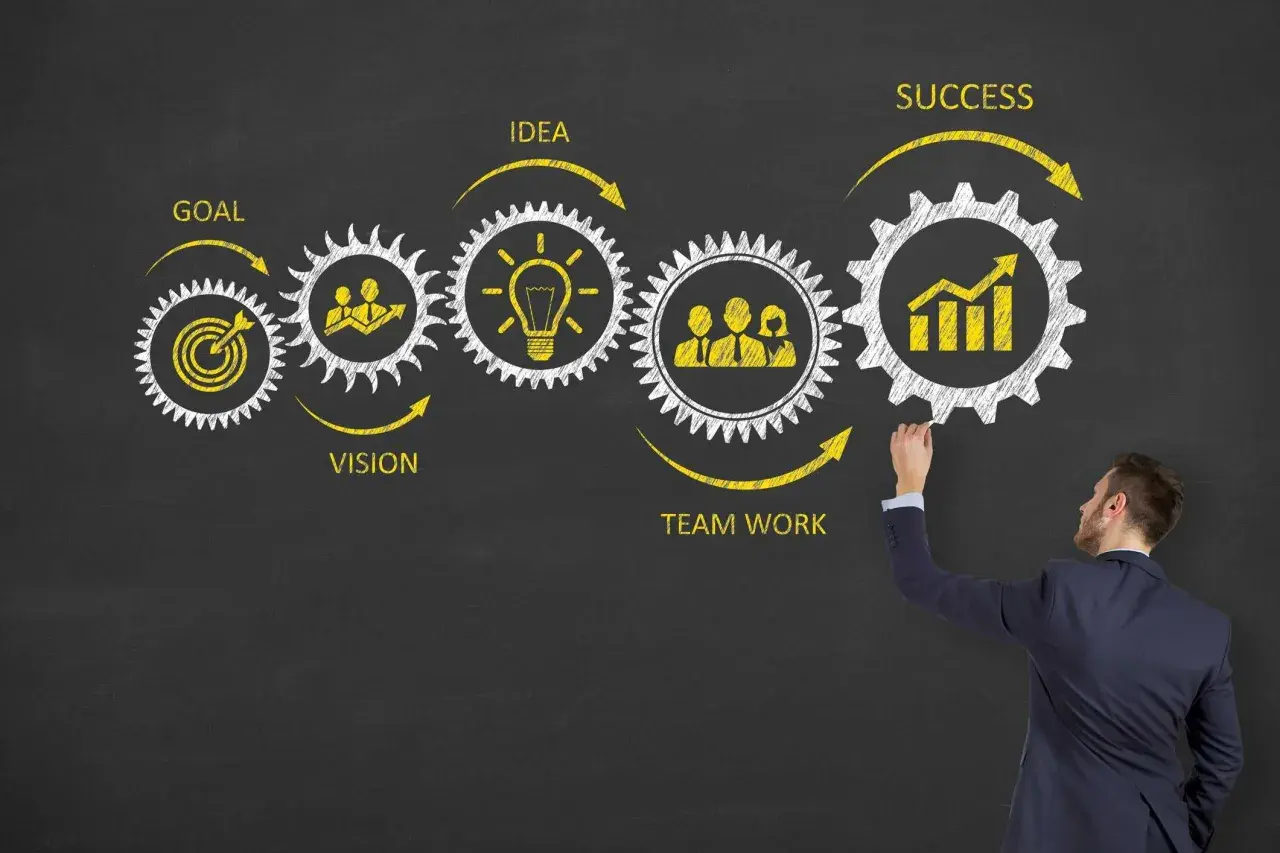
A well-built corporate innovation training program does not just encourage ideas; it changes how people spot problems, test solutions, and make decisions under pressure. In this article, I focus on what the training should teach, how it should support strategy and change, and what leaders need to do so the learning survives after the workshop ends. I also look at the inclusive practices that make innovation feel usable for more than a small inner circle.
The short version is that innovation training only works when it changes everyday behavior
- Start with a strategic business problem, not a generic creativity exercise.
- Teach teams how to frame opportunities, run small experiments, and present evidence clearly.
- Use mixed cohorts, psychological safety, and accessible formats so more employees contribute ideas.
- Measure adoption, experiment velocity, and business impact instead of attendance alone.
- Keep managers involved, or the program will fade after the first round.
What innovation training should actually change
The first mistake I see is treating innovation like a mood. A fun workshop can lift energy for a day, but a real learning program should change how people behave when they return to their desks, their meetings, and their performance goals. In practice, that means fewer vague brainstorms and more disciplined problem framing, faster experimentation, and better decisions about what to stop doing.
That distinction matters even more in U.S. companies, where leaders are usually balancing quarterly targets, hybrid teams, and constant pressure to show progress. If the program does not connect to a live business priority, it becomes a side activity. If it does connect, it can help teams respond to change without waiting for a top-down reset.
I think of this as moving from inspiration to operating capability. The training should help people make innovation a repeatable habit, not a special event. That is why the next question is not whether employees are “creative enough”; it is which skills actually move the business forward.
The skills that matter most
Good innovation learning is usually narrower than people expect. It does not try to turn everyone into a strategist, designer, and data scientist in one sitting. It gives people a few practical moves they can repeat until they become part of the way work gets done.
Finding the right problem
Most organizations have too many ideas and too little clarity. The useful skill is not generating more concepts; it is learning how to identify the problem worth solving. That means asking whether the issue affects customer value, operational speed, employee friction, or growth. A team that learns to phrase a problem well will usually produce better solutions with less noise.
Turning ideas into experiments
I prefer training that treats experimentation as a basic business habit. An experiment is simply a low-risk test with a clear hypothesis, a time limit, and a defined success measure. When people learn to test ideas in one or two weeks instead of debating them for months, momentum changes fast. That is especially useful when budgets are tight and leaders want evidence before they commit.
Working across functions
Innovation breaks down when sales, operations, HR, finance, and product teams all hold separate versions of the truth. Training should teach people how to collaborate across those lines without pretending that every group has the same priorities. The point is not to erase tension; it is to use it productively. Cross-functional thinking is often the difference between a clever idea and a workable change.
Read Also: AI in Project Management - Will It Take Over?
Explaining the case for change
Strong ideas still need sponsorship. People need to learn how to present a concept with enough evidence that a manager, peer, or executive can act on it. That includes the business case, the risk, the expected upside, and the smallest next step. When teams can explain why a change matters, adoption becomes much easier.
These skills sound simple, but they are the ones that determine whether the program creates movement or just produces notes on a flip chart. Once those capabilities are clear, the design of the learning journey becomes much easier to get right.

How I would design the learning journey
If I were building the program from scratch, I would keep the structure simple and the application real. For most companies, a mix of brief leadership alignment, cohort learning, and an action-learning sprint works better than a single long course. The reason is straightforward: people need the theory, the practice, and the follow-through in the same system.
| Format | Best for | Limitation |
|---|---|---|
| 90-minute executive briefing | Aligning leaders on the strategic purpose of the program | Too light to change behavior on its own |
| Half-day cohort workshop | Building a shared language and introducing core tools | Needs follow-up or the learning fades quickly |
| 4-week action-learning sprint | Applying new skills to a live business problem | Requires manager time and sponsor attention |
| Manager toolkit with coaching prompts | Reinforcing behavior after the session | Depends on disciplined managers, not just good content |
For the first 90 days, I would keep the scope tight. Choose one strategic challenge, one pilot cohort, and 3 to 5 experiments that matter to the business. That could mean reducing customer drop-off, shortening a service cycle, improving internal handoffs, or cutting rework in a high-friction process. The best pilot problems are specific enough to measure but broad enough to matter.
In the U.S. context, this setup works because it respects time. Busy teams are more willing to participate when the learning is tied to real work and when the output is visible within a quarter. It also gives leadership something concrete to review instead of a stack of engagement notes. From there, the issue becomes not just design, but inclusion.
Keep the program inclusive so more ideas surface
Innovation often gets framed as a creative skill issue, but in many companies it is really a participation issue. If the same people always speak first, the same people also shape the future. That is a waste of perspective, and it makes the program look smarter than it is. Great Place To Work’s idea of “Innovation By All” captures the practical point: the more voices you hear, the better the signal.
I would build the learning environment to reduce status effects. That means using mixed-seniority groups, rotating facilitators, and offering a few ways to contribute beyond speaking in the room. Anonymous idea capture, short written reflections, and small breakout groups can help people who are thoughtful but not naturally dominant. These are not cosmetic choices. They affect who feels safe enough to challenge an assumption.
Psychological safety matters here, and I use the term in a practical sense: people should be able to raise concerns, ask basic questions, or suggest a different path without worrying that they will be dismissed. Without that, innovation becomes performative. Teams will nod in workshops and stay silent in real meetings.
Inclusive design also means making the content usable. If the program assumes everyone has the same schedule, confidence level, and communication style, it will skew toward already-privileged voices. I would keep materials concise, avoid jargon-heavy slides, and make sure managers know how to include remote employees, non-native English speakers, and people who prefer reflection before discussion.
When inclusion is built into the process, the program produces a wider range of ideas and a more realistic picture of what the organization can change. That wider signal is useful only if leaders can read it properly, which brings us to measurement.
Measure progress like a leader, not like a trainer
I am skeptical of training programs that report only attendance and satisfaction. Those numbers tell you whether people showed up and liked the room temperature, not whether the business changed. For an innovation program, I would track a small set of metrics that reflect movement from learning to action.
| Metric | What it shows | Practical first-pilot target |
|---|---|---|
| Ideas moved into test | Whether learning is producing action | At least 3 to 5 experiments per cohort |
| Cycle time from idea to test | Whether bureaucracy is slowing progress | Under 30 days for simple tests |
| Manager follow-through | Whether leaders are reinforcing the change | Every participant has a scheduled follow-up conversation |
| Business outcome tie-in | Whether the work matters beyond the workshop | Each cohort links to at least one cost, revenue, quality, or retention metric |
| Participation mix | Whether the program is drawing in different voices | Balanced input across functions and seniority levels |
I would also avoid measuring too many things at once. Three to five core metrics are usually enough for a pilot. More than that, and people start optimizing the dashboard instead of the work. The useful question is not “Did we collect data?” It is “Did the organization make a different decision because of this learning?”
That standard also makes it easier to defend the program to skeptical leaders. If the results show better cycle time, stronger manager engagement, or a handful of tests that save time or improve service, the case becomes real. If they do not, the program probably needs a redesign, not a louder message. The biggest reasons for that failure are usually predictable.
Where most programs break down
The most common failure is overreach. Leaders want innovation in every department, on every problem, all at once. That sounds ambitious, but it usually creates vagueness. The better move is to pick one business problem and prove the method there before spreading it.
Another failure is treating training as a one-off event. People leave inspired, then return to unchanged incentives, unclear priorities, and managers who are too busy to support new behavior. When that happens, the program loses credibility fast. The fix is not more content. It is a tighter link between learning, manager coaching, and performance expectations.
- Too much theory - People understand the vocabulary but never build a test or change a process.
- No manager ownership - Participants learn, but their leaders never reinforce the new behavior.
- Ideas without execution - Teams generate possibilities but do not have a clear path to pilot them.
- Hidden resistance - A process owner or middle manager quietly blocks the change because the impact was never addressed.
- Innovation as a side project - The work is scheduled outside the real operating rhythm, so it never competes with core priorities.
I also watch for a subtler problem: training that rewards the loudest people instead of the most useful ideas. That usually happens when there is no structured way to judge ideas, no clear criteria for risk, and no psychologically safe path to challenge senior opinions. The program then teaches conformity while claiming to teach creativity.
If I had to reduce the lesson to one sentence, it would be this: innovation training fails when it lives outside the management system. Once it is tied to goals, managers, and actual decisions, the next challenge is keeping the momentum after the pilot proves itself.
What I would keep in place after the first rollout
After the pilot, I would not rush straight into a bigger, more polished version. I would keep the best mechanics and simplify the rest. A light, repeatable system is usually more valuable than an impressive but fragile one.
- A quarterly challenge tied to one real strategic priority
- A short intake form that turns ideas into testable hypotheses
- A monthly sponsor review to unblock experiments and remove friction
- A manager checklist that covers coaching, follow-up, and recognition
- A simple library of examples so new teams can borrow what already works
I would also build one small habit into the calendar: a regular review of what the organization stopped doing because the new idea was better. That sounds minor, but it is one of the clearest signs that change is real. Companies often celebrate additions and ignore subtraction, even though dropping an outdated step is frequently where the value appears.
When the program is designed this way, it stops being a learning event and starts becoming part of how the company adapts. That is the standard I would use for any serious innovation effort: practical enough for managers, inclusive enough for the whole workforce, and disciplined enough to survive the next quarter.
