
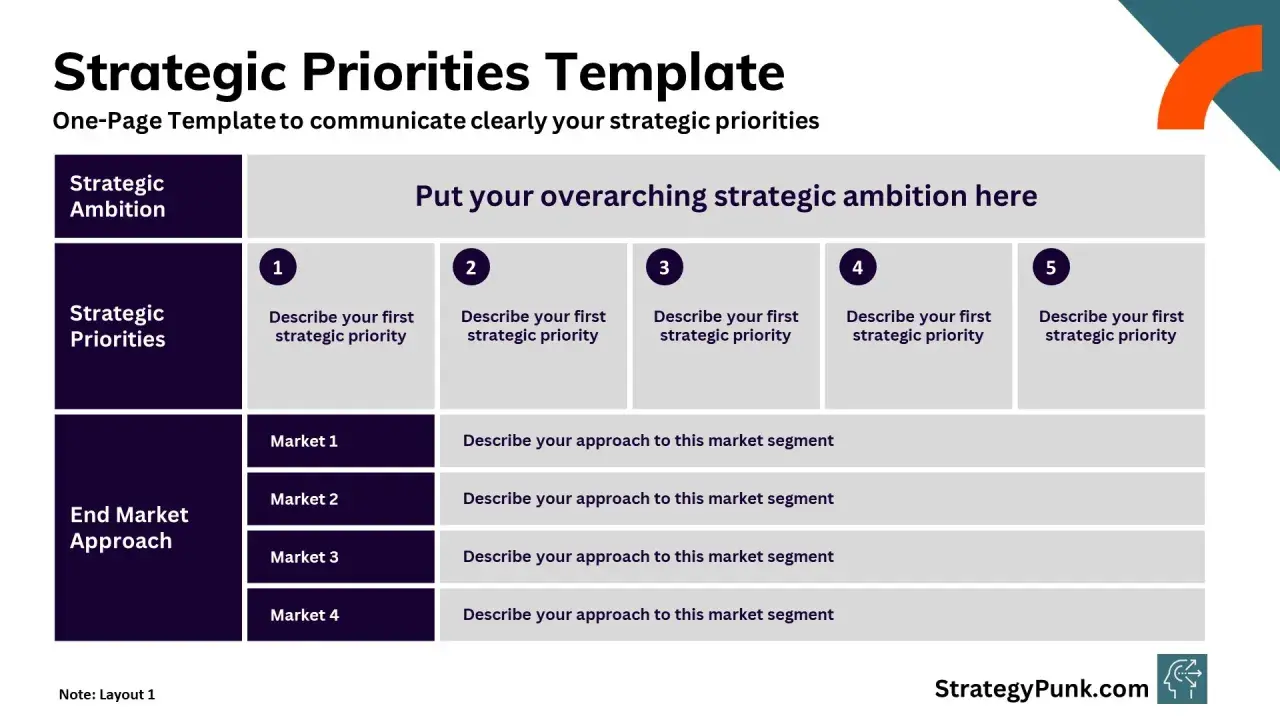
A strategy on a page is most useful when an organization needs clarity, speed, and follow-through. I use it to turn a broad direction into a working document that managers can explain, teams can remember, and leaders can actually review. In this article I show what belongs on the page, how to build it, and how to use it for change work, especially when the goal is a healthier, more inclusive workplace.
What matters most on a one-page strategy
- Keep the page focused on the decisions that matter most, not on every detail.
- Use plain language for purpose, priorities, actions, owners, and metrics.
- When the work is about change, include the human impact, not only the business target.
- In practice, 3-5 priorities and 2-3 measures per priority are usually enough.
- Review it on a fixed rhythm so it stays useful instead of becoming wallpaper.
Why a one-page strategy works when change is moving fast
Change usually gets messy when every department tells a slightly different story. A one-page plan fixes that by forcing trade-offs and giving people one reference point for decisions, communication, and accountability. The point of a strategy on a page is not to compress everything; it is to make trade-offs visible. If I cannot explain the strategy in a minute, the team probably cannot execute it in a month.
This matters even more in U.S. organizations with hybrid teams, multiple time zones, and local managers making daily calls. A compact strategy keeps the message consistent without turning leaders into script readers. Once the direction is clear, the next task is deciding exactly what deserves space on the page.

What belongs on the page
The page should read like a decision tool, not a brochure. I usually look for five building blocks, and I keep them tight enough that a manager can scan them in under two minutes.
| Element | What it should answer | Rule of thumb |
|---|---|---|
| Case for change | Why are we changing now? | Two or three plain sentences, no jargon |
| Desired future state | What will look different when this works? | Describe behavior and outcomes, not slogans |
| Strategic priorities | What are the 3-5 things that matter most? | One line each, and stop before the list becomes a backlog |
| Owners and cadence | Who drives each priority and when do we review? | One owner per action, with a review every 4-6 weeks |
| Measures | How will we know adoption is happening? | Mix output metrics with behavior and experience signals |
If a detail does not help someone decide, act, or measure progress, it belongs in the supporting plan, not on the page. That discipline matters most when the change involves inclusion, culture, or new leadership behavior, because vague language lets everyone interpret the plan differently. From there, building the page is mostly a matter of sequence.
How I would build it step by step
When I draft a one-page strategy, I start with the problem and work forward. That keeps the document anchored in reality instead of drifting into corporate language.
- Write the case for change. Explain the current problem and why it matters in two or three sentences.
- Define the desired future state. Describe what will be different for customers, employees, or teams once the change works.
- Choose the few priorities that can actually move the outcome. I rarely go above five.
- Turn each priority into actions, owners, and timing. This is where the plan becomes usable.
- Add measures and a review rhythm. Track both results and adoption, not just activity.
- Decide what is out of scope. A strategy gets stronger when it names what it will not try to do.
A useful rule: if a line item cannot be reviewed in a management meeting, it is probably too detailed for the page. “Operating model” is another term that helps here; it simply means the routines, roles, and decision paths that let the strategy run in real life. That becomes especially important when the strategy is supposed to change how people experience leadership.
How to use it for inclusive leadership and workplace culture
When the goal is better inclusion, the page should describe behavior, not just aspiration. I want to see what leaders will do differently in hiring, feedback, meetings, promotion, and communication. If the change is about belonging, the page should also say how employee voice will be captured and how leaders will respond.
- Manager habits. Define inclusive meeting norms, equal airtime expectations, and clearer feedback routines.
- Fair processes. Make the criteria for hiring, promotion, and performance review visible and consistent.
- Employee voice. Use listening sessions, pulse surveys, and follow-up commitments so people can see action after feedback.
- Hybrid norms. Clarify response expectations, meeting access, and documentation for distributed teams.
- Measures. Track training completion, pulse trends, turnover, promotion patterns, and the speed of response to concerns.
I would not measure everything at once; I would pick the few signals that show whether the culture is actually shifting. “Adoption” matters here, and I mean it in a practical sense: people are using the new behaviors, not just nodding at them in a meeting. The page should make it obvious who owns those signals and what happens if they move the wrong way.
Where these plans usually fail
The weak versions fail in predictable ways. The problem is rarely the idea itself. It is usually the shape of the page and the way leaders use it.
- Too many priorities. The page becomes a wish list, and nothing gets enough attention.
- Vanity metrics. Teams report activity instead of real progress or behavior change.
- Vague ownership. If everyone owns it, nobody owns it.
- Pretty but unusable language. People cannot repeat the plan in plain English.
- No review rhythm. The page goes stale after the launch meeting.
- No employee input. The strategy feels imposed, which is a fast way to create quiet resistance.
My test is simple: can a manager explain the page and name the next decision in under 60 seconds? If not, it is still draft work. That is why I like to anchor the plan in a real example before I treat it as finished.
A simple example for a culture-change initiative
Here is what I would put on a one-page plan for a U.S. company trying to strengthen inclusive culture across hybrid teams:
- Purpose. Build a workplace where people across roles and locations feel heard and can advance fairly.
- Priorities. Strengthen inclusive manager behavior, make people processes more transparent, and close the feedback loop faster.
- 90-day actions. Train managers on meeting facilitation, review promotion criteria, launch monthly listening sessions, and publish response commitments after employee feedback.
- Measures. Track manager completion rates, pulse survey movement, participation in feedback forums, promotion consistency, and retention by team.
Notice what is missing: a long history, a theory deck, and ten side projects. The example works because it keeps the page focused on the behaviors and measures that actually change culture. Once that is in place, the real work is making the page part of how the organization operates.
Make the page part of the operating rhythm
A one-page strategy only matters if it shows up where decisions are made. I use it in leadership meetings, manager check-ins, onboarding, and quarterly reviews. That is where it stops being a document and starts acting like a filter.
If the page does not help you say no to work that misses the point, or yes to work that moves the culture forward, it is not finished. The best version is not the prettiest one; it is the version people keep using because it helps them decide what happens next.
