
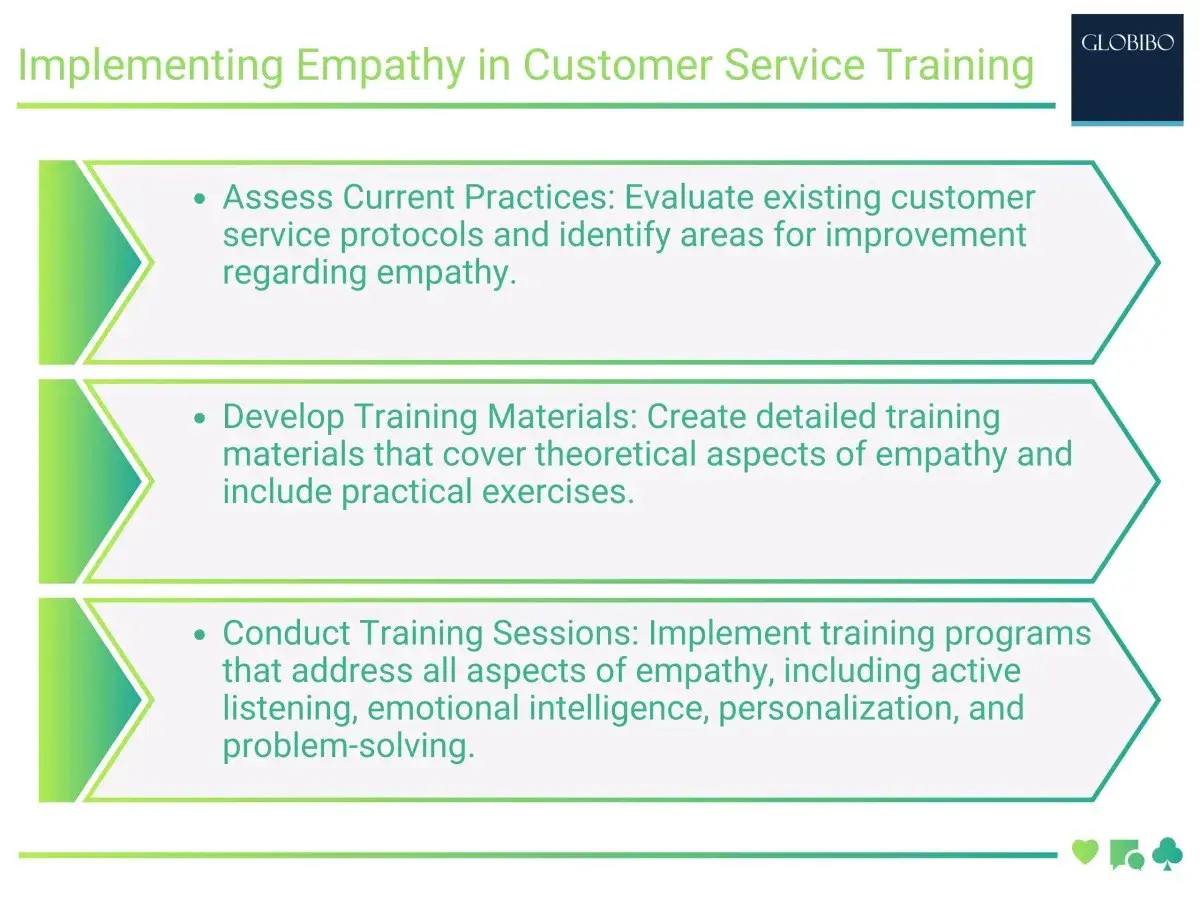
Better communication rarely fails because people lack words; it fails because they miss what the other person is feeling, protecting, or trying not to say. Programs built around empathy training can change that by teaching people how to listen more accurately, respond with less friction, and keep trust intact during tense conversations. In practice, the most useful versions focus on real workplace behavior: asking better questions, reading the room, and replying in a way that supports both clarity and respect.
The main takeaways for busy teams
- Empathy improves communication most when it shows up in listening, clarification, and follow-through.
- The best programs combine practice, manager modeling, and repetition instead of relying on a single workshop.
- Role-play, reflective listening, and scenario-based coaching are more useful than abstract theory alone.
- Inclusion improves when quieter voices, remote workers, and people with different communication styles are deliberately included.
- You should measure behavior change, not just how people felt about the session.
Why empathy matters most when conversations get hard
In workplace communication, empathy is not about agreeing with everyone or softening every message until it loses shape. It is the ability to recognize what someone is carrying into a conversation and respond in a way that keeps the exchange productive. That matters most in moments that tend to break teams apart: performance feedback, conflict between peers, layoffs, customer complaints, and cross-functional handoffs. Washington State University notes that empathy and active listening strengthen trust, collaboration, and problem-solving, and I think that is exactly where many teams underestimate the skill. People often assume miscommunication is a wording problem, when it is really a listening problem. A manager who says, “Let me make sure I understand what you’re worried about,” usually creates more progress than one who replies immediately with a polished explanation.Empathy also changes the quality of inclusive leadership. When people feel that their perspective will be heard without being minimized, they are more likely to speak up, challenge assumptions, and share early warning signs. The Center for Creative Leadership has also reported that empathetic leadership is associated with stronger performance, which matches what I see in practice: communication gets cleaner when people feel safer telling the truth.
That is why the design of the program matters more than the label on it. If it does not change how people speak, listen, and respond, it is just awareness training with a nicer name.

What a strong program should teach
A good empathy training program should not stop at theory. It should give people repeatable behaviors they can use in live conversations, especially when they disagree, feel rushed, or hold different levels of power. I care less about whether participants can define empathy and more about whether they can demonstrate it in a meeting at 4:45 p.m. on a stressful day.
| Skill | What participants practice | Why it matters |
|---|---|---|
| Perspective-taking | Asking what else may be shaping the other person’s view | Reduces snap judgments and defensiveness |
| Reflective listening | Paraphrasing, checking understanding, and naming the concern | Prevents people from talking past each other |
| Emotion labeling | Recognizing frustration, uncertainty, embarrassment, or pressure without turning it into drama | De-escalates tense moments and makes issues easier to discuss |
| Inclusive turn-taking | Inviting quieter voices, pausing longer, and making room for different communication styles | Improves participation and reduces the dominance of the loudest voices |
| Boundary setting | Being compassionate while still being direct about expectations | Prevents empathy from sliding into avoidance or vague feedback |
The strongest sessions use realistic scenarios, not generic exercises. A customer service team may need practice responding to frustration without becoming defensive. A manager may need to rehearse a difficult performance conversation. A hybrid team may need help reading written messages more carefully because tone is easier to misread in chat than in person. Those details matter because people do not need empathy as an idea; they need it as a habit.
It also helps to include nonverbal communication and cultural context. Silence does not always mean agreement. Direct eye contact does not mean the same thing in every culture. A confident voice does not always mean a thoughtful one. Programs that ignore those differences usually overfit to one communication style and leave everyone else guessing.
Once the core skills are clear, the next question is which delivery model actually fits the team.
Program formats that fit real U.S. workplaces
In the United States, many teams are hybrid, distributed across time zones, or working under tight schedules. That makes format a serious design choice, not a side detail. I usually think about it in terms of scale, depth, and follow-through.
| Format | Best for | Strength | Limitation |
|---|---|---|---|
| Live workshop | Shared language and basic skill-building | Fast to launch and good for team alignment | Can fade quickly without follow-up |
| Manager coaching | Leaders who need to model behavior in real conversations | Changes day-to-day communication where it matters most | Slower to scale across large groups |
| Role-play clinic | Conflict, feedback, and cross-functional tension | Builds confidence through rehearsal | Feels awkward if the scenarios are too artificial |
| Microlearning | Busy or distributed teams | Easy to repeat in small doses | Usually too light on its own |
| Peer discussion circle | Culture change and trust-building | Shows people how colleagues actually interpret conversations | Needs a skilled facilitator to stay focused |
For most organizations, a blended model works best. A 60- to 90-minute live session can introduce the core behaviors, but that should be followed by short practice rounds, manager prompts, and one or two real-world applications in the next month. If the content is sound but nobody revisits it, the effect evaporates.
I also like to separate leadership training from team-wide training when the use case is different. Managers need practice with feedback, conflict, and decision-making under pressure. Individual contributors often need more support with peer communication, email tone, handoff clarity, and speaking up in meetings. One program can cover both, but the practice should not be identical.
That leads naturally to the part most organizations get wrong: they launch the session, then expect behavior to change by itself.
How to make the behavior stick after the workshop
The real test is whether people use the skill on a normal Tuesday. I usually recommend a simple sequence that makes the training visible after the room empties.
- Pick three observable behaviors, not ten vague intentions.
- Practice them in short role-plays that mirror real workplace moments.
- Ask managers to model the language in their own meetings.
- Build one reminder into recurring team rituals, such as check-ins or debriefs.
- Review one real example per month and discuss what changed.
For example, a team might agree to do three things consistently: paraphrase before disagreeing, ask one clarifying question before offering a solution, and name the likely impact of a decision on others. Those are small behaviors, but they alter the tone of a conversation quickly. They also make it easier for people to feel respected without forcing anyone to become overly sentimental.
Written communication deserves the same discipline. A thoughtful email or Slack message should make the point clearly, but also show that the sender understands the reader’s likely concern. A line such as, “I know this adds work, so here is why I think it matters,” often lowers resistance more than a longer explanation does.
The key is repetition. People rarely become more empathetic because they attended one good session. They improve when the organization keeps asking them to practice in situations that matter.
Common mistakes that make the effort feel hollow
There are a few predictable ways these programs lose credibility. Most of them are avoidable.
- Turning empathy into a branding exercise instead of a behavior change effort.
- Using vague language like “be more empathetic” without showing what that looks like in a meeting or review.
- Confusing empathy with agreement, which can lead to weak decisions and muddled accountability.
- Training only managers while everyone else keeps the old habits.
- Ignoring cultural, linguistic, or neurodivergent communication differences.
- Skipping follow-up and acting surprised when people go back to their default style.
There is also a subtler problem: using empathy to avoid hard truths. Good leaders do not stop being direct; they just become more precise about how they deliver the message. If a person is underperforming, the answer is not endless warmth. The answer is clarity, respect, and a conversation that leaves no doubt about expectations.
Another limit is emotional load. When people are asked to keep accommodating others without any structural support, empathy starts to feel like unpaid labor. If the organization wants better communication, it has to back that up with reasonable workloads, better meeting norms, and a culture where respectful behavior is expected from everyone, not only from the most patient employees.
Once those mistakes are avoided, it becomes much easier to tell whether the program is actually working.
How to tell whether it is working
I would not rely on a post-training satisfaction survey alone. People often enjoy a session without changing a single habit. The better approach is to track a few behavioral signals over time.
| Signal | How to measure it | What improvement looks like |
|---|---|---|
| Meeting quality | Short pulse survey or manager observation | Fewer interruptions, more clarification, better participation |
| Conflict resolution | Manager notes or HR trends | Faster de-escalation and fewer repeated misunderstandings |
| Leader communication | 360 feedback or direct reports’ comments | More trust, clearer feedback, less vague language |
| Inclusion in discussion | Observation of speaking time or participation patterns | More balanced airtime and more input from quieter team members |
| Written clarity | Review of email or chat exchanges | Fewer misunderstandings and less defensive back-and-forth |
A practical starting point is to collect a baseline, run the program, and then check the same signals at 30, 60, and 90 days. I would keep the measurement light and consistent rather than building a giant dashboard no one uses. Three short questions are often enough:
- Do people listen before reacting?
- Do difficult conversations stay respectful and clear?
- Do more people feel safe speaking up?
If the answers are improving, the training is doing something real. If they are not, the fix is usually not more theory. It is more practice, more manager involvement, or a redesign of the program itself.
What I would fix before buying another workshop
If an organization wants better communication, I would start with the moments that already shape trust: one-to-ones, team meetings, feedback conversations, and written handoffs. Those are the places where empathy either becomes visible or stays abstract. The most effective programs do not try to make people nicer; they make people more accurate, more respectful, and more deliberate under pressure.
My practical rule is simple: teach one behavior, show it in a real scenario, repeat it in the manager layer, and measure it after the team has had time to use it. That approach is less glamorous than a one-off keynote, but it is also far more likely to change how people actually communicate.
When that happens, empathy stops being a concept and becomes part of the team’s operating system.
