
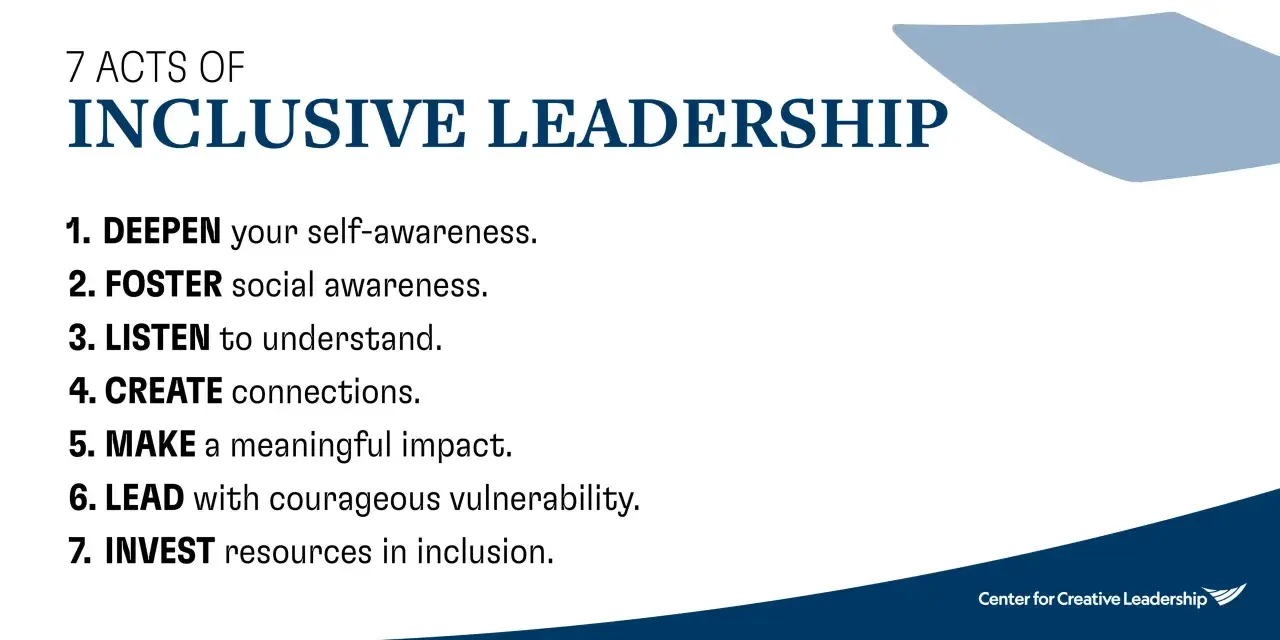
Strong strategy is less about writing polished plans and more about making decisions that people can carry out under real pressure. In inclusive leadership and workplace culture, that means balancing direction, clarity, and trust so change does not stall between the slide deck and daily behavior. A strong strategy skill is the difference between a plan that sounds smart and one that actually changes how a team works.
The strongest plans are the ones people can actually carry out
- Strategy is not just vision; it is a set of choices, trade-offs, and follow-through.
- Change succeeds faster when people understand the reason, the impact, and their role in it.
- Inclusive leadership improves strategy because it surfaces risks earlier and builds trust sooner.
- The best strategic thinkers define outcomes in behavior, not slogans.
- Implementation fails most often because of priority overload, weak manager alignment, and poor feedback loops.
What strategy looks like when change is the real test
The ability to develop and implement effective plans is what separates strategy from aspiration. In practice, strategy is not a document; it is a sequence of choices about where to focus, what to delay, who owns the work, and how success will be measured.
When change is involved, I think of strategy in three layers: direction, trade-offs, and cadence. Direction tells people where the organization is going. Trade-offs make it clear what will not happen. Cadence keeps the plan alive after the kickoff meeting ends.
| Dimension | Weak version | Stronger version |
|---|---|---|
| Direction | “Improve culture” | Reduce turnover by improving manager consistency and promotion clarity |
| Trade-offs | Everything is a priority | Two or three moves matter more than the rest |
| Execution | One announcement and a slide deck | Named owners, deadlines, check-ins, and visible feedback loops |
| Adaptation | Wait and hope | Adjust quickly when signals show confusion or resistance |
That is why strategy is so often misunderstood. A confident statement about the future is not the same thing as a plan that can survive friction, especially when people have different levels of power, access, or trust. Once that distinction is clear, the next question is how inclusion changes the quality of the plan itself.
Why inclusive leadership changes the quality of strategy
In my view, inclusive leadership is not a soft layer on top of strategy. It is part of the operating system. If a plan ignores who is most affected, who can speak freely, and who will carry the heaviest load, the plan may look clean on paper and still fail in the real world.
That matters even more in U.S. workplaces, where hybrid teams, cross-functional projects, and AI-driven redesigns are forcing people to adapt quickly. Recent McKinsey work on organizational reinvention points to purpose, medium-term strategy, long-term vision, and obstacle removal as central to change leadership. I would add one more requirement: the people closest to the work must be heard early, not after the decision is already fixed.
Inclusive strategy tends to do four things well:
- It identifies who benefits first and who may absorb extra work during the transition.
- It uses transparent criteria so decisions do not feel arbitrary.
- It creates room for dissent before resistance hardens into silence.
- It treats psychological safety as practical infrastructure, not a slogan. Psychological safety simply means people can raise a concern without fearing punishment for the message.
When those conditions are missing, employees often comply publicly and resist privately. That is expensive, because you do not see the breakdown until adoption is already slipping. The good news is that a few disciplined habits make strategic thinking much more usable.
The habits that separate strategic thinking from wishful planning
Strategic thinkers are not magical. They are usually better at a small set of repeatable habits that turn vague intent into workable action. I look for these habits because they tell me whether a leader can actually guide change or only describe it.
| Habit | What it means | Why it matters |
|---|---|---|
| Problem framing | Define the real issue before choosing a solution | Prevents teams from fixing symptoms while the root cause stays untouched |
| Trade-off thinking | Choose what not to do | Keeps the team from spreading attention too thin |
| Behavioral clarity | Describe what people should do differently | Makes the plan actionable instead of abstract |
| Feedback discipline | Check signals early and often | Lets you correct course before resistance becomes structural |
If one of those habits is missing, the plan usually starts to drift. The presentation still looks polished, but the team is guessing about priorities, waiting for more direction, or quietly creating workarounds. That is why the next section matters so much: strategy has to survive the move from intention to action.

How to turn a plan into action without losing people
This is where many leaders overcomplicate things. A good rollout is usually not dramatic; it is sequenced, specific, and visible. I prefer a four-step approach because it keeps the work grounded and makes it easier for people to follow.
1. Define the outcome in observable terms
Start with behavior, not branding. Instead of saying “we want a better culture,” define what better looks like in day-to-day work. For example, “managers give monthly feedback,” “promotion criteria are published and used consistently,” or “meeting decisions are documented and accessible.”
2. Map the people who can speed up or slow down the change
Every change has a social map. Some people own decisions, some own implementation, and some simply carry the load. I like to ask three questions: Who will make this easier? Who may resist because the change adds friction? Who is most likely to be overlooked unless we deliberately include them?
3. Sequence the work in waves
Do not launch every change at once. A 30-60-90 day rhythm is often more realistic than a big-bang rollout. In the first 30 days, focus on clarity and ownership. In the next 30, train managers and remove obvious blockers. By day 90, you should be able to see whether the new behavior is sticking.
Read Also: Reputation Risk Management - Stop Damage Before It Starts
4. Communicate, listen, and adjust
Communication is not a one-time announcement. It is repetition with feedback. Ask managers what is unclear, ask employees what is becoming harder, and check whether the rollout is creating uneven burden across teams. A quick pre-mortem can help here: before launch, ask the team to imagine the change has failed and name the likely reasons. That exercise often reveals risks that optimistic planning hides.
When change is sequenced like this, people do not feel bulldozed by the strategy. They can see where it is going, why it matters, and how they fit into it. Even then, several predictable mistakes can still derail the work.
Where strategy work usually breaks down
The most common failure is not lack of effort. It is poor alignment between ambition and execution. In my experience, these are the traps that show up again and again:
- Priority overload. Everything is labeled urgent, so nothing gets enough attention to change behavior.
- Manager distance. Senior leaders announce the plan, but middle managers are left to translate it without support.
- Resistance misread as attitude. Pushback is often a signal that the plan is unclear, unrealistic, or unfairly distributed.
- Metric blindness. Teams measure outcomes too late, after adoption has already slipped.
- Change fatigue. Multiple initiatives land at once, and people stop believing that any one of them will stick.
One practical test I use is simple: if the rollout needs a 40-slide deck to explain, the strategy may not be ready. The sharper the plan, the easier it is to describe what changes, who changes first, and what success looks like in the first few weeks. From there, the real work is capability building.
How to build the capability in yourself and your team
When I help a team strengthen strategic capability, I focus on routines before talent. People get better at planning and implementation when they practice the same questions often enough to make them automatic.
Here are the routines I trust most:
- Write a one-paragraph change charter. Name the goal, the reason, the main trade-offs, and the first action.
- Use a weekly decision review. Ask what was decided, what is still unclear, and what now needs to move.
- Run a pre-mortem before launch. Surface likely failure points while you still have room to adjust.
- Do an after-action review at 30 and 90 days. Check what happened, what changed, and what the team learned.
Measurement matters too, but I would not reduce inclusive change to a single engagement score. I want to see a mix of leading and lagging signals.
| Signal | What it tells you | What good looks like |
|---|---|---|
| Decision cycle time | How quickly the team can move from debate to action | Shorter cycles without losing quality |
| Adoption of new behaviors | Whether the change is reaching daily work | Managers and teams use the new process consistently |
| Cross-team consistency | Whether the change is being interpreted the same way | Fewer gaps between departments, locations, or levels |
| Voice from underrepresented groups | Whether the plan is experienced as fair | People can raise issues early and see action taken |
| Retention in critical teams | Whether the change is creating hidden strain | Key people stay engaged while the transition settles |
If those indicators improve together, the strategy is probably becoming real. If only the executive dashboard looks good, but managers are overloaded and employees are confused, the plan is still fragile. That leads to the final practical reset I would keep in view before the next change cycle starts.
What I would keep on the desk before the next change cycle
Before I launch any new initiative, I ask five questions that force the plan to stay honest:
- What behavior changes first?
- Who carries the heaviest transition cost?
- What will we stop doing to make room for this?
- Which managers need support before rollout begins?
- What signal will tell us within 30 days that the plan is drifting?
If you can answer those questions clearly, you are already ahead of most change efforts. That is the real test of strategic work in an inclusive workplace: not just whether the idea is smart, but whether people can understand it, trust it, and use it without being left behind.
