
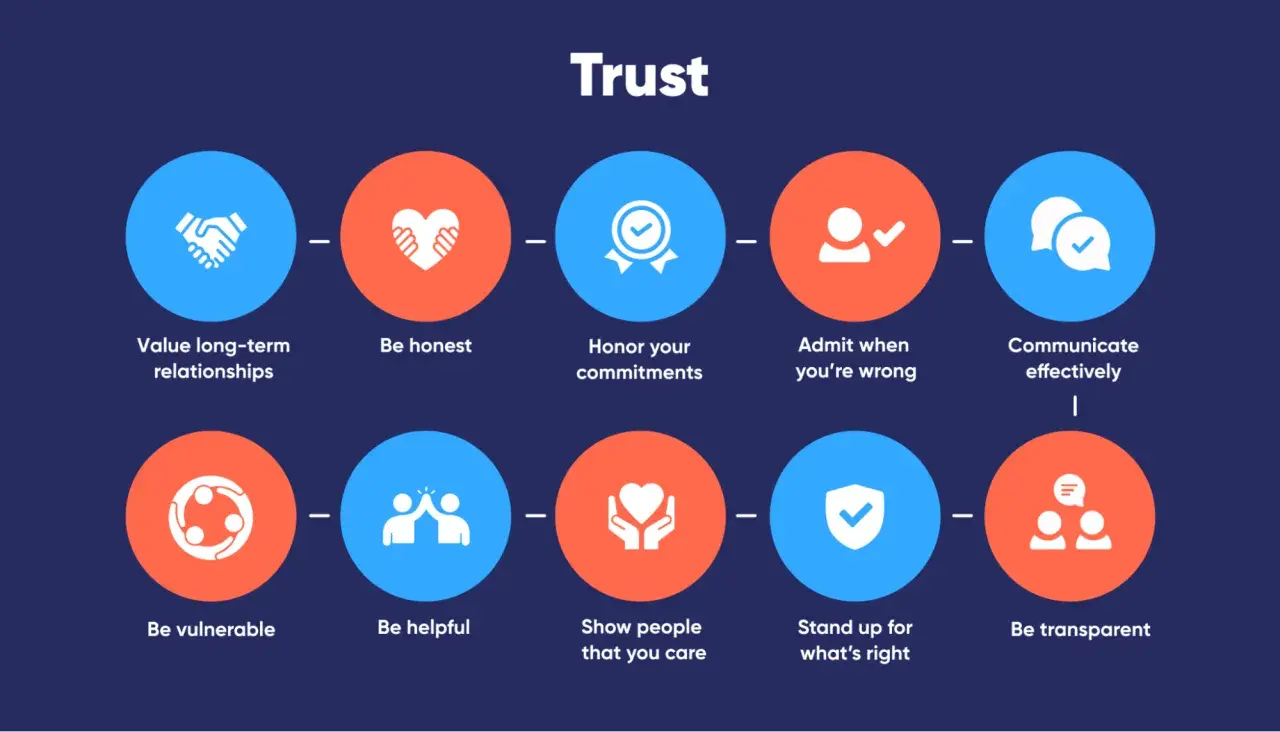
Employee communication works only when people can repeat the message back in plain English and use it in their day-to-day work. That is the real job of internal marketing: turning company priorities into something employees understand, trust, and can act on. In this article, I break down how that works in practice, which channels matter most, what tends to break trust, and how to tell whether the message actually landed.
What matters most when you communicate with employees
- Clear communication is what turns company strategy into employee action.
- Too many messages create noise; a few well-structured ones create alignment.
- Managers are the trust bridge between leadership and frontline teams.
- Inclusive communication means plain language, accessible formats, and room for employee voice.
- Open rates are not enough; comprehension and follow-through matter more.
What this work is really trying to change
I do not treat employee communication as a decorative layer on top of strategy. I treat it as the mechanism that helps people understand why the company exists, where it is going, and what their own work contributes to that direction. When that message is clear, employees can make better decisions without waiting for constant supervision.
That is why internal messaging is not just about announcements. It is about translating leadership intent into everyday behavior, especially when the organization is changing, growing, or trying to strengthen culture. If people cannot explain the company’s priorities in one sentence, the problem is rarely motivation alone. More often, it is a communication failure.
That leads to the next question: if communication matters this much, what exactly makes it effective instead of forgettable?
Why communication is the lever that makes it work
Most organizations underestimate how much confusion comes from assuming everyone heard the same thing and interpreted it the same way. Leaders often think they are aligned when, in reality, they are using different language, different assumptions, and different expectations. That gap is where trust erodes and execution slows down.
In a Gartner survey discussed by Harvard Business Review, 38% of employees said they receive an excessive volume of communications at work. That number matters because overload does not create alignment; it creates filtering, and eventually people stop reading altogether. Strong communication is not louder communication. It is communication that is easier to parse, easier to trust, and easier to act on.
SHRM has long treated workplace communication as a core driver of culture and relationships, and that lines up with what I see in practice. When communication is weak, managers improvise, employees fill gaps with rumor, and the culture becomes local instead of shared. A company can have great values on paper and still feel fragmented if the message never becomes a lived routine.
Once you accept that, the focus shifts from “How do we say more?” to “What do employees actually need to hear first?”
The messages employees actually need from leaders
Before I choose channels, I map the message. Employees usually do not need ten different updates; they need a small set of answers that reduce uncertainty and help them act with confidence. If those answers are missing, even a polished campaign will feel thin.
| Message employees need | What it should answer | Why it matters |
|---|---|---|
| Why this is happening | What problem or opportunity is driving the change? | People support what they understand, not what they only hear repeated. |
| What is changing | What will be different now, and what will stay the same? | This reduces rumor and prevents employees from overreacting to partial information. |
| What it means for my role | How does this affect my team, my tasks, and my priorities? | Relevance is what turns a corporate message into personal action. |
| How success will be measured | What outcomes matter, and what behaviors are expected? | If people do not know the score, they make up their own version of success. |
| What support is available | Where do I go with questions, concerns, or implementation issues? | This is where trust grows, because the company shows up after the announcement. |
| What will not change | Which routines, benefits, or guardrails are stable? | Stability lowers anxiety and helps people focus on the real shift. |
I also like to give managers a short script, not because I want them to sound robotic, but because they are the people employees trust to explain what the message means in context. A manager who can say, “Here is the change, here is why it matters, and here is what I need from you this week,” will always be more effective than a polished memo on its own.
With the message defined, the next decision is practical: which channels will actually carry it without distorting it?

Which channels make the message stick
Different channels do different jobs. I do not expect email to build trust on its own, and I do not expect a town hall to answer detailed questions. The best systems use one source of truth, then repeat the core message through formats that fit how people work.
| Channel | Best use | Main risk |
|---|---|---|
| All-hands meeting | Explaining strategy, change, and tone from leadership | It feels inspiring but too broad if there is no follow-up |
| Manager huddles | Translating the message into team-specific action | Managers may improvise if they are underprepared |
| Sharing the core message, links, deadlines, and next steps | It becomes noise if every update looks the same | |
| Intranet or knowledge hub | Hosting the official version, FAQs, and supporting materials | It fails if people do not know where to find it |
| Chat tools | Quick reinforcement, reminders, and lightweight updates | Important nuance gets lost very quickly |
| Printed notices or QR posters | Reaching frontline teams, shared spaces, and non-desk workers | They are ignored if the language is too abstract or too long |
| Pulse surveys | Testing understanding and surfacing confusion early | They become performative if nothing changes after feedback |
The rule I follow is simple: repeat the same core idea in different forms, not different messages in the same form. That is how you reduce confusion without sounding scripted. It also gives employees more than one way to engage, which matters in a workforce that may be hybrid, mobile, or distributed across shifts and sites.
Good channel design helps reach people; inclusive communication is what makes that reach credible.
What inclusive communication looks like in practice
Inclusive communication is not a side project. It is the difference between a message that reaches people and a message that actually includes them. In a U.S. workplace, that usually means not assuming everyone works at a desk, checks email constantly, or uses English as a first language.
In practice, I look for a few basics: plain language instead of jargon, captions for video, readable PDFs instead of image-only flyers, mobile-friendly pages, translated summaries when needed, and timing that does not privilege only one shift or one location. These are not cosmetic touches. They determine whether employees can access the message without friction.
Inclusive communication also means creating a real feedback loop. Employees should have a way to ask questions without feeling exposed, especially when the topic involves change, performance expectations, or cultural tension. If only confident or highly visible employees feel safe speaking up, you do not get a full read on the organization.
I also pay attention to who is missing from the room when messages are designed. If the communication team only hears from corporate staff, it will naturally optimize for corporate staff. When leaders listen across functions, locations, and seniority levels, the message becomes more useful and more fair. That matters because trust is built not only by what the company says, but by who it seems to have considered while saying it.
Once those basics are in place, the next risk is less obvious: the mistakes that make a message sound official while quietly weakening trust.
Common mistakes that quietly erode trust
Most communication problems are not dramatic. They are cumulative. A few weak habits can make employees doubt the message even when the content is technically accurate.
- Talking about values without operational detail. If the company says it values inclusion, employees still need to see what that changes in hiring, meetings, scheduling, and promotion.
- Sending too many updates with no hierarchy. When every message looks urgent, nothing feels urgent.
- Leaving managers to improvise. If people leaders do not receive talking points, examples, and likely questions, the message fragments by team.
- Using corporate jargon as if it were clarity. Acronyms and buzzwords do not make a message strategic; they usually make it harder to repeat.
- Ignoring the frontline experience. A communications plan that works only for office staff is not a company-wide plan.
- Measuring reach instead of understanding. Opens and clicks tell you very little about whether employees know what to do next.
The deeper pattern here is simple: when communication feels one-way, people stop believing it is meant for them. When that happens, even good initiatives feel imposed. That is why measurement matters, but it has to measure the right things.
How to know whether the message landed
When I evaluate internal communication, I look for comprehension, confidence, and action. If people opened the email but still cannot explain the change, the campaign did not work. If they understand it but do not know what to do next, the message is incomplete.
| Signal | What it tells you | How to use it |
|---|---|---|
| Pulse survey responses | Whether employees understand the message | Ask one or two direct questions about clarity and relevance within 1 week of launch |
| Manager feedback | Whether leaders can explain the message in their own words | Use manager debriefs within the first 7 to 10 days |
| Employee questions | What is still unclear or worrying people | Track recurring questions instead of treating every question as a separate issue |
| Behavior change | Whether employees are acting on the message | Review after 30, 60, and 90 days, depending on the scope of the change |
| Team-level outcomes | Whether the communication helped execution | Compare areas with strong manager support against areas with weak support |
I would rather see a small set of honest indicators than a dashboard full of vanity metrics. A message that reaches 90% of inboxes but fails to change behavior is not a strong message. A message that sparks follow-up questions, gets repeated by managers, and leads to action is.
That brings me to the most useful next step: a simple execution plan that makes the whole system easier to manage.
A simple 30-day plan that makes the message easier to trust
If I had to improve employee communication quickly, I would keep the plan tight. Most organizations do not need more complexity; they need better sequencing.
- Week 1: Define the top three messages employees must understand and write them in plain language.
- Week 2: Build a manager toolkit with talking points, likely questions, and one or two real examples.
- Week 3: Publish the official version in one place, then repeat it through email, team meetings, and the right frontline channels.
- Week 4: Ask employees what they understood, what they still need, and what got in the way of action.
From there, I would revise the language, not just the layout. That distinction matters. If employees remain confused, the answer is usually not another channel or a longer memo. It is a cleaner message, delivered by people they trust, in a format they can actually use. When that happens, communication stops being a campaign and starts becoming part of the culture.
