
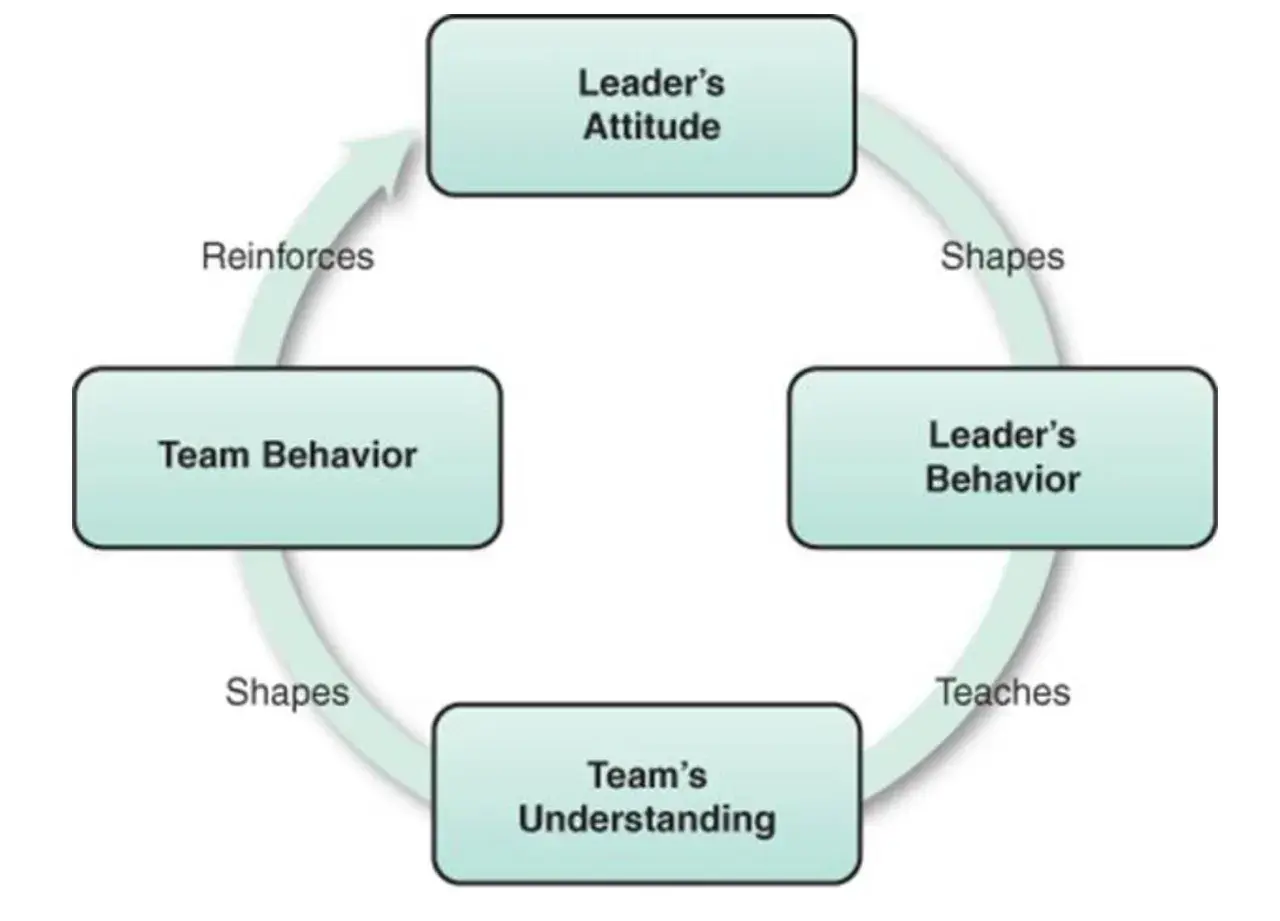
In a workplace culture, the tone set by leaders matters less as a slogan and more as a series of daily choices: who speaks, who decides, how mistakes are handled, and whether people feel safe enough to disagree. A strong leadership culture can turn those choices into trust, speed, and fairness; a weak one creates silence, politics, and avoidable turnover. This article breaks down what the idea means in practice, how to spot it, how it affects inclusion and performance, and what to change first if your team wants better results.
The practical signals that tell you whether leadership is helping or hurting the workplace
- It is not about charisma; it is about repeated behavior that people can predict.
- Employees notice meeting habits, feedback style, decision transparency, and how leaders react under pressure.
- Psychological safety is a major divider between healthy and fragile teams.
- Inclusion improves when leaders share voice, credit, and access to opportunity.
- Measurement should focus on behavior, not just values statements.
What a healthy leadership culture looks like
I think of this as the organization’s default management pattern: how leaders behave when no one is coaching them in the moment. A healthy version is visible in small things, not just in mission statements. People get clear answers, feedback is direct but respectful, mistakes are discussed without drama, and authority is exercised with enough transparency that employees can follow the logic.
It also has a predictable rhythm. Managers do not need to be perfect, but they do need to be consistent. When the rules for decision-making, recognition, and escalation are stable, people spend less energy guessing and more energy doing good work.
| Area | Healthy signal | Warning sign |
|---|---|---|
| Decision-making | Criteria are clear, and people know who owns the call | Decisions depend on status, mood, or who speaks loudest |
| Feedback | Feedback is frequent, specific, and tied to behavior | Feedback shows up only during reviews or after failure |
| Mistakes | Problems are discussed early and used for learning | People hide issues until they become expensive |
| Inclusion | Different voices are invited and actually heard | The same people dominate every meeting |
| Accountability | Leaders are judged by behavior, not only results | Strong numbers excuse poor conduct |
When I see those patterns in place, I usually know the next question is not “Is the culture good?” but “How do employees experience it in everyday work?”

The behaviors employees notice first
People do not experience culture as a policy deck. They experience it through habits. A leader who listens without interrupting, follows up on commitments, and shares credit creates a different climate from one who dominates meetings and rewrites history when things go wrong.
- Meeting behavior - Who gets airtime, who is cut off, and whether disagreement is welcome.
- 1:1 discipline - Whether managers keep regular conversations instead of only reaching out when there is a problem.
- Conflict handling - Whether tension is addressed early or allowed to harden into avoidance.
- Recognition - Whether credit goes only to visible performers or also to the people doing the connective work.
- Error response - Whether the first reaction to a mistake is curiosity or blame.
This is where inclusive leadership becomes practical rather than symbolic. If leaders want quieter voices to contribute, they have to build room for them. That may mean pre-reads instead of live-only debate, structured round-robins, written input before meetings, or explicit invitations to challenge an assumption. None of that is complicated, but it works because it changes the social cost of speaking up.
Those behaviors matter because they shape whether people feel safe enough to stay engaged, and that takes us straight to performance.
Why it affects engagement, retention, and inclusion
Organizations often treat leadership as a performance issue and culture as a separate HR topic. In practice, they are tangled together. If employees trust their manager, they are more likely to ask for help, share bad news early, and stay through difficult periods. If they do not, they withdraw long before they leave.
Gallup has reported that only 44% of managers globally have received formal management training. That number explains a lot. Many people are promoted for technical skill or tenure, then expected to manage conflict, give feedback, and motivate others without a real operating model. The result is inconsistent behavior, and inconsistency is expensive.
McKinsey’s research on psychological safety points in the same direction: supportive and consultative leadership behaviors help create a team climate where people can speak honestly and learn faster. That matters for inclusion too. A workplace can have diverse hiring outcomes and still feel narrow if only a few voices shape the real agenda. Belonging is not just about representation; it is about whether people can influence what happens next.
In other words, the business case is not abstract. Better leadership habits reduce friction, improve decision quality, and make it easier for people from different backgrounds to contribute without performing a constant adaptation tax.
If that sounds straightforward, the useful part is that it is also trainable. The next step is making the habits repeatable.
How to build it day to day
I would not start with a slogan or a company-wide values campaign. I would start with routines. The fastest gains usually come from a few repeated behaviors that managers can actually keep.
- Set decision rules - Clarify who decides, who advises, and what requires escalation. Ambiguity is where politics grows.
- Run better one-to-ones - Keep them weekly or biweekly, and use them to surface obstacles, priorities, and career questions, not just task updates.
- Make meetings fairer - Rotate facilitators, invite written input, and make space for disagreement before the room converges too quickly.
- Close the loop on feedback - If someone raises a problem, respond with next steps and a timeline. Silence teaches people not to bother.
- Reward the right behavior - Recognize coaching, collaboration, and good judgment, not only heroics and last-minute rescue work.
- Train managers on actual management - Coaching, conflict, inclusion, and performance conversations need practice, not just a policy memo.
The smallest habit that often makes the biggest difference is follow-through. A leader who does what they said they would do builds more trust in two months than a leader who gives polished speeches for two years.
Once those routines are in place, the hard part is no longer implementation. It is proof.
How to measure whether the pattern is real
Culture work gets vague when it is measured only through annual engagement scores or sentiment. I prefer a narrower set of signals that show whether leadership behavior is improving in practice.
| Metric | What it tells you | How often to review |
|---|---|---|
| Engagement and eNPS | Whether people feel connected enough to stay and contribute | Quarterly, with lighter pulse checks monthly |
| Voluntary turnover | Whether strong performers are choosing to leave | Quarterly |
| Internal mobility | Whether people can see a future inside the company | Semiannually |
| Speak-up rate | Whether people raise risks, ideas, and concerns early | Monthly or after key projects |
| Promotion and pay outcomes | Whether opportunity is distributed fairly | Semiannually |
| Meeting participation patterns | Whether voice is shared or concentrated | Monthly spot checks |
The point is not to chase a perfect score. It is to see whether the same people keep speaking, whether managers are actually coaching, and whether opportunity is moving in a visible and fair direction. If the numbers improve only after a survey but the daily habits do not change, the change is cosmetic.
That is also where many well-meaning efforts fail, and those failures are usually more predictable than leaders want to admit.
Where leadership efforts usually go wrong
One of the most common mistakes is treating leadership development as a one-time event. A workshop can raise awareness, but it rarely changes behavior unless the organization reinforces it with coaching, metrics, and accountability. Another mistake is assuming senior executives alone define the culture. In reality, middle managers are often the people employees feel most directly.I also see leaders confuse visibility with consistency. A bold town hall can feel inspiring, but if the next six weeks are full of contradictory decisions, people will trust the pattern, not the speech. The same is true of inclusion. If the organization celebrates diversity publicly but rewards only narrow styles of communication privately, employees notice the gap immediately.
- Training without follow-up creates short-lived enthusiasm.
- Values without behavioral standards stay vague.
- Recognition systems that reward only short-term output can damage trust.
- Ignoring middle managers leaves the largest leverage point untouched.
- Measuring representation without measuring experience hides the real problem.
When culture work stalls, the issue is usually not that the goal is unrealistic. It is that the organization has not made the new behavior easier than the old one.
That is why I like a time-boxed reset: it forces discipline and makes progress visible.
A practical 90-day reset for a healthier workplace
If I were asked to improve a team’s leadership habits quickly, I would keep the first 90 days simple.
- Days 1-30 - Listen and map the gaps. Use short interviews, manager self-assessments, and pulse questions to identify where trust breaks down.
- Days 31-60 - Standardize the basics. Set meeting norms, clarify decision rights, and define the minimum cadence for feedback and check-ins.
- Days 61-90 - Reinforce accountability. Review manager behavior with the same seriousness you give financial goals, and coach the teams that need help most.
That sequence works because it moves from diagnosis to structure to accountability. It avoids the usual trap of trying to fix culture with inspiration alone. If one habit has to change first, I would choose decision transparency, because it affects trust, fairness, and speed at the same time.
The organizations that get this right are not the ones with the most polished language. They are the ones where leaders make it easier for people to speak, easier to understand how choices are made, and easier to believe that good work will be noticed. That is the difference between a workplace that simply talks about culture and one that actually earns it.
